Melodic Death Metal
Metal · extreme strand
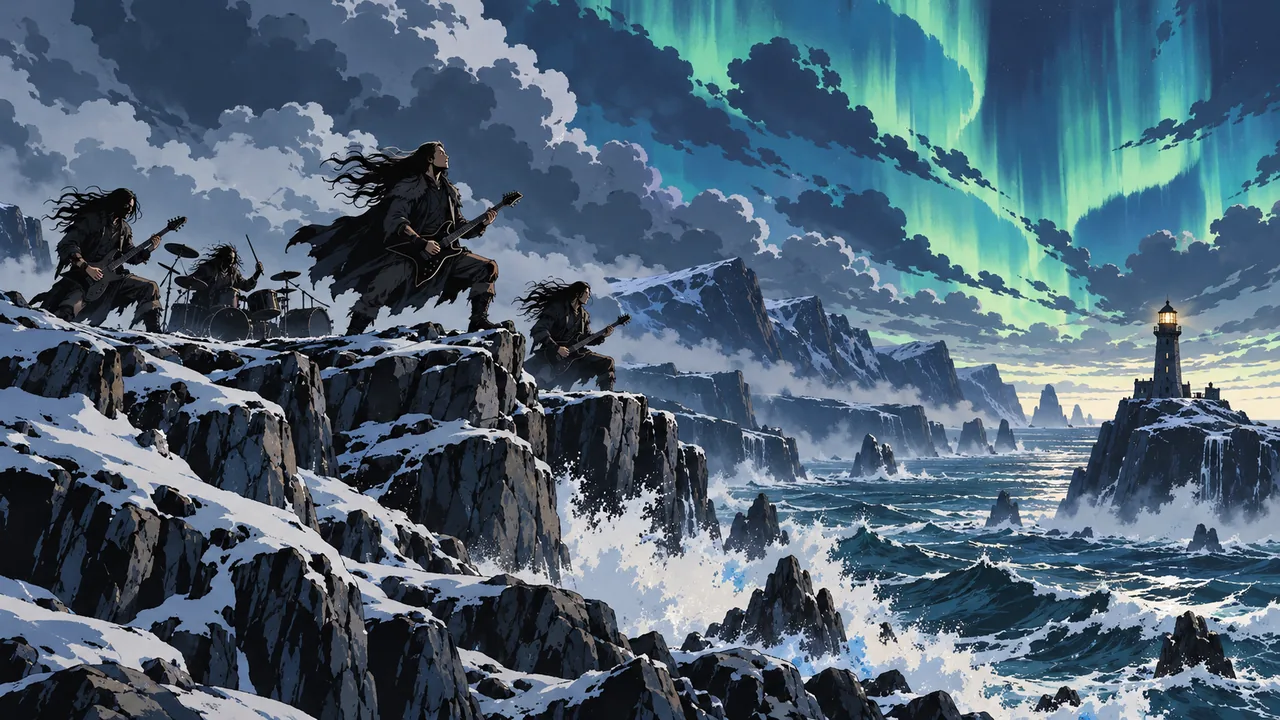
Death-metal growls with Nordic twin-guitar melodies: ferocious yet tragically beautiful.
- Era
- Early 1990s–present
- Origin
- Gothenburg · Finland
- Tempo
- 140–200 BPM
- Core instruments
- twin guitars · double kick · growls
AI prompt
Melodic death metal, Gothenburg sound, 170 BPM, harmonised twin lead guitars in thirds, fast tremolo riffs, double kick drums with occasional blast beats, harsh growled vocals with a clean-sung chorus, icy and epic, Nordic storm
228 charactersWrite melodic death metal + twin guitar harmonies + growls; for catchier add clean chorus, for fiercer add blast beats.
Rhythm
Fast double-kick gallops, often slowing into more melodic choruses.
Drums
Dense double kick, occasional blast beats.
Bass
Bass locked to the guitars.
Synths / arrangement
Twin guitars harmonised in thirds, fast riffs, occasional keyboards.
Vocals
Growls and screams, sometimes clean vocals in the chorus.
Two guitars play a sorrowful harmony in thirds, double kick at full speed, and the vocalist roars over it.
- Period
- Early 1990s–present
- Regions & spread
- Gothenburg, Sweden · Finland
Melodic death metal took shape in early-'90s Gothenburg, Sweden: At the Gates, In Flames and Dark Tranquillity combined death metal's speed and growls with Iron Maiden-style harmonised twin-guitar melodies, the so-called Gothenburg sound. Arch Enemy, Children of Bodom and others took it worldwide, and it shaped American metalcore.
Social context
Nordic youth voiced sorrow and anger through extreme music amid cold and isolation.
Technology
High-level Swedish studios such as Studio Fredman and clearer metal production.
Cultural psychology (interpretation)
Creative interpretation: Ferocious growls and tragic melodies together feel like a lament sung in a storm.
Slaughter of the Soul
At the Gates / AlbumHear the textbook Gothenburg sound: speed, screams and twin-guitar melody.
The Jester Race
In Flames / AlbumCompare an approach with more folk melody and atmosphere.
Nordic fantasy, boss fights and blizzards
Ferocious yet melodic: impact you can still remember.
- What is Melodic Death Metal?
- Melodic Death Metal is a metal · extreme strand. Death-metal growls with Nordic twin-guitar melodies: ferocious yet tragically beautiful. Period: Early 1990s–present. Regions: Gothenburg, Sweden, Finland. Two guitars play a sorrowful harmony in thirds, double kick at full speed, and the vocalist roars over it.
- How do I write a Suno prompt for Melodic Death Metal?
- Copy this full prompt:
Melodic death metal, Gothenburg sound, 170 BPM, harmonised twin lead guitars in thirds, fast tremolo riffs, double kick drums with occasional blast beats, harsh growled vocals with a clean-sung chorus, icy and epic, Nordic storm. Write melodic death metal + twin guitar harmonies + growls; for catchier add clean chorus, for fiercer add blast beats. - What BPM and instruments does Melodic Death Metal use?
- Usually 140–200 BPM. Drums: Dense double kick, occasional blast beats. Bass: Bass locked to the guitars. Synths / arrangement: Twin guitars harmonised in thirds, fast riffs, occasional keyboards. Vocals: Growls and screams, sometimes clean vocals in the chorus.
- What Melodic Death Metal music should I start with?
- Start with “Slaughter of the Soul” by At the Gates; “The Jester Race” by In Flames. The Key works tab notes what to listen for in each.
- What styles are similar to Melodic Death Metal?
- Doom Metal Same branch; Black Metal Same branch; Heavy Metal Similar mood · Epic & vast; Post-Metal Similar mood · Epic & vast
Sources are used to check history, categories and works. Cultural psychology, visual language, creator uses, and the instrument and mood tags in the overview are editorial interpretation and do not speak for a whole community or an artist’s sole intent. Tempo ranges are only a starting point; listen to AI examples and adjust.
- Wikipedia · Melodic death metal ↗Works and cultural background; sound, imagery and creator uses are editorial analysis
- Wikipedia · Slaughter of the Soul ↗Works and cultural background; sound, imagery and creator uses are editorial analysis