Jazz
Music family and improvising tradition
Within shared harmony and groove, everyone gets to say their own piece in the moment.
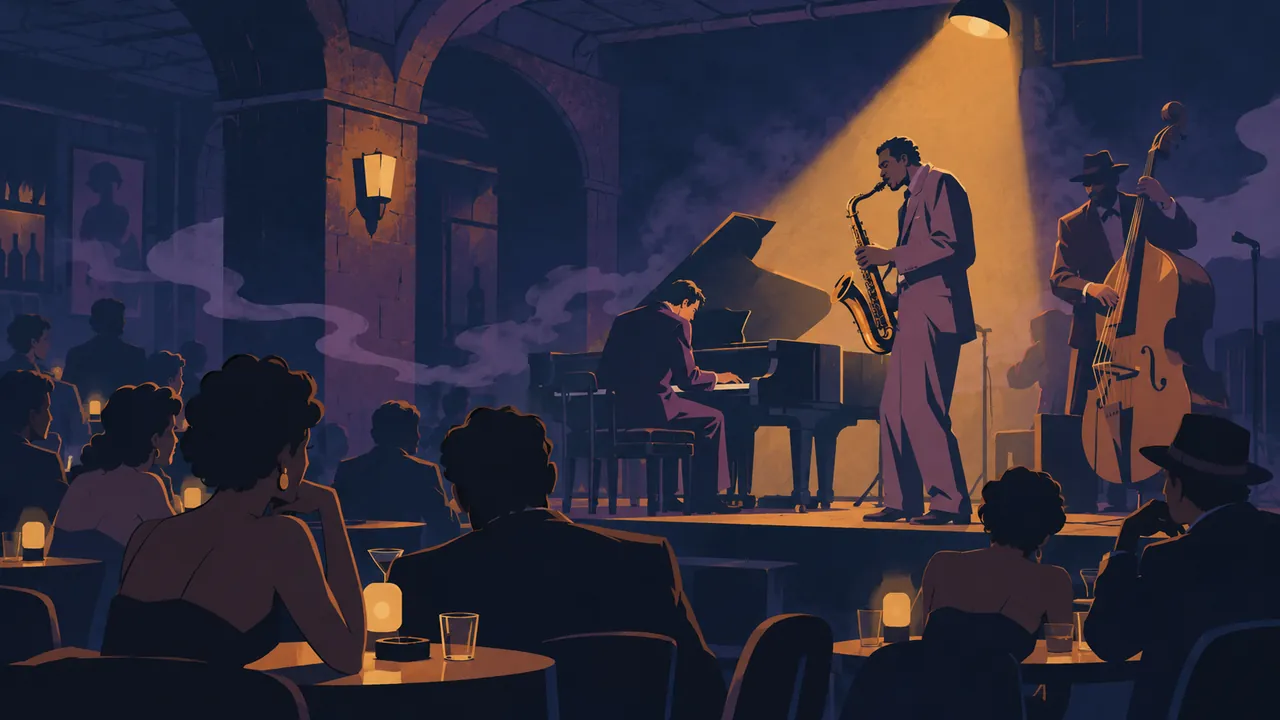
- Era
- Early 20th century
- Origin
- New Orleans, USA
- Tempo
- 60–250+ BPM
- Core instruments
- saxophone · upright bass · piano · brushed drums
AI prompt
Jazz, 132 BPM swing, walking upright bass, ride cymbal and brushed snare, piano comping with extended chords, warm tenor saxophone lead and solo, instrumental, late-night club, head-solo-head form, conversational interplay
222 charactersPick an era and line-up first (big band, trio or quintet), then decide on vocals; asking for swing feel and an improvised solo matters more than listing instruments.
Rhythm
Swung eighth notes and syncopation are the usual foundation.
Drums
The ride cymbal keeps time while snare and kick answer the soloist.
Bass
Upright bass walks through the harmony.
Synths / arrangement
Piano, saxophone, trumpet, trombone and guitar; seventh and extended chords.
Vocals
Often instrumental; vocals range from scat to standards.
Head, solos, head again; the musicians' real-time responses are the soul.
- Period
- Formed in the early 20th century and has kept branching since
- Regions & spread
- New Orleans, USA · then Chicago, New York and the world
African American communities fused blues, ragtime, brass bands and church music into it. Swing, bebop, cool, modal and fusion sound very different; improvisation and interplay are the common core, and it is not just saxophones and a sleepy bar.
Social context
Urbanisation and migration brought musical traditions together in dance halls, clubs and records.
Technology
Records and radio let improvised performances be replayed, studied and spread.
Cultural psychology (interpretation)
Creative interpretation: when the rules are clear enough, freedom has direction; jazz makes the conversation itself the work.
So What · Kind of Blue
Miles Davis / Song / albumHear the bass ask a question and the band answer, then how each soloist gives a different answer over the same chords.
A detective's office on a rainy night
Let saxophone and brushed drums write the loneliness, while leaving room for improvised uncertainty.
- What is Jazz?
- Jazz is a music family and improvising tradition. Within shared harmony and groove, everyone gets to say their own piece in the moment. Period: Formed in the early 20th century and has kept branching since. Regions: New Orleans, USA, then Chicago, New York and the world. Head, solos, head again; the musicians' real-time responses are the soul.
- How do I write a Suno prompt for Jazz?
- Copy this full prompt:
Jazz, 132 BPM swing, walking upright bass, ride cymbal and brushed snare, piano comping with extended chords, warm tenor saxophone lead and solo, instrumental, late-night club, head-solo-head form, conversational interplay. Pick an era and line-up first (big band, trio or quintet), then decide on vocals; asking for swing feel and an improvised solo matters more than listing instruments. - What BPM and instruments does Jazz use?
- No fixed BPM; ballads can sit near 60, bebop can exceed 250. Drums: The ride cymbal keeps time while snare and kick answer the soloist. Bass: Upright bass walks through the harmony. Synths / arrangement: Piano, saxophone, trumpet, trombone and guitar; seventh and extended chords. Vocals: Often instrumental; vocals range from scat to standards.
- What Jazz music should I start with?
- Start with “So What · Kind of Blue” by Miles Davis. The Key works tab notes what to listen for in each.
- What styles are similar to Jazz?
- Cool Jazz Same branch; Smooth Jazz Similar mood · Calm & focused; Neo-Soul Similar mood · Warm & intimate; Vocal Jazz Same branch
Sources are used to check history, categories and works. Cultural psychology, visual language, creator uses, and the instrument and mood tags in the overview are editorial interpretation and do not speak for a whole community or an artist’s sole intent. Tempo ranges are only a starting point; listen to AI examples and adjust.
- Wikipedia · Jazz ↗Works and cultural background; sound, imagery and creator uses are editorial analysis
- Wikipedia · Kind of Blue ↗Works and cultural background; sound, imagery and creator uses are editorial analysis