Baroque
Classical period
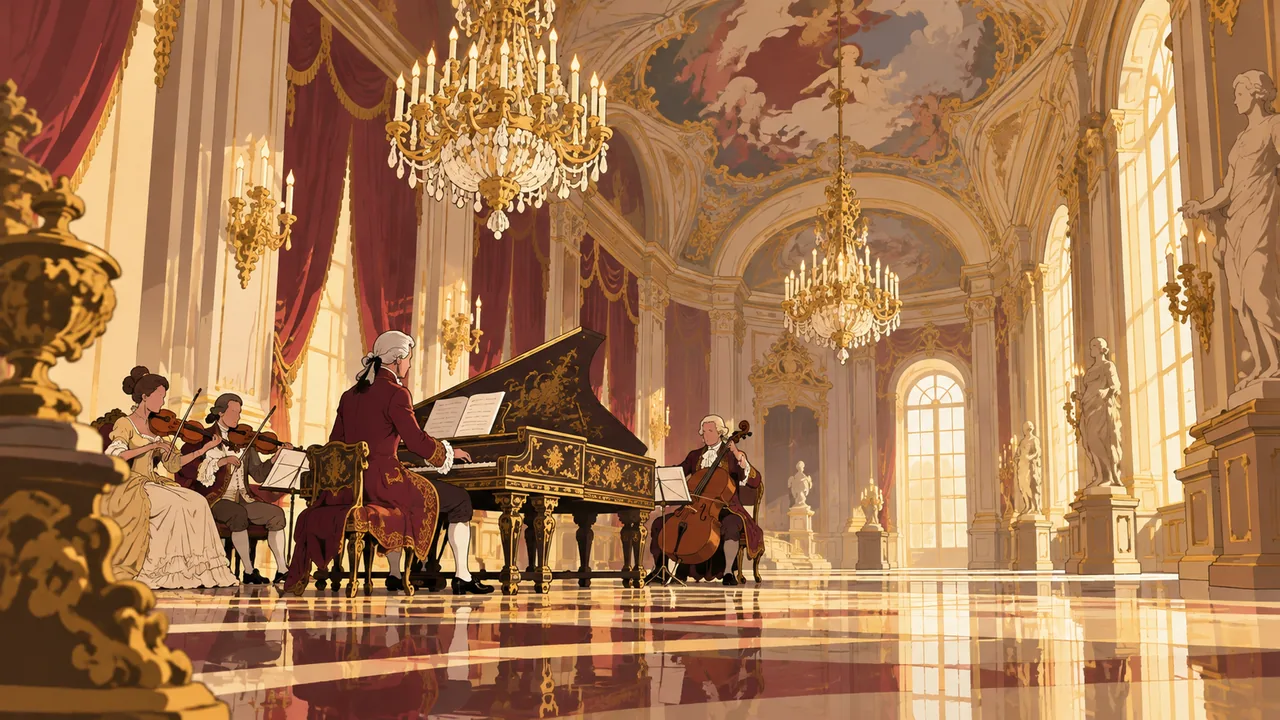
Harpsichord, basso continuo and interlocking counterpoint, ornate yet precise court music.
- Era
- 1600–1750
- Origin
- Italy · Germany · England
- Tempo
- 60–140 BPM
- Core instruments
- harpsichord · violin · cello
AI prompt
Baroque chamber music, 110 BPM, crisp harpsichord continuo, two violins in interweaving counterpoint, cello bassline, oboe solo, steady motor rhythm, ornate and bright, 18th-century palace hall, instrumental
207 charactersWrite baroque + harpsichord + counterpoint; for a choral version add baroque choir.
Rhythm
Steady continuous motor rhythm, interwoven counterpoint.
Drums
Usually no percussion, sometimes timpani.
Bass
Basso continuo (cello + harpsichord).
Synths / arrangement
Harpsichord, violin, oboe, flute, organ, baroque trumpet.
Vocals
Instrumental or ornamented voice and choir.
The harpsichord plucks crisp chords while two violins chase each other in counterpoint above.
- Period
- About 1600–1750
- Regions & spread
- Italy, Germany and England
Monteverdi, Vivaldi's The Four Seasons, Bach and Handel's Messiah are key; hallmarks are basso continuo, counterpoint, concerto and fugue.
Social context
Church and court patronage made music an ornament of power and faith.
Technology
Harpsichord, organ and small string ensembles were the main forces.
Cultural psychology (interpretation)
Creative interpretation: Multiple voices moving at once and answering each other fascinate like clockwork.
The Four Seasons
Antonio Vivaldi / WorkHear the concerto dialogue between solo violin and strings.
Brandenburg Concertos
J. S. Bach / WorkCompare more complex counterpoint and varied solo instruments.
Courts, aristocrats and classical elegance
Harpsichord establishes European court elegance instantly.
- What is Baroque?
- Baroque is a classical period. Harpsichord, basso continuo and interlocking counterpoint, ornate yet precise court music. Period: About 1600–1750. Regions: Italy, Germany and England. The harpsichord plucks crisp chords while two violins chase each other in counterpoint above.
- How do I write a Suno prompt for Baroque?
- Copy this full prompt:
Baroque chamber music, 110 BPM, crisp harpsichord continuo, two violins in interweaving counterpoint, cello bassline, oboe solo, steady motor rhythm, ornate and bright, 18th-century palace hall, instrumental. Write baroque + harpsichord + counterpoint; for a choral version add baroque choir. - What BPM and instruments does Baroque use?
- Usually 60–140 BPM. Drums: Usually no percussion, sometimes timpani. Bass: Basso continuo (cello + harpsichord). Synths / arrangement: Harpsichord, violin, oboe, flute, organ, baroque trumpet. Vocals: Instrumental or ornamented voice and choir.
- What Baroque music should I start with?
- Start with “The Four Seasons” by Antonio Vivaldi; “Brandenburg Concertos” by J. S. Bach. The Key works tab notes what to listen for in each.
- What styles are similar to Baroque?
- Sacred / Choral Same branch; Chamber Music Same branch; Impressionism (Debussy / Ravel) Same branch; Neoclassical / Modern Classical Piano Same branch
Sources are used to check history, categories and works. Cultural psychology, visual language, creator uses, and the instrument and mood tags in the overview are editorial interpretation and do not speak for a whole community or an artist’s sole intent. Tempo ranges are only a starting point; listen to AI examples and adjust.
- Wikipedia · Baroque music ↗Works and cultural background; sound, imagery and creator uses are editorial analysis
- Wikipedia · The Four Seasons (Vivaldi) ↗Works and cultural background; sound, imagery and creator uses are editorial analysis