Dubstep
Electronic dance genre
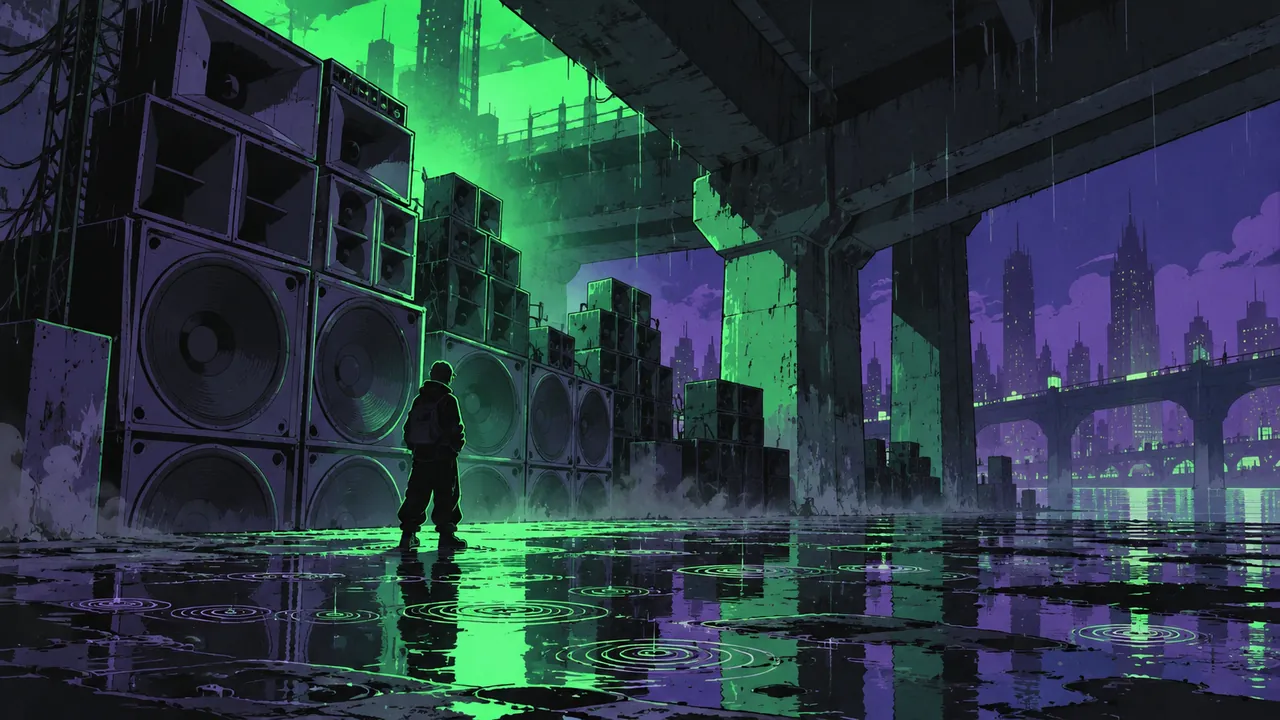
The low end becomes the lead, the room shaking between half-time hits.
- Era
- Early 2000s
- Origin
- London, UK
- Tempo
- 140 (half-time 70) BPM
- Core instruments
- wobble bass · sub-bass · half-time drums
AI prompt
Dubstep, 140 BPM half-time groove with snare on the third beat, deep sub-bass and LFO wobble bass, sparse heavy drums, dark pads with dub echoes, tense build-up into a heavy bass drop, instrumental, rainy underground city
221 charactersChoose early UK style (dark, spacious, sub-heavy) or American brostep (harsh, explosive) first; write half-time and drop.
Rhythm
Half-time groove: the snare lands on beat three.
Drums
Sparse kicks, heavy snare, syncopated hats.
Bass
Sub-bass and LFO-modulated wobble bass are the undisputed stars.
Synths / arrangement
Dark pads, dub echoes and samples; brostep adds harsh midrange synths.
Vocals
Mostly sampled vocal snippets or short MC lines.
Build-and-drop structure; the contrast of space and low end decides the impact.
- Period
- Formed in early-2000s London; American brostep broke through around 2010
- Regions & spread
- South London, UK · USA
It grew from UK garage, 2-step, dub and jungle; early work by Skream, Benga and Digital Mystikz is dark, spacious and sub-bass heavy. Around 2010, American brostep (Skrillex and others) added aggressive midrange wobbles and explosive drops, a big departure from the early UK sound.
Social context
London's underground clubs and pirate radio nurtured a community devoted to feeling the bass.
Technology
LFO modulation in soft synths let the bass "talk", and big sound systems amplified the sub.
Cultural psychology (interpretation)
Creative interpretation: a long build and a sudden bass impact create intense anticipation and release.
Midnight Request Line · Skream!
Skream / Track / albumStart from early UK dubstep: half-time drums, open space and a repeating synth motif; the low end matters more than loudness.
Underground races and the peak of a chase
The bass impact of the drop pushes action to its peak.
- What is Dubstep?
- Dubstep is an electronic dance genre. The low end becomes the lead, the room shaking between half-time hits. Period: Formed in early-2000s London; American brostep broke through around 2010. Regions: South London, UK, USA. Build-and-drop structure; the contrast of space and low end decides the impact.
- How do I write a Suno prompt for Dubstep?
- Copy this full prompt:
Dubstep, 140 BPM half-time groove with snare on the third beat, deep sub-bass and LFO wobble bass, sparse heavy drums, dark pads with dub echoes, tense build-up into a heavy bass drop, instrumental, rainy underground city. Choose early UK style (dark, spacious, sub-heavy) or American brostep (harsh, explosive) first; write half-time and drop. - What BPM and instruments does Dubstep use?
- About 140 BPM with a half-time feel of 70. Drums: Sparse kicks, heavy snare, syncopated hats. Bass: Sub-bass and LFO-modulated wobble bass are the undisputed stars. Synths / arrangement: Dark pads, dub echoes and samples; brostep adds harsh midrange synths. Vocals: Mostly sampled vocal snippets or short MC lines.
- What Dubstep music should I start with?
- Start with “Midnight Request Line · Skream!” by Skream. The Key works tab notes what to listen for in each.
- What styles are similar to Dubstep?
- Drum & Bass Same branch; Footwork / Juke Same branch; Future Bass / EDM Same branch; Darksynth Similar mood · Dark & heavy
Sources are used to check history, categories and works. Cultural psychology, visual language, creator uses, and the instrument and mood tags in the overview are editorial interpretation and do not speak for a whole community or an artist’s sole intent. Tempo ranges are only a starting point; listen to AI examples and adjust.
- Wikipedia · Dubstep ↗Works and cultural background; sound, imagery and creator uses are editorial analysis
- Wikipedia · Skream! ↗Works and cultural background; sound, imagery and creator uses are editorial analysis