Ragtime
Early jazz · piano
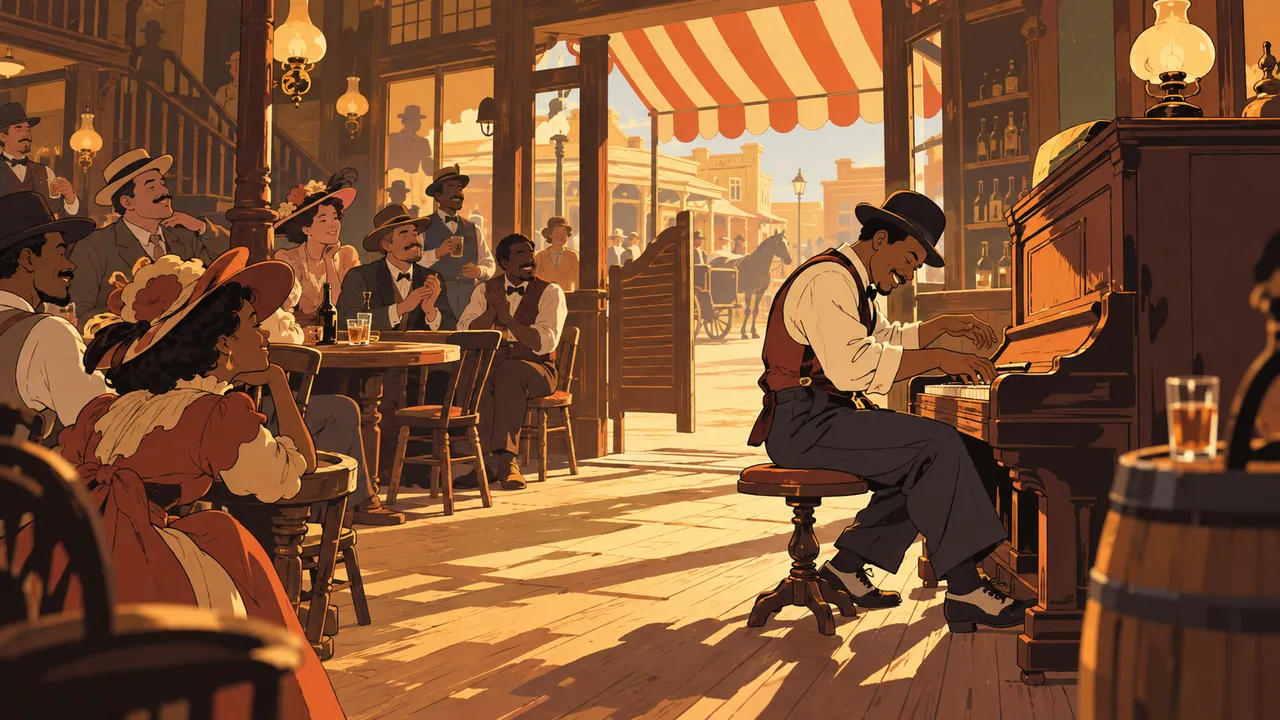
A hopping left hand and a playfully syncopated right: saloon piano from the early 1900s, jazz's grandparent.
- Era
- Late 1890s–1910s
- Origin
- US Midwest
- Tempo
- 80–110 BPM
- Core instruments
- upright piano · stride left hand · syncopated melody
AI prompt
Ragtime, solo honky-tonk upright piano, 96 BPM 2/4 march feel, bouncing oom-pah left hand in octaves, playful syncopated right-hand melody, early 1900s saloon, cheerful and jaunty, slightly out-of-tune vintage piano
215 charactersWrite ragtime + honky-tonk piano + syncopated; for silent film add silent film, for faster and livelier add stride piano.
Rhythm
March-like 2/4 with heavy right-hand syncopation.
Drums
Usually no drums; the left hand is the rhythm section.
Bass
Left-hand bass leaping in octaves.
Synths / arrangement
Solo piano, often a slightly out-of-tune upright.
Vocals
Usually no vocals.
The left hand goes oom-pah, oom-pah while the right-hand tune keeps jumping in early, as if teasing the beat.
- Period
- Late 1890s to 1910s
- Regions & spread
- Missouri and the US Midwest
Ragtime arose in African American communities, and Scott Joplin's "Maple Leaf Rag" (1899) and "The Entertainer" made it a national craze. It is notated piano music: the left hand bounces steadily between bass notes and chords (oom-pah), while the right-hand melody is heavily syncopated, creating "ragged time". It shaped early jazz and silent-film accompaniment, and was revived in the 1970s by the film The Sting.
Social context
Urbanisation and pianos in ordinary homes made popular sheet music a best-seller.
Technology
Printed sheet music and player-piano rolls.
Cultural psychology (interpretation)
Creative interpretation: The steady left hand and playful right hand create a little offset that makes you tap your foot.
Maple Leaf Rag
Scott Joplin / WorkHear ragtime's standard form: hopping left hand and syncopated right.
The Entertainer
Scott Joplin / WorkCompare a more lyrical, more widely known rag.
Silent-film style, comic chases and retro games
Playful piano is naturally comic and old-movie-like.
- What is Ragtime?
- Ragtime is an early jazz · piano. A hopping left hand and a playfully syncopated right: saloon piano from the early 1900s, jazz's grandparent. Period: Late 1890s to 1910s. Regions: Missouri and the US Midwest. The left hand goes oom-pah, oom-pah while the right-hand tune keeps jumping in early, as if teasing the beat.
- How do I write a Suno prompt for Ragtime?
- Copy this full prompt:
Ragtime, solo honky-tonk upright piano, 96 BPM 2/4 march feel, bouncing oom-pah left hand in octaves, playful syncopated right-hand melody, early 1900s saloon, cheerful and jaunty, slightly out-of-tune vintage piano. Write ragtime + honky-tonk piano + syncopated; for silent film add silent film, for faster and livelier add stride piano. - What BPM and instruments does Ragtime use?
- Usually 80–110 BPM (march tempo in 2/4). Drums: Usually no drums; the left hand is the rhythm section. Bass: Left-hand bass leaping in octaves. Synths / arrangement: Solo piano, often a slightly out-of-tune upright. Vocals: Usually no vocals.
- What Ragtime music should I start with?
- Start with “Maple Leaf Rag” by Scott Joplin; “The Entertainer” by Scott Joplin. The Key works tab notes what to listen for in each.
- What styles are similar to Ragtime?
- Swing / Big Band Same branch; Gypsy Jazz Same branch; Indie Pop Similar mood · Bright & sweet; New Wave Similar mood · Nostalgic
Sources are used to check history, categories and works. Cultural psychology, visual language, creator uses, and the instrument and mood tags in the overview are editorial interpretation and do not speak for a whole community or an artist’s sole intent. Tempo ranges are only a starting point; listen to AI examples and adjust.
- Wikipedia · Ragtime ↗Works and cultural background; sound, imagery and creator uses are editorial analysis
- Wikipedia · Maple Leaf Rag ↗Works and cultural background; sound, imagery and creator uses are editorial analysis