Thrash Metal
Metal subgenre
Punk speed poured into metal weight, anger played as the fastest downpicking.
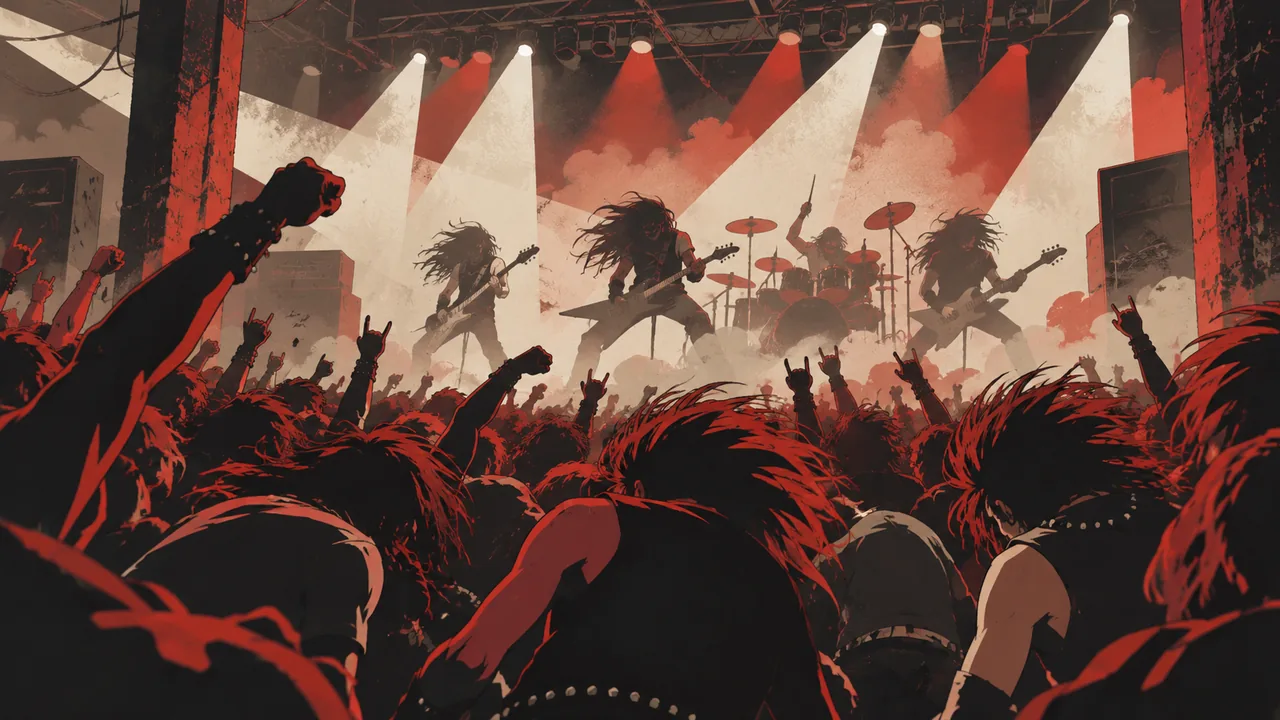
- Era
- 1980s
- Origin
- Bay Area · Germany
- Tempo
- 160–220 BPM
- Core instruments
- distorted guitar · double kick · electric bass
AI prompt
Thrash metal, 190 BPM, fast palm-muted downpicked guitar riffs, skank beat drums with double bass bursts, gritty shouted male vocals, shredding guitar solo, sudden half-time breakdown, aggressive and tight, 1980s Bay Area
221 charactersWrite thrash metal + palm-muted riffs + a BPM; to avoid death growls, ask for shouted vocals rather than growl.
Rhythm
Fast eighths and sixteenths with frequent stops and tempo shifts.
Drums
Skank beats alternating with double bass, snare driving the offbeats.
Bass
Bass locks to the guitar riffs, with occasional melodic runs.
Synths / arrangement
Palm-muted downpicked riffs on power chords, shrill fast guitar solos.
Vocals
Gritty shouted vocals, mid-high register, not death growls.
Muted riffs fire like a machine gun, then cut to a half-time stomp.
- Period
- Formed in the early 1980s, peaked mid-to-late 1980s
- Regions & spread
- San Francisco Bay Area and Los Angeles, USA · Germany's Ruhr area
Metallica, Slayer, Megadeth and Anthrax are the "Big Four"; Germany's Kreator and Sodom grew in parallel. It took NWOBHM riffs and hardcore punk speed, with lyrics about war, society and power.
Social context
Amid Reagan-era and Cold War anxiety, suburban teens wanted something angrier and more honest than glam metal.
Technology
High-gain amps and tape trading spread underground bands worldwide fast.
Cultural psychology (interpretation)
Creative interpretation: Speed is the emotion: when every beat sprints, the listener's pulse is dragged along.
Master of Puppets
Metallica / AlbumHear how tight the downpicked riffs in the title track are, and how the middle turns lyrical before speeding up again.
Reign in Blood
Slayer / AlbumCompare more extreme speed and shorter songs; the whole album is under half an hour.
Racing, chases and fight scenes
Relentless riffs carry built-in momentum for fast cuts.
- What is Thrash Metal?
- Thrash Metal is a metal subgenre. Punk speed poured into metal weight, anger played as the fastest downpicking. Period: Formed in the early 1980s, peaked mid-to-late 1980s. Regions: San Francisco Bay Area and Los Angeles, USA, Germany's Ruhr area. Muted riffs fire like a machine gun, then cut to a half-time stomp.
- How do I write a Suno prompt for Thrash Metal?
- Copy this full prompt:
Thrash metal, 190 BPM, fast palm-muted downpicked guitar riffs, skank beat drums with double bass bursts, gritty shouted male vocals, shredding guitar solo, sudden half-time breakdown, aggressive and tight, 1980s Bay Area. Write thrash metal + palm-muted riffs + a BPM; to avoid death growls, ask for shouted vocals rather than growl. - What BPM and instruments does Thrash Metal use?
- Usually 160–220 BPM. Drums: Skank beats alternating with double bass, snare driving the offbeats. Bass: Bass locks to the guitar riffs, with occasional melodic runs. Synths / arrangement: Palm-muted downpicked riffs on power chords, shrill fast guitar solos. Vocals: Gritty shouted vocals, mid-high register, not death growls.
- What Thrash Metal music should I start with?
- Start with “Master of Puppets” by Metallica; “Reign in Blood” by Slayer. The Key works tab notes what to listen for in each.
- What styles are similar to Thrash Metal?
- Punk Rock Similar mood · Rebellious & bold; Power Metal Same branch; Electronicore Similar mood · Groove & energy; Hard Techno Similar mood · Hype & thrill
Sources are used to check history, categories and works. Cultural psychology, visual language, creator uses, and the instrument and mood tags in the overview are editorial interpretation and do not speak for a whole community or an artist’s sole intent. Tempo ranges are only a starting point; listen to AI examples and adjust.
- Wikipedia · Thrash metal ↗Works and cultural background; sound, imagery and creator uses are editorial analysis
- Wikipedia · Master of Puppets ↗Works and cultural background; sound, imagery and creator uses are editorial analysis