Dub
Reggae · mixing art
Reggae taken apart: drums and bass up front, voices and instruments drifting in and out of echo, the mixing desk itself as an instrument.
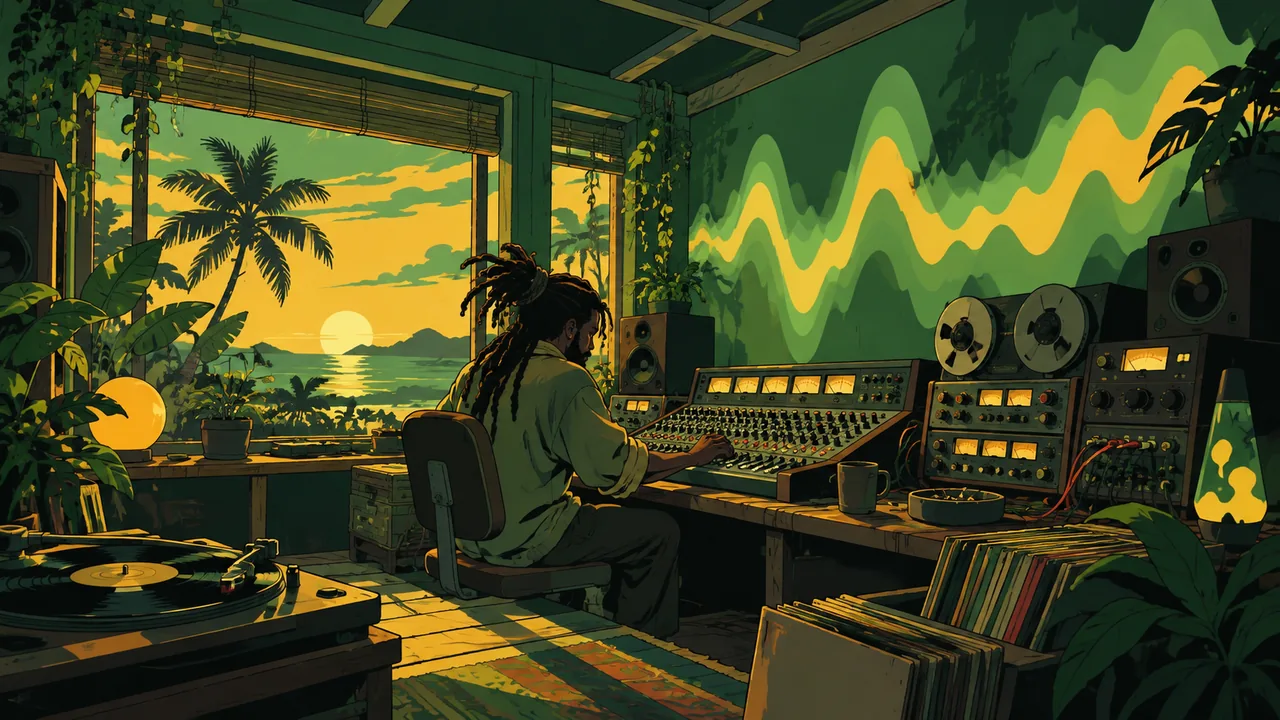
- Era
- Late 1960s–present
- Origin
- Jamaica
- Tempo
- 60–80 BPM
- Core instruments
- bass · tape echo · spring reverb
AI prompt
Dub, 70 BPM one-drop reggae groove, deep round bassline up front, crisp rimshots trailing long tape echo, spring reverb, fragments of offbeat guitar, organ and horns dropping in and out, distant echoing vocal snippets, hypnotic and spacious
240 charactersWrite dub + tape echo + heavy bass; for modern add dub techno or steppers, for some voice add vocal snippets.
Rhythm
Reggae one-drop groove with lots of space.
Drums
Crisp rimshots trailing long echoes.
Bass
Very deep, round bass as the lead.
Synths / arrangement
Fragments of offbeat guitar, organ and horns soaked in echo and reverb.
Vocals
Only fragments of vocals, stretched by echo.
The bass keeps walking deep, one snare hit echoes around the room again and again, and a vocal fragment appears then gets swallowed by echo.
- Period
- Late 1960s–present
- Regions & spread
- Kingston, Jamaica
Dub grew out of Jamaican engineers' instrumental remixes for single B-sides: King Tubby, Lee "Scratch" Perry and others pushed drums and bass to the front, dropped other parts in and out and blew them up with tape echo and spring reverb, creating vast, trippy sonic spaces. It deeply shaped hip-hop, jungle, dubstep, trip-hop and the mixing mindset of electronic music.
Social context
Jamaican sound-system culture wanted fresh instrumental versions to work live.
Technology
Multitrack tape, mixer faders, tape echo and spring reverb.
Cultural psychology (interpretation)
Creative interpretation: Deep bass and endless echo pull you into a slow, hypnotic state.
Super Ape
Lee "Scratch" Perry & The Upsetters / AlbumHear dense reverb, echo and a trippy sense of space.
King Tubby
King Tubby / Artist / BandCompare the root of dub: live mixing with faders and echo.
Late night, psychedelic scenes and slow city films
Deep bass and echo create a floating, slow-moving space.
- What is Dub?
- Dub is a reggae · mixing art. Reggae taken apart: drums and bass up front, voices and instruments drifting in and out of echo, the mixing desk itself as an instrument. Period: Late 1960s–present. Regions: Kingston, Jamaica. The bass keeps walking deep, one snare hit echoes around the room again and again, and a vocal fragment appears then gets swallowed by echo.
- How do I write a Suno prompt for Dub?
- Copy this full prompt:
Dub, 70 BPM one-drop reggae groove, deep round bassline up front, crisp rimshots trailing long tape echo, spring reverb, fragments of offbeat guitar, organ and horns dropping in and out, distant echoing vocal snippets, hypnotic and spacious. Write dub + tape echo + heavy bass; for modern add dub techno or steppers, for some voice add vocal snippets. - What BPM and instruments does Dub use?
- Usually 60–80 BPM. Drums: Crisp rimshots trailing long echoes. Bass: Very deep, round bass as the lead. Synths / arrangement: Fragments of offbeat guitar, organ and horns soaked in echo and reverb. Vocals: Only fragments of vocals, stretched by echo.
- What Dub music should I start with?
- Start with “Super Ape” by Lee "Scratch" Perry & The Upsetters; “King Tubby” by King Tubby. The Key works tab notes what to listen for in each.
- What styles are similar to Dub?
- Cloud Rap Similar mood · Dreamy & floating; Downtempo / Chillout Similar mood · Calm & focused; Cool Jazz Similar mood · Calm & focused; Smooth Jazz Similar mood · Calm & focused
Sources are used to check history, categories and works. Cultural psychology, visual language, creator uses, and the instrument and mood tags in the overview are editorial interpretation and do not speak for a whole community or an artist’s sole intent. Tempo ranges are only a starting point; listen to AI examples and adjust.
- Wikipedia · Dub music ↗Works and cultural background; sound, imagery and creator uses are editorial analysis
- Wikipedia · Super Ape ↗Works and cultural background; sound, imagery and creator uses are editorial analysis