Russian Post-Punk / Doomer
Post-punk · Russian-language strand
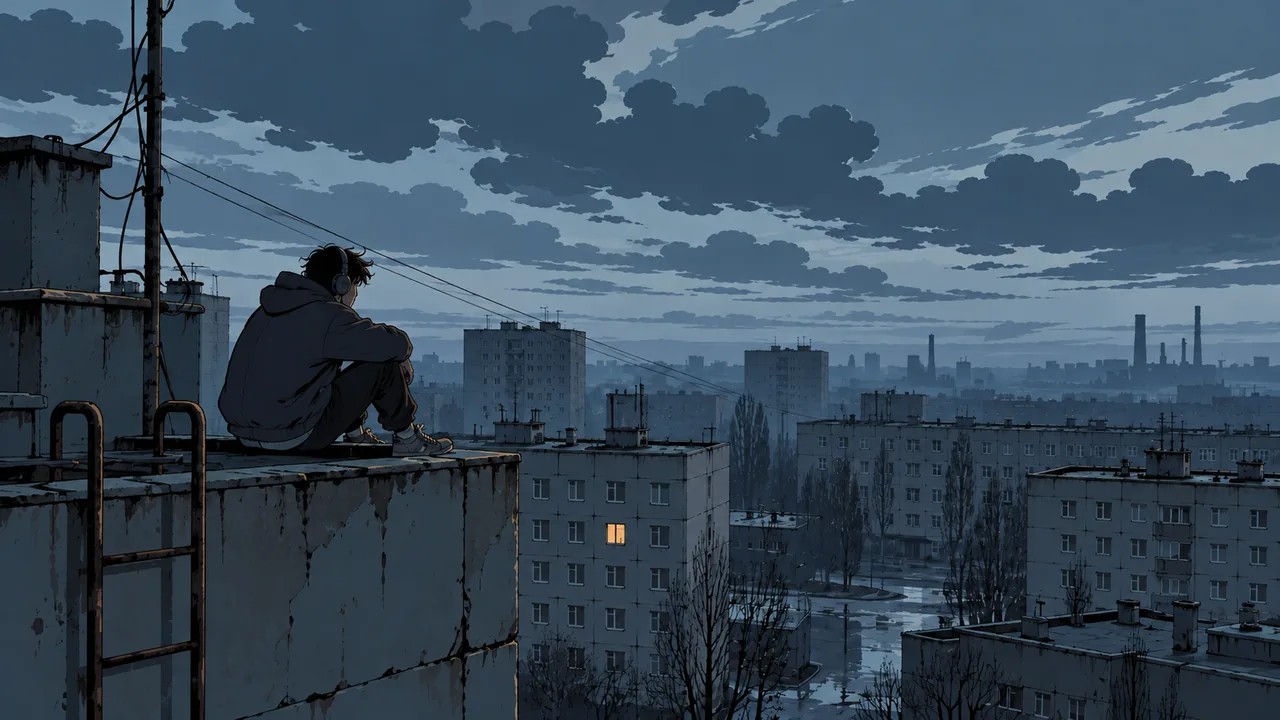
Cold drum machine, synths and a deep, flat male voice: sitting alone on the roof of a grey apartment block.
- Era
- 1980s · late 2010s–present
- Origin
- Russia · Belarus
- Tempo
- 120–150 BPM
- Core instruments
- drum machine · synth · bass
AI prompt
Russian post-punk, 138 BPM, dry mechanical drum machine, driving melodic picked bassline, cold minor synth arpeggios, chorus-drenched guitar, deep flat male baritone vocals in Russian, cold wave, gloomy and hypnotic, grey apartment blocks at dusk
246 charactersWrite Russian post-punk or cold wave + drum machine + deep baritone in Russian; for more doomer add lo-fi and melancholic.
Rhythm
Mechanical, repetitive drum-machine groove that barely changes.
Drums
Dry drum-machine snare and kick.
Bass
Melodic, driving picked bass.
Synths / arrangement
Cold synth arpeggios and chorus-drenched guitar.
Vocals
Deep, flat, almost emotionless Russian baritone.
The drum machine ticks on unchanging, the bass pushes the melody, and a baritone coldly intones the chorus in Russian.
- Period
- 1980s Soviet underground rock; revived from the late 2010s
- Regions & spread
- Russia, Belarus
In 1980s Leningrad, Kino (led by Viktor Tsoi) brought new wave and post-punk into Soviet rock, with Gruppa Krovi (1988) as a landmark. In the late 2010s Minsk's Molchat Doma reignited the sound with Etazhi (2018), and "Sudno" went viral on TikTok in 2020; similar bands include Ploho and Buerak. Online it is linked to "doomer" music: cold, grey, lonely and brooding.
Social context
Economic stagnation and uniform cityscapes left young people numb about the future; the internet turned that mood into a global echo.
Technology
Cheap drum machines and synths, bedroom recording, and TikTok and YouTube recommendation algorithms.
Cultural psychology (interpretation)
Creative interpretation: Repetitive, monotone grooves make you nod along without offering comfort; it is more like company in the gloom.
Sudno (Boris Ryzhy) · Etazhi
Molchat Doma / SongHear the drum machine, synths and deep baritone, the sound that made it explode on TikTok.
Gruppa Krovi
Kino / AlbumCompare the 1980s Soviet original: more guitar and rock energy, the same coldness.
Cold cities, lonely youth and late-night monologues
Monotone grooves and cold tones naturally portray alienation.
- What is Russian Post-Punk / Doomer?
- Russian Post-Punk / Doomer is a post-punk · Russian-language strand. Cold drum machine, synths and a deep, flat male voice: sitting alone on the roof of a grey apartment block. Period: 1980s Soviet underground rock; revived from the late 2010s. Regions: Russia, Belarus. The drum machine ticks on unchanging, the bass pushes the melody, and a baritone coldly intones the chorus in Russian.
- How do I write a Suno prompt for Russian Post-Punk / Doomer?
- Copy this full prompt:
Russian post-punk, 138 BPM, dry mechanical drum machine, driving melodic picked bassline, cold minor synth arpeggios, chorus-drenched guitar, deep flat male baritone vocals in Russian, cold wave, gloomy and hypnotic, grey apartment blocks at dusk. Write Russian post-punk or cold wave + drum machine + deep baritone in Russian; for more doomer add lo-fi and melancholic. - What BPM and instruments does Russian Post-Punk / Doomer use?
- Usually 120–150 BPM. Drums: Dry drum-machine snare and kick. Bass: Melodic, driving picked bass. Synths / arrangement: Cold synth arpeggios and chorus-drenched guitar. Vocals: Deep, flat, almost emotionless Russian baritone.
- What Russian Post-Punk / Doomer music should I start with?
- Start with “Sudno (Boris Ryzhy) · Etazhi” by Molchat Doma; “Gruppa Krovi” by Kino. The Key works tab notes what to listen for in each.
- What styles are similar to Russian Post-Punk / Doomer?
- Darkwave Same branch; Post-Punk Same branch; Gothic Rock Same branch; New Wave Same branch
Sources are used to check history, categories and works. Cultural psychology, visual language, creator uses, and the instrument and mood tags in the overview are editorial interpretation and do not speak for a whole community or an artist’s sole intent. Tempo ranges are only a starting point; listen to AI examples and adjust.
- Wikipedia · Molchat Doma ↗Works and cultural background; sound, imagery and creator uses are editorial analysis
- Wikipedia · Molchat Doma ↗Works and cultural background; sound, imagery and creator uses are editorial analysis