Impressionism (Debussy / Ravel)
Classical · Impressionism
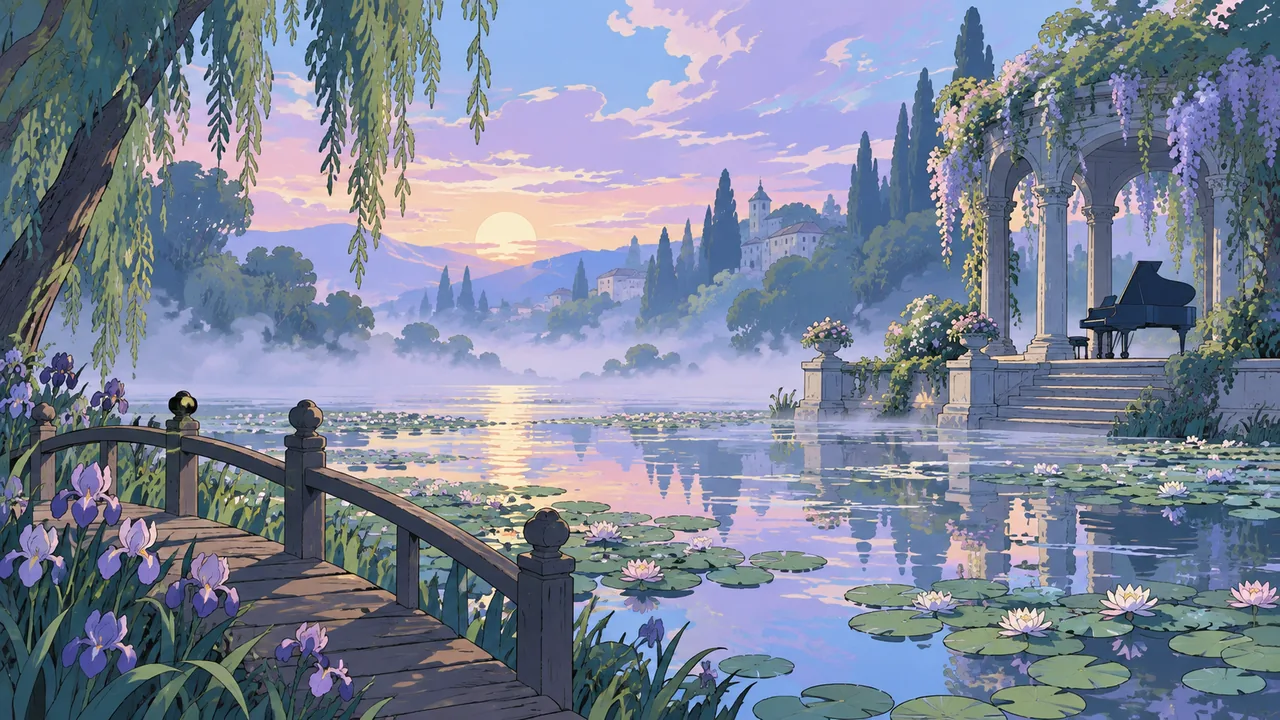
No story, only light: hazy harmonies and flowing arpeggios, as if Monet's water lilies became sound.
- Era
- 1890s–1920s
- Origin
- France
- Tempo
- 50–90 BPM
- Core instruments
- piano · harp · flute
AI prompt
Impressionist classical piano, Debussy style, free flowing tempo around 60 BPM, pedalled arpeggios, parallel chords and whole-tone harmony, soft dynamics, shimmering and dreamy, misty lily pond at dawn, solo grand piano
219 charactersWrite impressionist piano + Debussy style + whole-tone harmony; for orchestra add flute and harp and orchestral.
Rhythm
Free, flowing rhythm with few strong beats.
Drums
No drums, occasional harp or celesta touches.
Bass
Sustained low pedal tones.
Synths / arrangement
Solo piano arpeggios and parallel chords, or flute, harp and string colour.
Vocals
Usually no vocals.
Piano arpeggios spread softly in the pedal, harmonies glide toward an undefined key, like light on water in morning mist.
- Period
- 1890s–1920s
- Regions & spread
- France
Musical impressionism is led by Debussy and Ravel: "Clair de lune", Prélude à l'après-midi d'un faune, Pavane pour une infante défunte and more. They used whole-tone and pentatonic scales, parallel chords and blurred tonality to paint light, water, mist and atmosphere rather than dramatic plots. It deeply influenced jazz harmony, film scoring and ambient music.
Social context
In fin-de-siècle Paris, composers wanted to escape German Romantic grand narrative.
Technology
The modern piano's pedal and colourful orchestration.
Cultural psychology (interpretation)
Creative interpretation: Uncertain tonality and flowing colour let your mind drift like watching light on water.
Clair de lune
Claude Debussy / WorkHear pedalled arpeggios and hazy harmony in impressionism's best-known piece.
Prélude à l'après-midi d'un faune
Claude Debussy / WorkCompare the orchestral side: flute and harp colours.
Dreams, nature documentaries and art films
Hazy harmony creates soft, uncertain, dreamlike images.
- What is Impressionism (Debussy / Ravel)?
- Impressionism (Debussy / Ravel) is a classical · Impressionism. No story, only light: hazy harmonies and flowing arpeggios, as if Monet's water lilies became sound. Period: 1890s–1920s. Regions: France. Piano arpeggios spread softly in the pedal, harmonies glide toward an undefined key, like light on water in morning mist.
- How do I write a Suno prompt for Impressionism (Debussy / Ravel)?
- Copy this full prompt:
Impressionist classical piano, Debussy style, free flowing tempo around 60 BPM, pedalled arpeggios, parallel chords and whole-tone harmony, soft dynamics, shimmering and dreamy, misty lily pond at dawn, solo grand piano. Write impressionist piano + Debussy style + whole-tone harmony; for orchestra add flute and harp and orchestral. - What BPM and instruments does Impressionism (Debussy / Ravel) use?
- Usually 50–90 BPM, with a blurred pulse. Drums: No drums, occasional harp or celesta touches. Bass: Sustained low pedal tones. Synths / arrangement: Solo piano arpeggios and parallel chords, or flute, harp and string colour. Vocals: Usually no vocals.
- What Impressionism (Debussy / Ravel) music should I start with?
- Start with “Clair de lune” by Claude Debussy; “Prélude à l'après-midi d'un faune” by Claude Debussy. The Key works tab notes what to listen for in each.
- What styles are similar to Impressionism (Debussy / Ravel)?
- Neoclassical / Modern Classical Piano Same branch; Baroque Same branch; Chamber Music Same branch; Sacred / Choral Same branch
Sources are used to check history, categories and works. Cultural psychology, visual language, creator uses, and the instrument and mood tags in the overview are editorial interpretation and do not speak for a whole community or an artist’s sole intent. Tempo ranges are only a starting point; listen to AI examples and adjust.
- Wikipedia · Impressionism in music ↗Works and cultural background; sound, imagery and creator uses are editorial analysis
- Wikipedia · Clair de lune (Debussy) ↗Works and cultural background; sound, imagery and creator uses are editorial analysis