Fado
Portuguese · traditional song
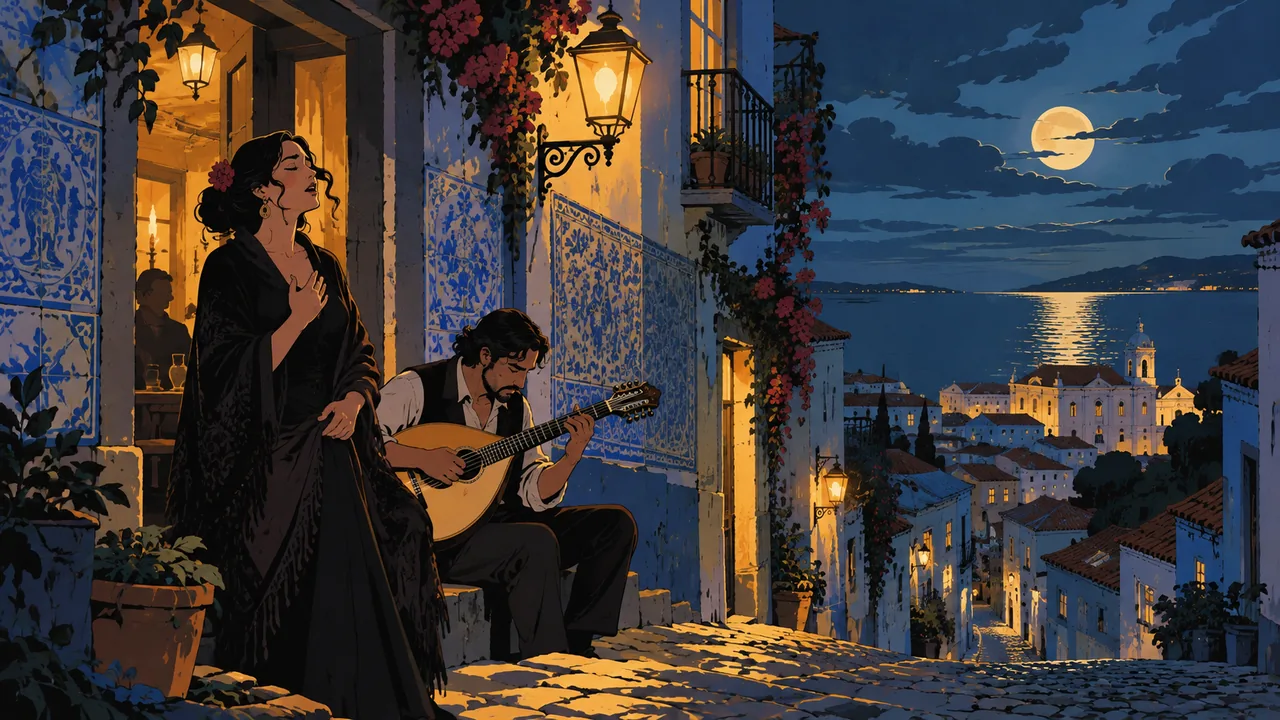
A lament from Lisbon taverns: the tremolo of the Portuguese guitar and a singer's long sigh, singing of a longing that can't go home (saudade).
- Era
- 19th century–present
- Origin
- Lisbon
- Tempo
- 60–100 BPM
- Core instruments
- Portuguese guitar · classical guitar · female vocal
AI prompt
Fado, Lisbon, slow rubato around 70 BPM, Portuguese guitar tremolo melody, classical guitar chords, no drums, deep melancholic female vocal in Portuguese with powerful emotional swells, saudade, intimate tavern atmosphere
221 charactersWrite fado + Portuguese guitar + saudade; to sing in another language keep these and just change the vocals language.
Rhythm
Slow, rubato rhythm breathing with the lyrics.
Drums
No drums.
Bass
Classical guitar bass lines or bass guitar.
Synths / arrangement
Portuguese guitar tremolo melodies over classical guitar chords.
Vocals
Portuguese female or male vocals, deeply felt with strong emotional swells.
The Portuguese guitar trembles a sad introduction, the singer closes her eyes and sings a deep line of longing for someone far away.
- Period
- Early 19th century–present
- Regions & spread
- Lisbon and Coimbra, Portugal
Fado formed in the port districts of 19th-century Lisbon, usually one singer (fadista) with the Portuguese guitar (guitarra portuguesa) and classical guitar. Amália Rodrigues made it world-famous and Mariza and others carry it on; in 2011 UNESCO inscribed it as Intangible Cultural Heritage. Its core feeling is saudade, a deep longing for what is lost.
Social context
Sailors, emigrants and the families who waited in a port city sang of parting and fate.
Technology
Live performance in fado houses, records and radio.
Cultural psychology (interpretation)
Creative interpretation: Slow melodies and trembling guitar immerse you in beautiful sorrow.
Amália Rodrigues
Amália Rodrigues / Artist / BandHear the classic fado sound: a deep female voice with Portuguese guitar.
Fado em Mim
Mariza / AlbumCompare contemporary fado: wider arrangements and a more modern sound.
Partings, port cities and nostalgic travel
The Portuguese guitar tremolo brings instant foreign melancholy.
- What is Fado?
- Fado is a portuguese · traditional song. A lament from Lisbon taverns: the tremolo of the Portuguese guitar and a singer's long sigh, singing of a longing that can't go home (saudade). Period: Early 19th century–present. Regions: Lisbon and Coimbra, Portugal. The Portuguese guitar trembles a sad introduction, the singer closes her eyes and sings a deep line of longing for someone far away.
- How do I write a Suno prompt for Fado?
- Copy this full prompt:
Fado, Lisbon, slow rubato around 70 BPM, Portuguese guitar tremolo melody, classical guitar chords, no drums, deep melancholic female vocal in Portuguese with powerful emotional swells, saudade, intimate tavern atmosphere. Write fado + Portuguese guitar + saudade; to sing in another language keep these and just change the vocals language. - What BPM and instruments does Fado use?
- Usually 60–100 BPM, often rubato. Drums: No drums. Bass: Classical guitar bass lines or bass guitar. Synths / arrangement: Portuguese guitar tremolo melodies over classical guitar chords. Vocals: Portuguese female or male vocals, deeply felt with strong emotional swells.
- What Fado music should I start with?
- Start with “Amália Rodrigues” by Amália Rodrigues; “Fado em Mim” by Mariza. The Key works tab notes what to listen for in each.
- What styles are similar to Fado?
- French Chanson Same branch; Flamenco Same branch; Tango Similar mood · Melancholy & lonely; Bachata Similar mood · Melancholy & lonely
Sources are used to check history, categories and works. Cultural psychology, visual language, creator uses, and the instrument and mood tags in the overview are editorial interpretation and do not speak for a whole community or an artist’s sole intent. Tempo ranges are only a starting point; listen to AI examples and adjust.
- Wikipedia · Fado ↗Works and cultural background; sound, imagery and creator uses are editorial analysis
- Wikipedia · Amália Rodrigues ↗Works and cultural background; sound, imagery and creator uses are editorial analysis