Reggae
Jamaican popular music genre
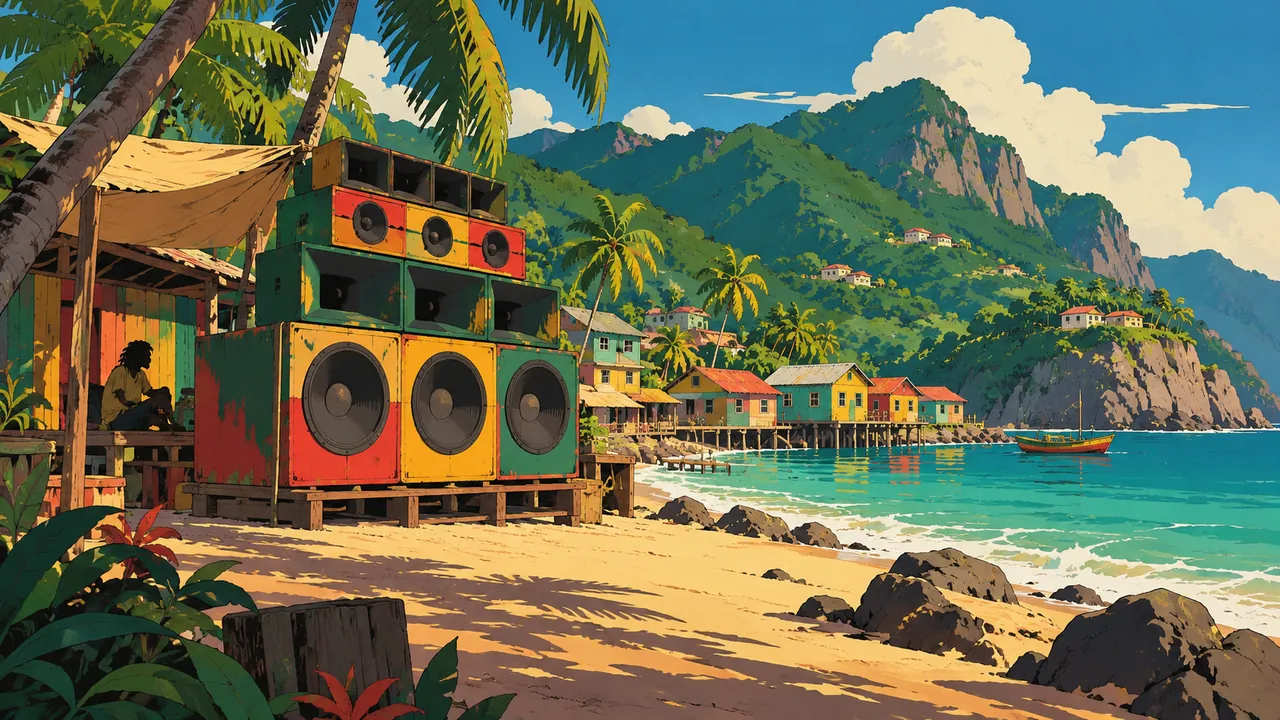
A light stroke on the offbeat, giving both protest and love a sunny ease.
- Era
- Late 1960s
- Origin
- Kingston, Jamaica
- Tempo
- 60–90 BPM
- Core instruments
- offbeat guitar · one-drop drums · deep bass · organ
AI prompt
Roots reggae, 76 BPM, short clean guitar upstrokes on the offbeats, one drop drum pattern, deep melodic bass line, organ bubble, light horn accents, warm male vocal with backing harmonies, sunny Caribbean afternoon, laid-back and uplifting
239 charactersAsk for one drop and short clean guitar upstrokes on the offbeats; write dub for more echo and electronics, dancehall for faster dance energy.
Rhythm
Guitar and keys chop short skanks on the offbeat.
Drums
One-drop drumming: kick and cross-stick land together on beat three.
Bass
Deep, melodic bass with space in it is the core.
Synths / arrangement
Offbeat guitar, organ bubble, horn accents.
Vocals
Warm storytelling vocals, often with harmonies and Jamaican patois.
Offbeat skank, one drop and heavy bass together make it recognisable.
- Period
- Late 1960s
- Regions & spread
- Kingston, Jamaica
It evolved from ska and rocksteady; Toots and the Maytals' Do the Reggay (1968) is seen as one source of the name, and Bob Marley & the Wailers took it worldwide. It is tightly linked to Rastafari faith and social protest; dub's mixing experiments and sound-system culture deeply shaped hip-hop, jungle and dubstep.
Social context
In newly independent Jamaica, youth from urban ghettos used music to voice faith, identity and resistance to oppression.
Technology
Mobile sound systems and studio dub mixing turned bass and echo into instruments.
Cultural psychology (interpretation)
Creative interpretation: a slow, steady groove doesn't rush to persuade you, yet lets the message stay with you more easily.
One Love/People Get Ready · Exodus
Bob Marley & the Wailers / Song / albumHear offbeat guitar, one-drop drums and harmonies create a relaxed, unifying feeling.
Island holidays and street gatherings
The offbeat groove relaxes a scene instantly while keeping a positive strength.
- What is Reggae?
- Reggae is a jamaican popular music genre. A light stroke on the offbeat, giving both protest and love a sunny ease. Period: Late 1960s. Regions: Kingston, Jamaica. Offbeat skank, one drop and heavy bass together make it recognisable.
- How do I write a Suno prompt for Reggae?
- Copy this full prompt:
Roots reggae, 76 BPM, short clean guitar upstrokes on the offbeats, one drop drum pattern, deep melodic bass line, organ bubble, light horn accents, warm male vocal with backing harmonies, sunny Caribbean afternoon, laid-back and uplifting. Ask for one drop and short clean guitar upstrokes on the offbeats; write dub for more echo and electronics, dancehall for faster dance energy. - What BPM and instruments does Reggae use?
- Usually 60–90 BPM. Drums: One-drop drumming: kick and cross-stick land together on beat three. Bass: Deep, melodic bass with space in it is the core. Synths / arrangement: Offbeat guitar, organ bubble, horn accents. Vocals: Warm storytelling vocals, often with harmonies and Jamaican patois.
- What Reggae music should I start with?
- Start with “One Love/People Get Ready · Exodus” by Bob Marley & the Wailers. The Key works tab notes what to listen for in each.
Sources are used to check history, categories and works. Cultural psychology, visual language, creator uses, and the instrument and mood tags in the overview are editorial interpretation and do not speak for a whole community or an artist’s sole intent. Tempo ranges are only a starting point; listen to AI examples and adjust.
- Wikipedia · Reggae ↗Works and cultural background; sound, imagery and creator uses are editorial analysis
- Wikipedia · One Love/People Get Ready ↗Works and cultural background; sound, imagery and creator uses are editorial analysis