Classic Rock / Hard Rock
Core direction of the rock family
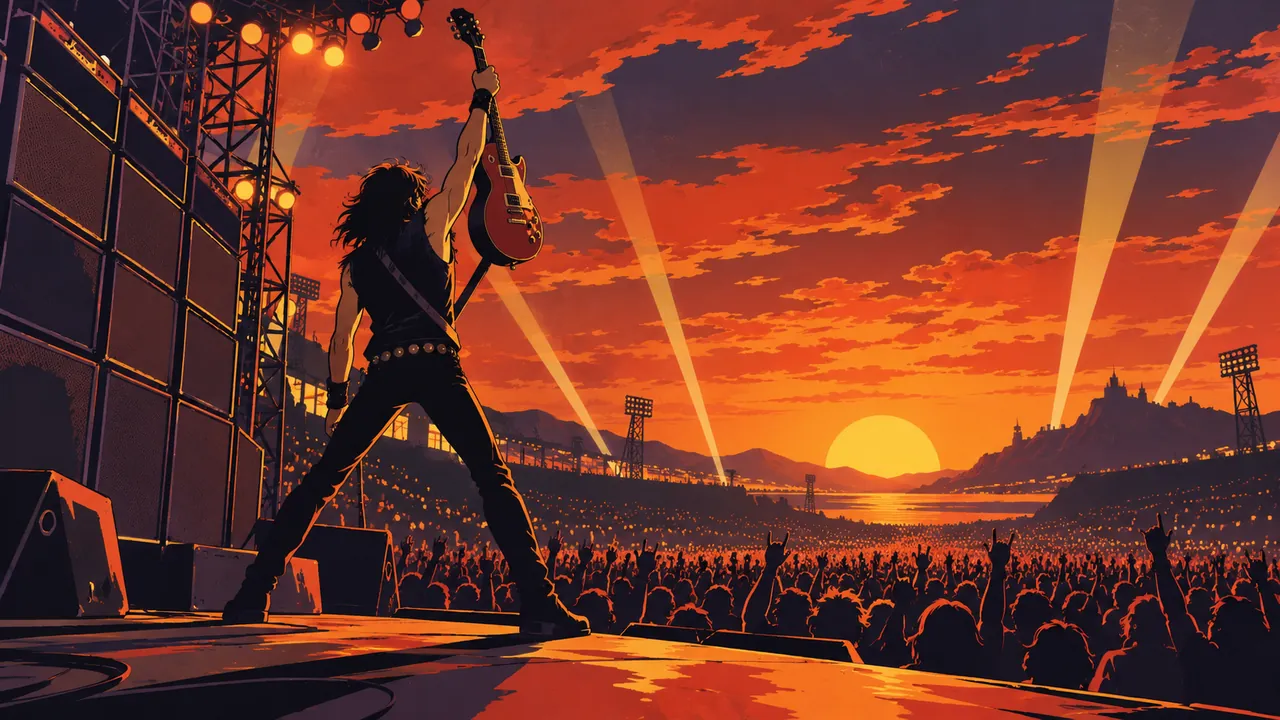
One guitar riff, a big drum kit and one voice can fill a whole stadium.
- Era
- Mid-1960s–1970s
- Origin
- UK · USA
- Tempo
- 90–140 BPM
- Core instruments
- overdriven guitar · live drums · Hammond organ
AI prompt
1970s hard rock, 120 BPM, iconic overdriven electric guitar riff, powerful live drums with tom fills, driving bass, Hammond organ swells, soaring raspy male vocal, blistering guitar solo, stadium energy, rebellious and anthemic
227 charactersPut guitar riff first and name the decade; add hard rock for weight or blues rock for vintage flavour.
Rhythm
Strong backbeat on two and four, often with a bluesy swagger.
Drums
Loud live kit with tom fills and open cymbals.
Bass
Bass doubling the riff or locking root notes to the kick.
Synths / arrangement
Overdriven guitar riffs and solos, Hammond organ, piano.
Vocals
High-powered male or female vocals, often with a rasp or wail.
A hummable guitar riff is the song's skeleton; the guitar solo is the peak.
- Period
- Peaked from the mid-1960s through the 1970s
- Regions & spread
- UK · USA
Growing out of blues and rock and roll, Led Zeppelin, The Rolling Stones, Queen and AC/DC defined riff-centred rock. Classic rock began as a radio label for the era; hard rock is the louder, heavier strand that leads straight to heavy metal.
Social context
The postwar baby-boom generation took rock as its banner of youth, rebellion and freedom.
Technology
High-powered amps, distortion and multitrack recording made guitars thicker and shows bigger.
Cultural psychology (interpretation)
Creative interpretation: a simple repeated riff works like a slogan; the louder it is, the more people shout it together.
Whole Lotta Love · Led Zeppelin II
Led Zeppelin / Song / albumHear the opening riff define the whole song in an instant, and how the middle section uses effects and space to turn psychedelic.
Highway chases and showdowns
Heavy riffs and big drums deliver energy and confidence directly.
- What is Classic Rock / Hard Rock?
- Classic Rock / Hard Rock is a core direction of the rock family. One guitar riff, a big drum kit and one voice can fill a whole stadium. Period: Peaked from the mid-1960s through the 1970s. Regions: UK, USA. A hummable guitar riff is the song's skeleton; the guitar solo is the peak.
- How do I write a Suno prompt for Classic Rock / Hard Rock?
- Copy this full prompt:
1970s hard rock, 120 BPM, iconic overdriven electric guitar riff, powerful live drums with tom fills, driving bass, Hammond organ swells, soaring raspy male vocal, blistering guitar solo, stadium energy, rebellious and anthemic. Put guitar riff first and name the decade; add hard rock for weight or blues rock for vintage flavour. - What BPM and instruments does Classic Rock / Hard Rock use?
- Usually 90–140 BPM. Drums: Loud live kit with tom fills and open cymbals. Bass: Bass doubling the riff or locking root notes to the kick. Synths / arrangement: Overdriven guitar riffs and solos, Hammond organ, piano. Vocals: High-powered male or female vocals, often with a rasp or wail.
- What Classic Rock / Hard Rock music should I start with?
- Start with “Whole Lotta Love · Led Zeppelin II” by Led Zeppelin. The Key works tab notes what to listen for in each.
- What styles are similar to Classic Rock / Hard Rock?
- Surf Rock Same branch; Rock 'n' Roll / Rockabilly Same branch; Hardstyle Similar mood · Groove & energy; Trance Similar mood · Groove & energy
Sources are used to check history, categories and works. Cultural psychology, visual language, creator uses, and the instrument and mood tags in the overview are editorial interpretation and do not speak for a whole community or an artist’s sole intent. Tempo ranges are only a starting point; listen to AI examples and adjust.
- Wikipedia · Hard rock ↗Works and cultural background; sound, imagery and creator uses are editorial analysis
- Wikipedia · Whole Lotta Love ↗Works and cultural background; sound, imagery and creator uses are editorial analysis