Metalcore
Fusion of metal and hardcore punk
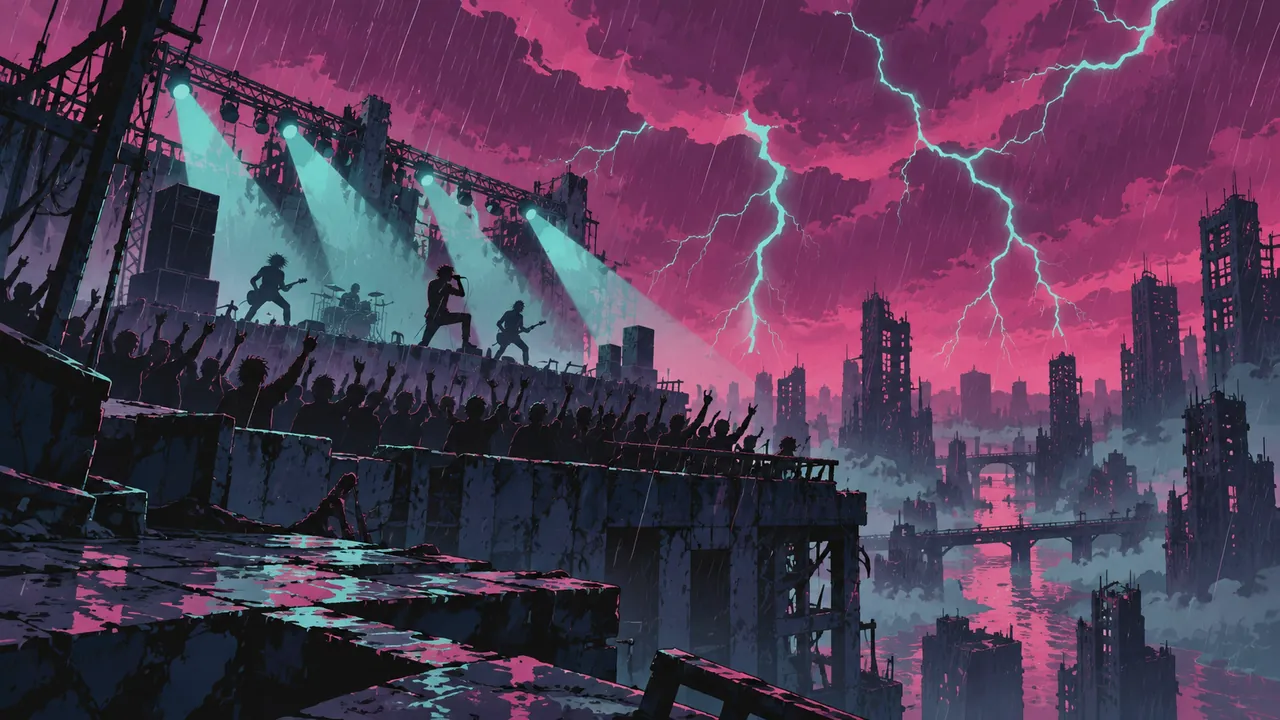
Screams tear the wound open; the clean-sung chorus pulls you back.
- Era
- From the 1990s
- Origin
- US Northeast
- Tempo
- 120–180 BPM
- Core instruments
- drop-tuned guitar · double kick · screams & cleans
AI prompt
Modern metalcore, 150 BPM, drop-tuned high-gain guitar riffs, tight double kick drums, aggressive screamed verses, soaring melodic clean-sung chorus, crushing half-time breakdown with sub drop, subtle electronic textures, cathartic and intense
243 charactersAsk for both screamed verses and clean chorus and mark where the breakdown goes; add electronicore for more electronics.
Rhythm
Fast syncopated riffs alternating with crushing half-time breakdowns.
Drums
Double kick, blast beats and precisely synced breakdown hits.
Bass
Low-tuned bass locked with guitars, with sub drops in breakdowns.
Synths / arrangement
Low-tuned distorted guitars, melodic-death-style leads; modern work often adds electronics.
Vocals
Screamed verses and clean-sung choruses.
The scream-clean contrast and the breakdown are its core identifiers.
- Period
- Formed in the 1990s, widely popular in the 2000s
- Regions & spread
- The US Northeast · UK, Japan and worldwide
It joins hardcore punk's live energy with metal's technical riffs. Killswitch Engage and others set the screamed-verse, clean-chorus template and the breakdown; Bring Me the Horizon and Japan's Crossfaith and Crystal Lake pushed it further, and it often appears in game and anime music.
Social context
The mosh culture of hardcore shows and emotional lyrics gave young fans a place to belong.
Technology
Modern high gain and precise editing make riffs extremely tight; low-tuned guitars create massive low end.
Cultural psychology (interpretation)
Creative interpretation: screams and clean singing are like two inner voices arguing, reconciled in the chorus.
The End of Heartache
Killswitch Engage / Song / albumHear screamed verses turn into a melodic clean chorus, then where the heavy breakdowns land between sections.
A boss's second phase or a character's awakening
The breakdown pushes power to the limit while the clean chorus gives an emotional outlet.
- What is Metalcore?
- Metalcore is a fusion of metal and hardcore punk. Screams tear the wound open; the clean-sung chorus pulls you back. Period: Formed in the 1990s, widely popular in the 2000s. Regions: The US Northeast, UK, Japan and worldwide. The scream-clean contrast and the breakdown are its core identifiers.
- How do I write a Suno prompt for Metalcore?
- Copy this full prompt:
Modern metalcore, 150 BPM, drop-tuned high-gain guitar riffs, tight double kick drums, aggressive screamed verses, soaring melodic clean-sung chorus, crushing half-time breakdown with sub drop, subtle electronic textures, cathartic and intense. Ask for both screamed verses and clean chorus and mark where the breakdown goes; add electronicore for more electronics. - What BPM and instruments does Metalcore use?
- Usually 120–180 BPM, breakdowns drop to half time. Drums: Double kick, blast beats and precisely synced breakdown hits. Bass: Low-tuned bass locked with guitars, with sub drops in breakdowns. Synths / arrangement: Low-tuned distorted guitars, melodic-death-style leads; modern work often adds electronics. Vocals: Screamed verses and clean-sung choruses.
- What Metalcore music should I start with?
- Start with “The End of Heartache” by Killswitch Engage. The Key works tab notes what to listen for in each.
- What styles are similar to Metalcore?
- Nu Metal Same branch; Deathcore Same branch; Electronicore Same branch; Kawaii Metal Same branch
Sources are used to check history, categories and works. Cultural psychology, visual language, creator uses, and the instrument and mood tags in the overview are editorial interpretation and do not speak for a whole community or an artist’s sole intent. Tempo ranges are only a starting point; listen to AI examples and adjust.
- Wikipedia · Metalcore ↗Works and cultural background; sound, imagery and creator uses are editorial analysis
- Wikipedia · The End of Heartache ↗Works and cultural background; sound, imagery and creator uses are editorial analysis