Disco
Dance genre and nightclub culture
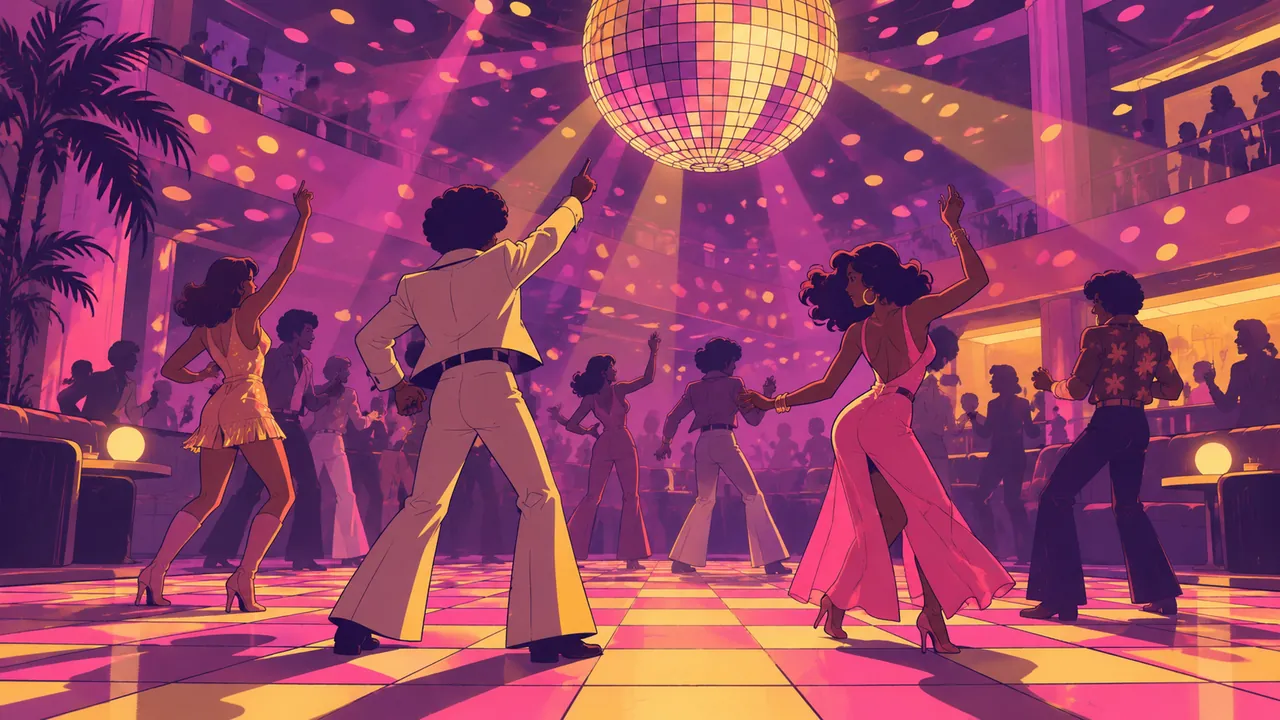
Four-on-the-floor and shimmering strings, inviting everyone to be the star of the same night.
- Era
- 1970s
- Origin
- New York · Europe
- Tempo
- 110–130 BPM
- Core instruments
- strings · octave bass · rhythm guitar · synths
AI prompt
Disco, 120 BPM, four-on-the-floor kick with offbeat open hi-hats, octave-jumping bass line, lush string section, funky rhythm guitar, brass hits, soaring female vocal and group chorus, glittering 1970s dance floor, joyful
221 charactersFor classic disco ask for strings and rhythm guitar; for a modern take write nu-disco with synths, but keep the octave bass.
Rhythm
Four-on-the-floor kick with offbeat open hi-hats.
Drums
Steady kick, open hats, claps and percussion fills.
Bass
Octave-jumping bass lines.
Synths / arrangement
Lush strings, horns, rhythm guitar; later synth arpeggios.
Vocals
Soaring female vocals or male falsetto with group choruses.
Glittering strings and octave bass over a steady four, written to stretch the dance floor.
- Period
- 1970s
- Regions & spread
- New York and Philadelphia, USA · Europe (Munich and others)
It rose in New York clubs among Black, Latino and LGBTQ+ crowds, drawing on soul, funk and Philly soul strings. Giorgio Moroder and Donna Summer's I Feel Love brought all-synth production that directly shaped later house and techno.
Social context
Communities shut out of the mainstream found safety, freedom and celebration in the clubs.
Technology
DJ mixing, 12-inch singles and extended mixes let dance music run all night.
Cultural psychology (interpretation)
Creative interpretation: a steady kick is a shared heartbeat that lets strangers fall into step.
I Feel Love
Donna Summer / SongHear the all-synth arpeggiated bass keep driving, and the voice seem to float above the machine pulse.
The peak of a retro party
Four-on-the-floor and strings instantly put a scene into celebration mode.
- What is Disco?
- Disco is a dance genre and nightclub culture. Four-on-the-floor and shimmering strings, inviting everyone to be the star of the same night. Period: 1970s. Regions: New York and Philadelphia, USA, Europe (Munich and others). Glittering strings and octave bass over a steady four, written to stretch the dance floor.
- How do I write a Suno prompt for Disco?
- Copy this full prompt:
Disco, 120 BPM, four-on-the-floor kick with offbeat open hi-hats, octave-jumping bass line, lush string section, funky rhythm guitar, brass hits, soaring female vocal and group chorus, glittering 1970s dance floor, joyful. For classic disco ask for strings and rhythm guitar; for a modern take write nu-disco with synths, but keep the octave bass. - What BPM and instruments does Disco use?
- Usually 110–130 BPM. Drums: Steady kick, open hats, claps and percussion fills. Bass: Octave-jumping bass lines. Synths / arrangement: Lush strings, horns, rhythm guitar; later synth arpeggios. Vocals: Soaring female vocals or male falsetto with group choruses.
- What Disco music should I start with?
- Start with “I Feel Love” by Donna Summer. The Key works tab notes what to listen for in each.
- What styles are similar to Disco?
- Funk Same branch; Electro Swing Similar mood · Bright & sweet; Dance-Pop Similar mood · Bright & sweet; K-pop Similar mood · Bright & sweet
Sources are used to check history, categories and works. Cultural psychology, visual language, creator uses, and the instrument and mood tags in the overview are editorial interpretation and do not speak for a whole community or an artist’s sole intent. Tempo ranges are only a starting point; listen to AI examples and adjust.
- Wikipedia · Disco ↗Works and cultural background; sound, imagery and creator uses are editorial analysis
- Wikipedia · I Feel Love ↗Works and cultural background; sound, imagery and creator uses are editorial analysis