Swing / Big Band
Jazz branch and ballroom music
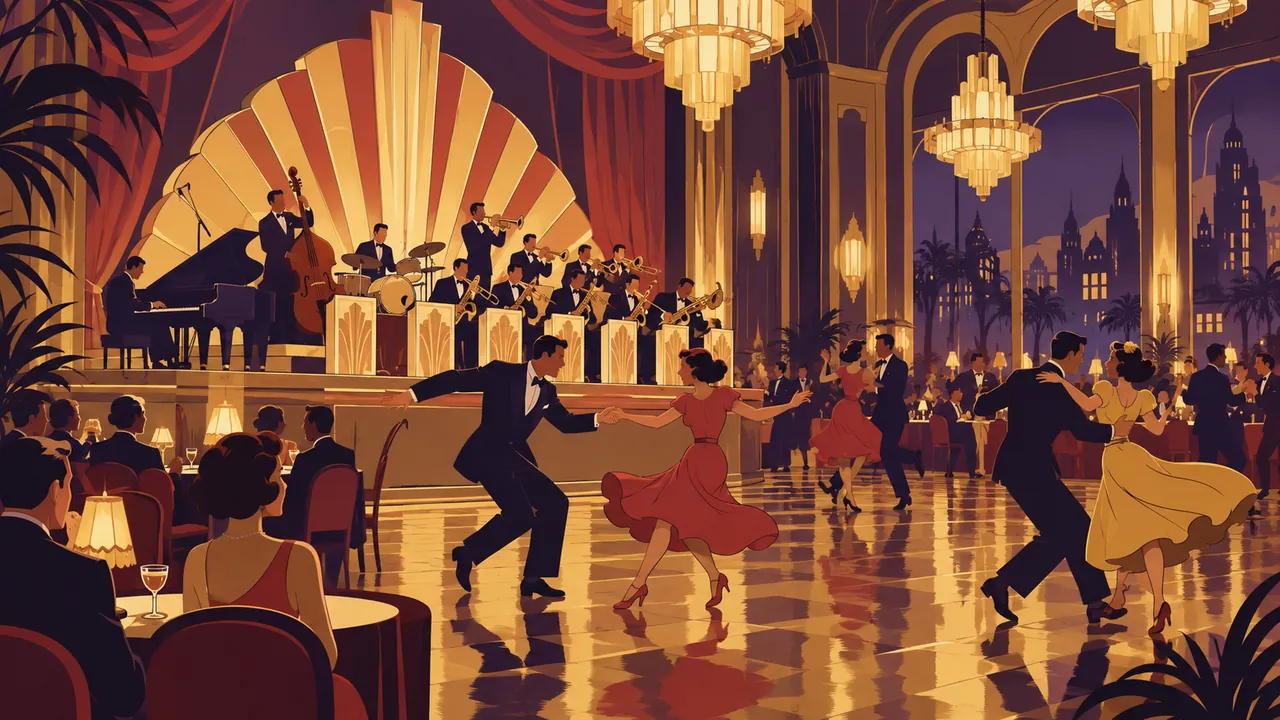
A whole horn section swinging together, so nobody on the dance floor can stay still.
- Era
- 1930s–1940s
- Origin
- New York · Kansas City
- Tempo
- 140–220 BPM
- Core instruments
- brass section · clarinet · upright bass · rhythm guitar
AI prompt
Big band swing, 170 BPM, punchy brass and saxophone section riffs with call and response, walking upright bass, four-to-the-bar rhythm guitar, driving hi-hat, clarinet solo break, instrumental, 1930s ballroom, joyful and glamorous
230 charactersAsk for big band and brass section, then name one solo instrument; for a modern twist write electro swing, though that is a different sound.
Rhythm
Even four-to-the-bar pulse with a strong swing.
Drums
Hi-hat and snare drive it; Krupa-style tom breaks create climaxes.
Bass
Upright bass walks steadily alongside rhythm guitar.
Synths / arrangement
Trumpet, trombone and sax sections in unison riffs and call and response, with piano fills.
Vocals
Crooners or jazz singers, or fully instrumental.
Short punchy horn riffs stack up, sections sparring like rivals.
- Period
- Peaked from the mid-1930s to the mid-1940s
- Regions & spread
- New York, Kansas City and Chicago, USA
Big bands led by Duke Ellington, Count Basie and Benny Goodman made jazz the dance music of the day. Written arrangements, call and response between brass and sax sections, and solo breaks are key; later electro swing is a modern remix, not the same historical era.
Social context
The Depression and wartime craved collective joy in the ballroom, and the Lindy Hop took off.
Technology
Live radio broadcasts and records turned big bands into a national craze.
Cultural psychology (interpretation)
Creative interpretation: a dozen players relaxed in perfect unison move bodies more than any one virtuoso.
Sing, Sing, Sing (With a Swing)
Benny Goodman / SongHear the tom-tom pattern run through the whole piece, while brass and clarinet solos push the floor higher layer by layer.
Take the "A" Train
Duke Ellington Orchestra / SongCompare a lighter, more elegant arrangement: the sax section melody and the brass replies.
A vintage hotel ball or dress-up party
Unison horns instantly establish period and celebration.
- What is Swing / Big Band?
- Swing / Big Band is a jazz branch and ballroom music. A whole horn section swinging together, so nobody on the dance floor can stay still. Period: Peaked from the mid-1930s to the mid-1940s. Regions: New York, Kansas City and Chicago, USA. Short punchy horn riffs stack up, sections sparring like rivals.
- How do I write a Suno prompt for Swing / Big Band?
- Copy this full prompt:
Big band swing, 170 BPM, punchy brass and saxophone section riffs with call and response, walking upright bass, four-to-the-bar rhythm guitar, driving hi-hat, clarinet solo break, instrumental, 1930s ballroom, joyful and glamorous. Ask for big band and brass section, then name one solo instrument; for a modern twist write electro swing, though that is a different sound. - What BPM and instruments does Swing / Big Band use?
- Dance numbers usually 140–220 BPM. Drums: Hi-hat and snare drive it; Krupa-style tom breaks create climaxes. Bass: Upright bass walks steadily alongside rhythm guitar. Synths / arrangement: Trumpet, trombone and sax sections in unison riffs and call and response, with piano fills. Vocals: Crooners or jazz singers, or fully instrumental.
- What Swing / Big Band music should I start with?
- Start with “Sing, Sing, Sing (With a Swing)” by Benny Goodman; “Take the "A" Train” by Duke Ellington Orchestra. The Key works tab notes what to listen for in each.
- What styles are similar to Swing / Big Band?
- Ragtime Same branch; Gypsy Jazz Same branch; Electro Swing Similar mood · Bright & sweet; Rock 'n' Roll / Rockabilly Similar mood · Nostalgic
Sources are used to check history, categories and works. Cultural psychology, visual language, creator uses, and the instrument and mood tags in the overview are editorial interpretation and do not speak for a whole community or an artist’s sole intent. Tempo ranges are only a starting point; listen to AI examples and adjust.
- Wikipedia · Swing music ↗Works and cultural background; sound, imagery and creator uses are editorial analysis
- Wikipedia · Sing Sing Sing ↗Works and cultural background; sound, imagery and creator uses are editorial analysis