Arabic Pop
Middle Eastern pop
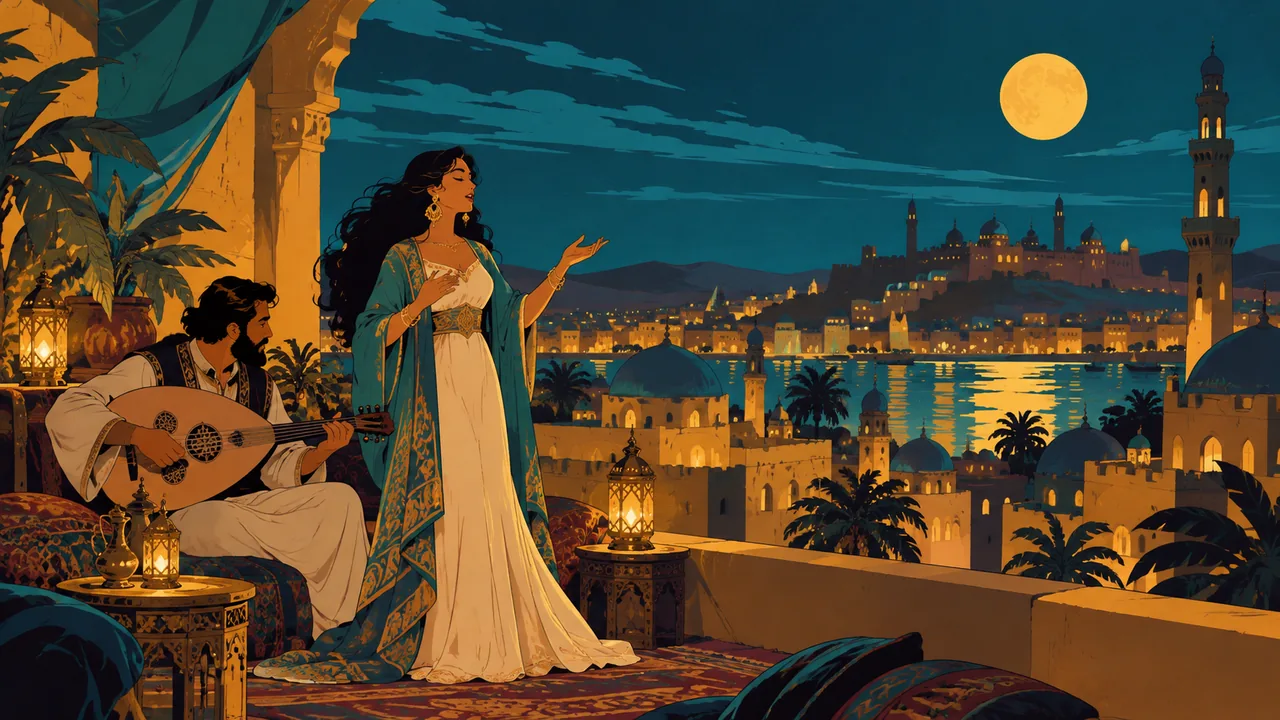
Oud, darbuka and ornamented singing with modern pop production, a desert city night.
- Era
- Mid-20th century–present
- Origin
- Cairo · Beirut · the Gulf
- Tempo
- 90–130 BPM
- Core instruments
- oud · darbuka · qanun
AI prompt
Arabic pop, 110 BPM, maqsum rhythm on darbuka and riq, oud and qanun melodies in maqam scale, ney flute, lush strings, synth bass, passionate male vocals in Arabic with rich ornamentation, glamorous desert city night
216 charactersWrite Arabic pop + oud + darbuka; more classical is classical Arabic, more dance is Arabic house.
Rhythm
Arabic rhythmic modes like maqsum with pop structure.
Drums
Darbuka, riq and modern kit.
Bass
Synth bass.
Synths / arrangement
Oud, qanun, ney flute, strings.
Vocals
Arabic singing with rich ornaments and microtones.
The oud plays a maqam line, the darbuka drives "dum-tek-tek" and the voice winds around it.
- Period
- From the mid-20th century; modernised after the 1990s
- Regions & spread
- Cairo, Egypt and Beirut, Lebanon · Gulf states
Umm Kulthum and Fairuz represent the classical era; Amr Diab, Nancy Ajram and Elissa modernised Arabic pop, fusing Western beats with Arabic maqam scales.
Social context
Satellite TV and music channels let pan-Arab pop stars cross borders.
Technology
Synths and recording tech can emulate quarter-tone Arabic scales.
Cultural psychology (interpretation)
Creative interpretation: Microtones and ornamentation bring exotic, intense emotional tension.
Nour El Ain
Amr Diab / SongHear Arabic melody with Western pop arrangement (Mediterranean pop).
Fairuz
Fairuz / Artist / BandCompare more classical, poetic Lebanese singing.
Desert adventures, Middle Eastern cities and exotic romance
Oud and darbuka establish regional atmosphere instantly.
- What is Arabic Pop?
- Arabic Pop is a middle Eastern pop. Oud, darbuka and ornamented singing with modern pop production, a desert city night. Period: From the mid-20th century; modernised after the 1990s. Regions: Cairo, Egypt and Beirut, Lebanon, Gulf states. The oud plays a maqam line, the darbuka drives "dum-tek-tek" and the voice winds around it.
- How do I write a Suno prompt for Arabic Pop?
- Copy this full prompt:
Arabic pop, 110 BPM, maqsum rhythm on darbuka and riq, oud and qanun melodies in maqam scale, ney flute, lush strings, synth bass, passionate male vocals in Arabic with rich ornamentation, glamorous desert city night. Write Arabic pop + oud + darbuka; more classical is classical Arabic, more dance is Arabic house. - What BPM and instruments does Arabic Pop use?
- Usually 90–130 BPM. Drums: Darbuka, riq and modern kit. Bass: Synth bass. Synths / arrangement: Oud, qanun, ney flute, strings. Vocals: Arabic singing with rich ornaments and microtones.
- What Arabic Pop music should I start with?
- Start with “Nour El Ain” by Amr Diab; “Fairuz” by Fairuz. The Key works tab notes what to listen for in each.
- What styles are similar to Arabic Pop?
- Bollywood Same branch; Celtic / Irish Folk Similar mood · Warm & intimate; Bachata Similar mood · Warm & intimate; Amapiano Similar mood · Warm & intimate
Sources are used to check history, categories and works. Cultural psychology, visual language, creator uses, and the instrument and mood tags in the overview are editorial interpretation and do not speak for a whole community or an artist’s sole intent. Tempo ranges are only a starting point; listen to AI examples and adjust.
- Wikipedia · Arabic pop music ↗Works and cultural background; sound, imagery and creator uses are editorial analysis
- Wikipedia · Amr Diab ↗Works and cultural background; sound, imagery and creator uses are editorial analysis