Opera
Classical vocal music
Bel canto voices filling a whole theatre without mics, with orchestra telling of love, hate and fate.
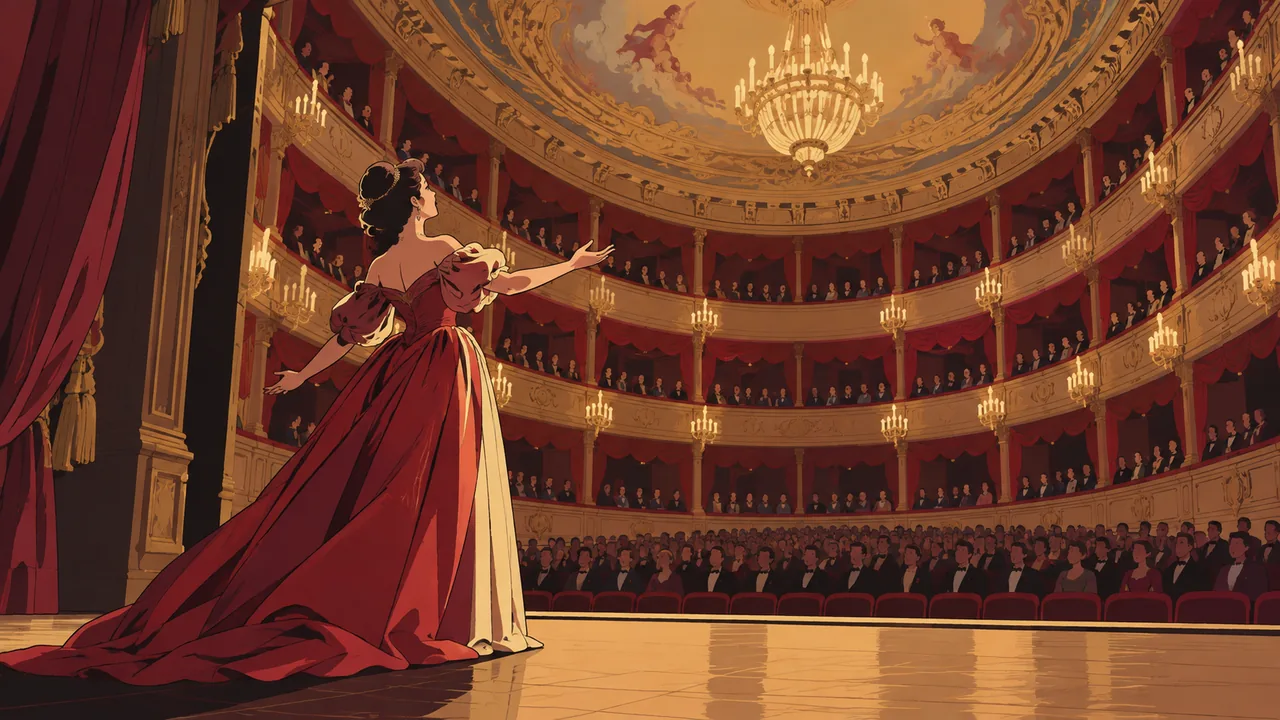
- Era
- 17th century–present
- Origin
- Italy · Germany · France
- Tempo
- 50–120 BPM
- Core instruments
- orchestra · operatic voice · harp
AI prompt
Opera aria, 70 BPM with rubato, full romantic orchestra with harp, operatic tenor singing in Italian, dramatic crescendo to a sustained high note climax, chorus answering, grand Italian opera house, tragic and romantic
218 charactersWrite opera aria + a voice type (soprano / tenor) + Italian; for pop crossover write classical crossover.
Rhythm
Recitative alternating with arias, lots of rubato.
Drums
Orchestral percussion, timpani.
Bass
Low strings.
Synths / arrangement
Full orchestra, harp.
Vocals
Operatic soprano, tenor, baritone and chorus.
The tenor sings a final high note over the full orchestra, ringing for ages.
- Period
- From around 1600, peaking in the 19th century
- Regions & spread
- Italy · Germany and France
Mozart, Verdi, Puccini and Wagner are key; arias like "Nessun dorma" and the "Habanera" are widely known. Crossover singers (Andrea Bocelli, Sarah Brightman) brought operatic voice to wider audiences.
Social context
Theatre culture of the aristocracy and rising middle class.
Technology
Bel canto resonance technique lets the voice cut through the orchestra.
Cultural psychology (interpretation)
Creative interpretation: Hugely projected voices and dramatic conflict blow human emotion up to mythic scale.
Nessun dorma
Giacomo Puccini / WorkHear a tenor aria break through at the climax.
Habanera (Carmen)
Georges Bizet / WorkCompare a sultrier mezzo aria with dance rhythm.
Tragic climaxes, moments of fate and lavish scenes
Operatic voice and orchestra push emotion to the top instantly.
- What is Opera?
- Opera is a classical vocal music. Bel canto voices filling a whole theatre without mics, with orchestra telling of love, hate and fate. Period: From around 1600, peaking in the 19th century. Regions: Italy, Germany and France. The tenor sings a final high note over the full orchestra, ringing for ages.
- How do I write a Suno prompt for Opera?
- Copy this full prompt:
Opera aria, 70 BPM with rubato, full romantic orchestra with harp, operatic tenor singing in Italian, dramatic crescendo to a sustained high note climax, chorus answering, grand Italian opera house, tragic and romantic. Write opera aria + a voice type (soprano / tenor) + Italian; for pop crossover write classical crossover. - What BPM and instruments does Opera use?
- Usually 50–120 BPM, flexing with the drama. Drums: Orchestral percussion, timpani. Bass: Low strings. Synths / arrangement: Full orchestra, harp. Vocals: Operatic soprano, tenor, baritone and chorus.
- What Opera music should I start with?
- Start with “Nessun dorma” by Giacomo Puccini; “Habanera (Carmen)” by Georges Bizet. The Key works tab notes what to listen for in each.
- What styles are similar to Opera?
- Chamber Music Same branch; Romantic Orchestral Same branch; Ballad / Power Ballad Similar mood · Warm & intimate; K-Ballad Similar mood · Melancholy & lonely
Sources are used to check history, categories and works. Cultural psychology, visual language, creator uses, and the instrument and mood tags in the overview are editorial interpretation and do not speak for a whole community or an artist’s sole intent. Tempo ranges are only a starting point; listen to AI examples and adjust.
- Wikipedia · Opera ↗Works and cultural background; sound, imagery and creator uses are editorial analysis
- Wikipedia · Nessun dorma ↗Works and cultural background; sound, imagery and creator uses are editorial analysis