Romantic Orchestral
Classical period
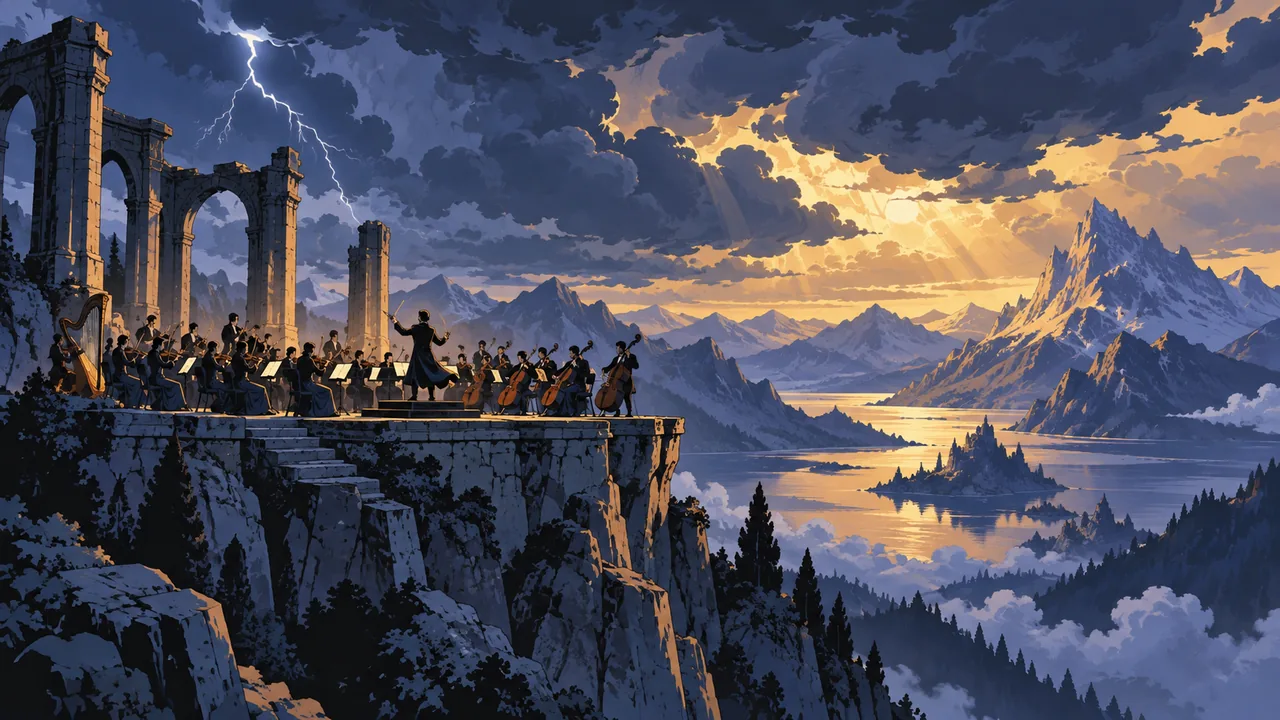
The surging passion of a large orchestra: storms, love and national epics.
- Era
- 1820–1910
- Origin
- Germany · Austria · Russia
- Tempo
- 50–140 BPM
- Core instruments
- string section · French horn · timpani · piano
AI prompt
Romantic era orchestral, 80 BPM with rubato, full symphony orchestra, sweeping lush string melody, soaring French horns, woodwind solos, harp glissandos, timpani rolls, dramatic crescendo into a passionate climax, 19th-century, epic and yearning, instrumental
259 charactersWrite romantic orchestral or late romantic symphony + sweeping strings; for piano lead write piano concerto.
Rhythm
Symphony, concerto and tone-poem forms, huge crescendos.
Drums
Timpani, bass drum and cymbals.
Bass
Double basses and tuba.
Synths / arrangement
Large strings, horns, trombones, woodwinds, harp, solo piano.
Vocals
Instrumental, sometimes chorus.
Strings sing a broad melody in unison and horns lift it at the climax.
- Period
- About 1820–1910
- Regions & spread
- Germany, Austria and Russia
Late Beethoven, Brahms, Tchaikovsky, Dvořák, Mahler and Rachmaninoff are key; it's the direct source of modern film-score language.
Social context
Individual emotion and nationalism rose in 19th-century Europe.
Technology
Improved brass and woodwinds expanded orchestral scale and colour.
Cultural psychology (interpretation)
Creative interpretation: Broad melodies and huge dynamic contrasts magnify personal feeling into destiny.
Symphony No. 6 "Pathétique"
Pyotr Ilyich Tchaikovsky / WorkHear broad string melodies and huge dynamic contrasts.
Piano Concerto No. 2
Sergei Rachmaninoff / WorkCompare the romantic dialogue of piano and orchestra.
Epic openings, turns of fate and majestic scenery
A large orchestra brings film-scale emotion.
- What is Romantic Orchestral?
- Romantic Orchestral is a classical period. The surging passion of a large orchestra: storms, love and national epics. Period: About 1820–1910. Regions: Germany, Austria and Russia. Strings sing a broad melody in unison and horns lift it at the climax.
- How do I write a Suno prompt for Romantic Orchestral?
- Copy this full prompt:
Romantic era orchestral, 80 BPM with rubato, full symphony orchestra, sweeping lush string melody, soaring French horns, woodwind solos, harp glissandos, timpani rolls, dramatic crescendo into a passionate climax, 19th-century, epic and yearning, instrumental. Write romantic orchestral or late romantic symphony + sweeping strings; for piano lead write piano concerto. - What BPM and instruments does Romantic Orchestral use?
- Usually 50–140 BPM with frequent tempo changes. Drums: Timpani, bass drum and cymbals. Bass: Double basses and tuba. Synths / arrangement: Large strings, horns, trombones, woodwinds, harp, solo piano. Vocals: Instrumental, sometimes chorus.
- What Romantic Orchestral music should I start with?
- Start with “Symphony No. 6 "Pathétique"” by Pyotr Ilyich Tchaikovsky; “Piano Concerto No. 2” by Sergei Rachmaninoff. The Key works tab notes what to listen for in each.
- What styles are similar to Romantic Orchestral?
- Opera Same branch; Chamber Music Same branch; Neoclassical / Modern Classical Piano Same branch; Ballad / Power Ballad Similar mood · Warm & intimate
Sources are used to check history, categories and works. Cultural psychology, visual language, creator uses, and the instrument and mood tags in the overview are editorial interpretation and do not speak for a whole community or an artist’s sole intent. Tempo ranges are only a starting point; listen to AI examples and adjust.
- Wikipedia · Romantic music ↗Works and cultural background; sound, imagery and creator uses are editorial analysis
- Wikipedia · Symphony No. 6 (Tchaikovsky) ↗Works and cultural background; sound, imagery and creator uses are editorial analysis