Ska Punk
Jamaican / punk fusion
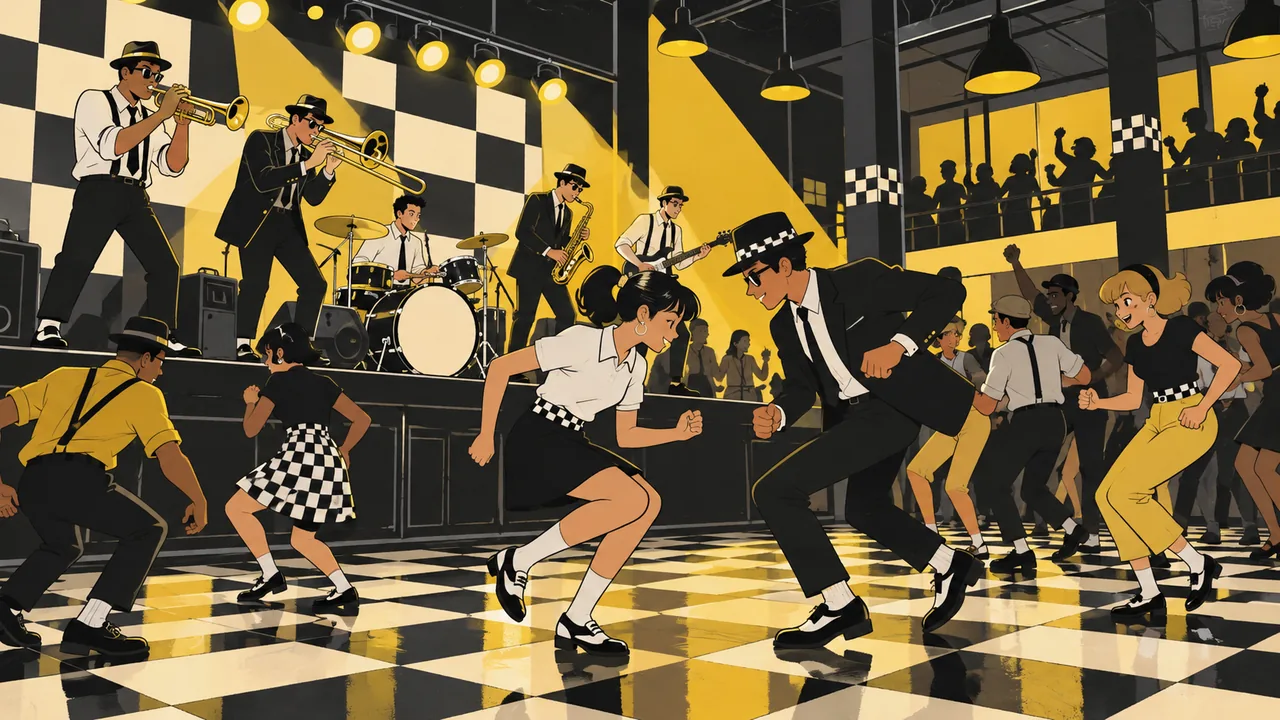
Offbeat guitar "chk-chk" plus horns, bouncy joy you dance with bent knees.
- Era
- 1960s–1990s
- Origin
- Jamaica · UK · USA
- Tempo
- 140–200 BPM
- Core instruments
- offbeat guitar · trumpet · trombone
AI prompt
Ska punk, 170 BPM, offbeat skank guitar chops, punchy trumpet and trombone horn section riffs, walking bouncing bassline, fast snare-driven drums, distorted guitars in the chorus, energetic male vocals with gang shouts, joyful and bouncy
237 charactersska gives vintage Jamaican flavour, ska punk the fast '90s version, 2 tone the British style.
Rhythm
Guitar and keys on the offbeat (skank); punk versions go faster.
Drums
Fast snare and hats, full-on in punk sections.
Bass
Walking, bouncing bass.
Synths / arrangement
Offbeat guitar, trumpet, trombone, sax unisons, distorted guitar.
Vocals
Lively male vocals and shouted gang choruses.
Over the offbeat chk-chk guitar, the horns blast a loud unison riff.
- Period
- Jamaican origins in the 1950s–'60s; UK 2 Tone in the late '70s; US ska punk in the '90s
- Regions & spread
- Kingston, Jamaica · Coventry, UK and California, USA
Ska preceded reggae, with The Skatalites as a key act; the UK 2 Tone movement (The Specials, Madness) added punk energy and anti-racist politics; in the '90s Reel Big Fish, Sublime and No Doubt made ska punk mainstream. Japan's Tokyo Ska Paradise Orchestra is also well known.
Social context
Jamaican independence optimism and the solidarity of multi-ethnic British youth.
Technology
Brass sections plus electric guitars made big sound in small clubs.
Cultural psychology (interpretation)
Creative interpretation: Offbeat rhythm puts the push on the up, making dancing feel extra light.
Sell Out
Reel Big Fish / TrackHear offbeat guitar and horn riffs collide with distorted punk choruses; The Specials provides the 2 Tone background.
The Specials
The Specials / AlbumHear 2 Tone ska's offbeat guitar, organ and punk energy.
Turn the Radio Off
Reel Big Fish / AlbumCompare the speed and horns of '90s US ska punk.
Comedy scenes, school festivals and summer parties
Bouncy offbeats and horns bring instant fun.
- What is Ska Punk?
- Ska Punk is a jamaican / punk fusion. Offbeat guitar "chk-chk" plus horns, bouncy joy you dance with bent knees. Period: Jamaican origins in the 1950s–'60s; UK 2 Tone in the late '70s; US ska punk in the '90s. Regions: Kingston, Jamaica, Coventry, UK and California, USA. Over the offbeat chk-chk guitar, the horns blast a loud unison riff.
- How do I write a Suno prompt for Ska Punk?
- Copy this full prompt:
Ska punk, 170 BPM, offbeat skank guitar chops, punchy trumpet and trombone horn section riffs, walking bouncing bassline, fast snare-driven drums, distorted guitars in the chorus, energetic male vocals with gang shouts, joyful and bouncy. ska gives vintage Jamaican flavour, ska punk the fast '90s version, 2 tone the British style. - What BPM and instruments does Ska Punk use?
- Usually 140–200 BPM. Drums: Fast snare and hats, full-on in punk sections. Bass: Walking, bouncing bass. Synths / arrangement: Offbeat guitar, trumpet, trombone, sax unisons, distorted guitar. Vocals: Lively male vocals and shouted gang choruses.
- What Ska Punk music should I start with?
- Start with “Sell Out” by Reel Big Fish; “The Specials” by The Specials; “Turn the Radio Off” by Reel Big Fish. The Key works tab notes what to listen for in each.
- What styles are similar to Ska Punk?
- Pop Punk Same branch; Punk Rock Same branch; Balkan Brass Similar mood · Bright & sweet; Japanese Idol Song Similar mood · Bright & sweet
Sources are used to check history, categories and works. Cultural psychology, visual language, creator uses, and the instrument and mood tags in the overview are editorial interpretation and do not speak for a whole community or an artist’s sole intent. Tempo ranges are only a starting point; listen to AI examples and adjust.
- Wikipedia · Ska punk ↗Works and cultural background; sound, imagery and creator uses are editorial analysis
- Wikipedia · The Specials (album) ↗Works and cultural background; sound, imagery and creator uses are editorial analysis