French Chanson
French · art song
Accordion, a rainy cafe and a storytelling singer: French chanson, where the words matter more than the tune.
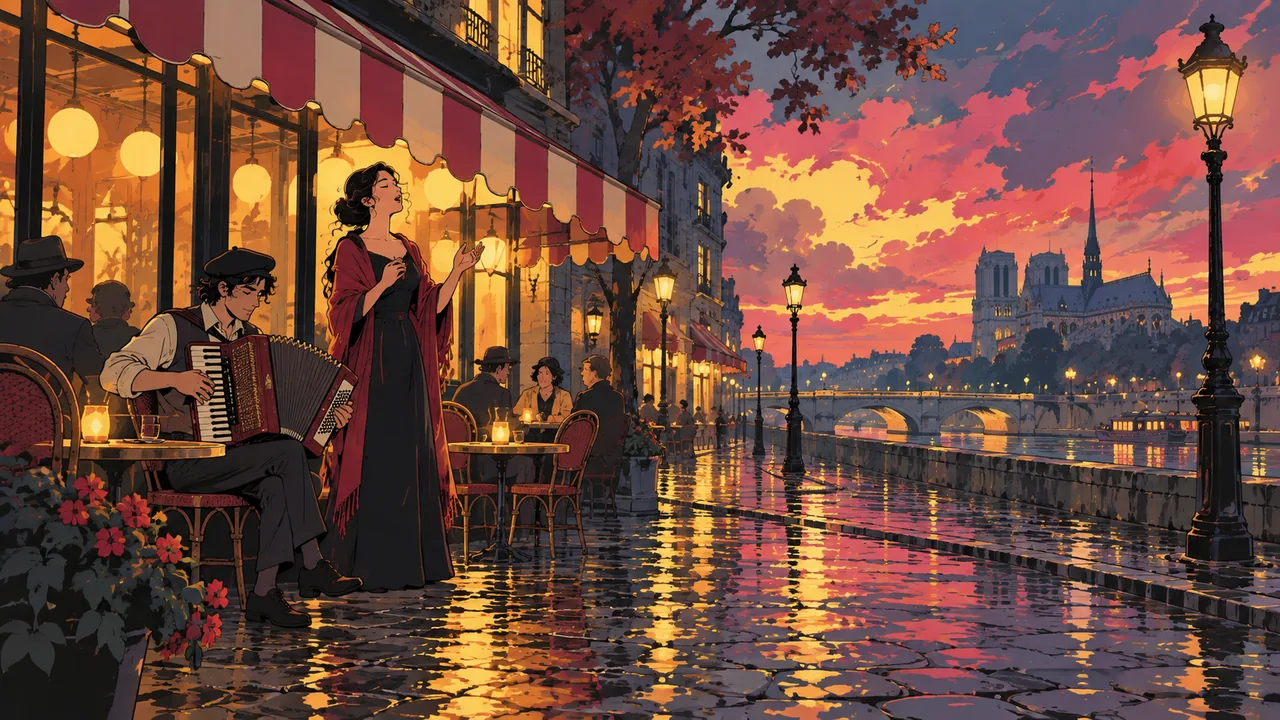
- Era
- Early 20th century–present
- Origin
- Paris · Belgium
- Tempo
- 70–130 BPM
- Core instruments
- accordion · piano · French vocals
AI prompt
French chanson, 1950s Paris, 3/4 waltz around 100 BPM, musette accordion, piano, upright bass, small string section, dramatic storytelling female vocal in French with strong vibrato, romantic and wistful, rainy cafe terrace
223 charactersWrite French chanson + accordion + waltz; for modern add modern French pop, for drama add dramatic vocal.
Rhythm
3/4 waltz or free narrative rhythm.
Drums
Light brushes or no drums.
Bass
Upright bass.
Synths / arrangement
Musette accordion, piano, small strings.
Vocals
French vocals like storytelling, intensely emotional, often with vibrato.
The accordion plays a waltz introduction, the singer almost speaks the first line, and emotion surges at the chorus.
- Period
- Early 20th century–present, golden age 1940s–60s
- Regions & spread
- Paris, France · Belgium
Chanson broadly means French song centred on lyrics and delivery; golden-age names include Édith Piaf's "La Vie en rose", Jacques Brel's "Ne me quitte pas", Charles Aznavour and Serge Gainsbourg. Accompaniment often features accordion (from the musette dance-hall tradition), piano and small strings, and the singer seems to tell a life story.
Social context
Paris music halls, Left Bank culture and postwar emotional expression.
Technology
Records, radio and music-hall tours.
Cultural psychology (interpretation)
Creative interpretation: Dramatic singing and wistful accordion make you feel inside an old French film.
La Vie en rose
Édith Piaf / SongHear chanson's classic sound: a strongly vibrato female voice and romantic melody.
Ne me quitte pas
Jacques Brel / SongCompare a more dramatic, monologue-like male chanson.
Paris streets, vintage romance and art films
One accordion waltz and it's French romance.
- What is French Chanson?
- French Chanson is a french · art song. Accordion, a rainy cafe and a storytelling singer: French chanson, where the words matter more than the tune. Period: Early 20th century–present, golden age 1940s–60s. Regions: Paris, France, Belgium. The accordion plays a waltz introduction, the singer almost speaks the first line, and emotion surges at the chorus.
- How do I write a Suno prompt for French Chanson?
- Copy this full prompt:
French chanson, 1950s Paris, 3/4 waltz around 100 BPM, musette accordion, piano, upright bass, small string section, dramatic storytelling female vocal in French with strong vibrato, romantic and wistful, rainy cafe terrace. Write French chanson + accordion + waltz; for modern add modern French pop, for drama add dramatic vocal. - What BPM and instruments does French Chanson use?
- Usually 70–130 BPM, often waltz time. Drums: Light brushes or no drums. Bass: Upright bass. Synths / arrangement: Musette accordion, piano, small strings. Vocals: French vocals like storytelling, intensely emotional, often with vibrato.
- What French Chanson music should I start with?
- Start with “La Vie en rose” by Édith Piaf; “Ne me quitte pas” by Jacques Brel. The Key works tab notes what to listen for in each.
- What styles are similar to French Chanson?
- Fado Same branch; Flamenco Same branch; Soviet Choir & March Same branch; City Pop Similar mood · Nostalgic
Sources are used to check history, categories and works. Cultural psychology, visual language, creator uses, and the instrument and mood tags in the overview are editorial interpretation and do not speak for a whole community or an artist’s sole intent. Tempo ranges are only a starting point; listen to AI examples and adjust.
- Wikipedia · Chanson ↗Works and cultural background; sound, imagery and creator uses are editorial analysis
- Wikipedia · La Vie en rose ↗Works and cultural background; sound, imagery and creator uses are editorial analysis