Glam Rock
Music movement and performance aesthetic
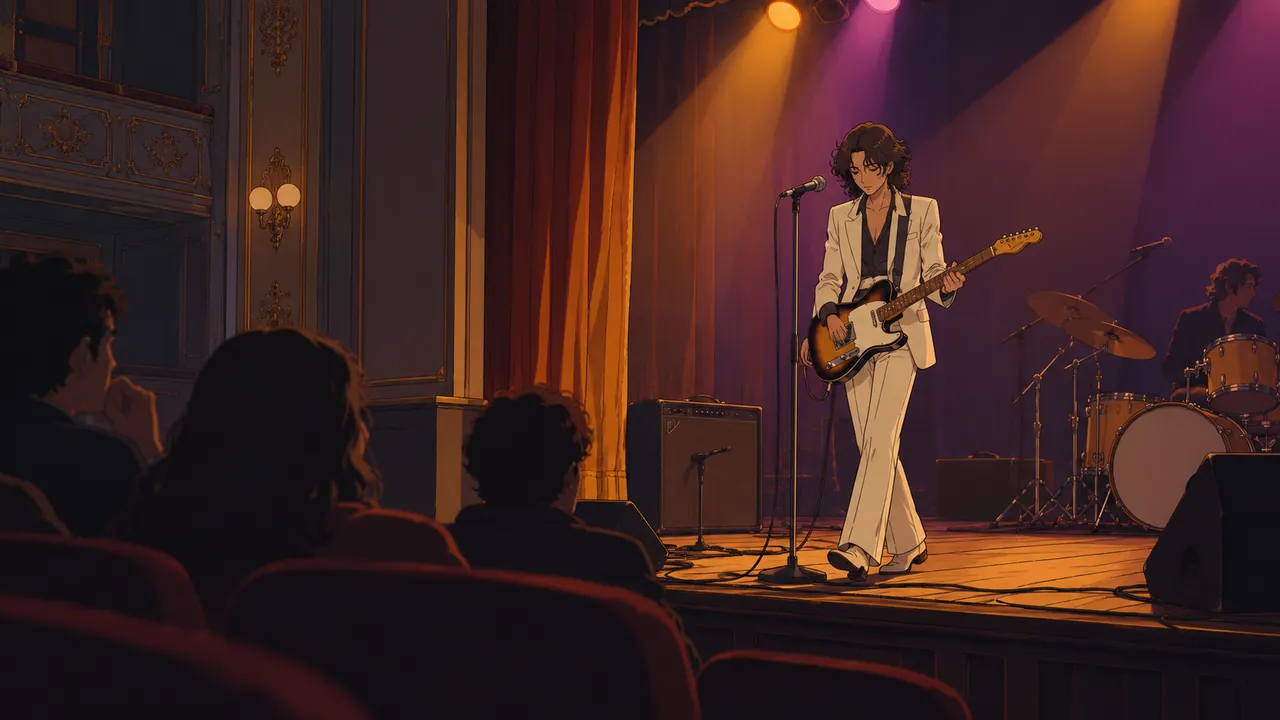
When everyday identity is too narrow, create a bolder self in the spotlight.
- Era
- Early 1970s
- Origin
- UK
- Tempo
- 100–140 BPM
- Core instruments
- stomping drums · distorted guitar · handclaps · theatrical vocals
AI prompt
1970s glam rock, 118 BPM, a short boogie electric-guitar riff, stomping live drums, elastic electric bass, tambourine accents, theatrical lead vocal and warm backing voices, memorable sing-along chorus, an original interstellar performer finding confidence onstage, swagger with a vulnerable undertone, concise song arrangement
327 charactersThis example is mid-tempo, guitar-groove glam. For something more art-rock, add keys, harmonies and section changes; for a 1980s heavy stage feel, explicitly add glam metal arrangement choices. Glamorous costumes can't stand in for sound.
Rhythm
A common entry point is direct, physical rock and roll, boogie or a stomping groove; there are also more winding art-rock arrangements.
Drums
Live kit with a clear backbeat; handclaps, tambourine or group shouts can boost stage interaction.
Bass
Bouncy electric bass locked tightly to short guitar riffs, keeping momentum and swing.
Synths / arrangement
Electric guitar riffs are a common entry point; piano, sax, keys or strings can widen the stage colours, and synths aren't required.
Vocals
Singing with a character's attitude, theatrical diction and an easy-to-remember chorus; the voice can be intimate, teasing or exaggerated, not just one style.
Hooks, bodily groove and stage persona hold each other up. Shiny costumes are only the entry point; listen to each work's arrangement and expression.
- Period
- Formed and flourished in the early 1970s
- Regions & spread
- The UK as a key centre · Mutual influence with the US rock scene
T. Rex, David Bowie, Roxy Music and others designed rock songs together with costume, make-up and stage persona. It has many sonic branches, borrowing from rock and roll while linking to musicals, film, science fiction and pop art. This page mainly covers 1970s glam rock and doesn't fold later glam metal into the same category.
Social context
Social and economic unease in early-1970s Britain met young audiences' hunger for fresh pop expression. Glamorous stages offered a shared carnival and made identity, gender expression and artificial personas things that could be tried in public.
Technology
Colour TV brought costumes, hair colour, body movement and songs into the home together; records and studio production let short, vivid hooks, guitar tones and arrangement layers carry memories beyond the stage.
Cultural psychology (interpretation)
Creative interpretation: role-play lets people briefly step past everyday rules. A carefully made stage identity can amplify desire and confidence, and also let audiences see the loneliness behind the glamour.
Bang a Gong (Get It On) · Electric Warrior
T. Rex / Song · official audioHear the bodily groove in how the short guitar riff, bass and drums lock together, then how lead and backing vocals turn a simple loop into a stage summons. It's an entry point to rock-groove glam, not all of glam's sound.
Starman · Top of the Pops (1972 performance, official release)
David Bowie / Song / TV performance · official videoWatch the melody, on-camera movement and stage persona together: how a singable song brings a strange character into viewers' everyday lives. Then compare with T. Rex to feel different expressions within one movement.
Alien performers, space radio and interstellar tours
Vivid singing and stage persona can make a strange world charming while keeping the fragility behind the exaggerated image.
A character choosing their public image for the first time
Write confidence with a steady groove and transformation with voice and performance stance; styling should answer the character's needs, not just add decoration.
Night stages, costume parties and public provocation
Direct hooks invite the audience in while a theatrical persona temporarily rewrites real identity, suiting scenes with both joy and secrets.
- What is Glam Rock?
- Glam Rock is a music movement and performance aesthetic. When everyday identity is too narrow, create a bolder self in the spotlight. Period: Formed and flourished in the early 1970s. Regions: The UK as a key centre, Mutual influence with the US rock scene. Hooks, bodily groove and stage persona hold each other up. Shiny costumes are only the entry point; listen to each work's arrangement and expression.
- How do I write a Suno prompt for Glam Rock?
- Copy this full prompt:
1970s glam rock, 118 BPM, a short boogie electric-guitar riff, stomping live drums, elastic electric bass, tambourine accents, theatrical lead vocal and warm backing voices, memorable sing-along chorus, an original interstellar performer finding confidence onstage, swagger with a vulnerable undertone, concise song arrangement. This example is mid-tempo, guitar-groove glam. For something more art-rock, add keys, harmonies and section changes; for a 1980s heavy stage feel, explicitly add glam metal arrangement choices. Glamorous costumes can't stand in for sound. - What BPM and instruments does Glam Rock use?
- No single BPM; mid-tempo stomping tracks here can start at 100–140 BPM. Drums: Live kit with a clear backbeat; handclaps, tambourine or group shouts can boost stage interaction. Bass: Bouncy electric bass locked tightly to short guitar riffs, keeping momentum and swing. Synths / arrangement: Electric guitar riffs are a common entry point; piano, sax, keys or strings can widen the stage colours, and synths aren't required. Vocals: Singing with a character's attitude, theatrical diction and an easy-to-remember chorus; the voice can be intimate, teasing or exaggerated, not just one style.
- What Glam Rock music should I start with?
- Start with “Bang a Gong (Get It On) · Electric Warrior” by T. Rex; “Starman · Top of the Pops (1972 performance, official release)” by David Bowie. The Key works tab notes what to listen for in each.
- What styles are similar to Glam Rock?
- Rock 'n' Roll / Rockabilly Same branch; Surf Rock Same branch; Classic Rock / Hard Rock Same branch; Ska Punk Similar mood · Bright & sweet
Sources are used to check history, categories and works. Cultural psychology, visual language, creator uses, and the instrument and mood tags in the overview are editorial interpretation and do not speak for a whole community or an artist’s sole intent. Tempo ranges are only a starting point; listen to AI examples and adjust.
- V&A · Glam Rock: Dandies in the Underworld ↗Museum publication notes: 1970s Britain, socio-economic context, stage theatre and cross-media aesthetics
- Simon Philo · Glam Rock: Music in Sound and Vision ↗Publisher's description and contents: sonic diversity, T. Rex and Bowie, the movement's period and later influence
- Glam Rock and the Society of the Spectacle ↗Public abstract of original historical research: colour TV and the visual expression of Bolan and Bowie; full text restricted
- David Bowie 官方 · Starman on Top of the Pops ↗1972 TV performance, official video link and how the stage persona spread
- T. Rex 官方艺术家频道 · Bang a Gong (Get It On) ↗Official audio from Rhino / Warner and original work, production and instrument credits; the listening analysis is this page's guide