Ska
Jamaican · reggae's forerunner
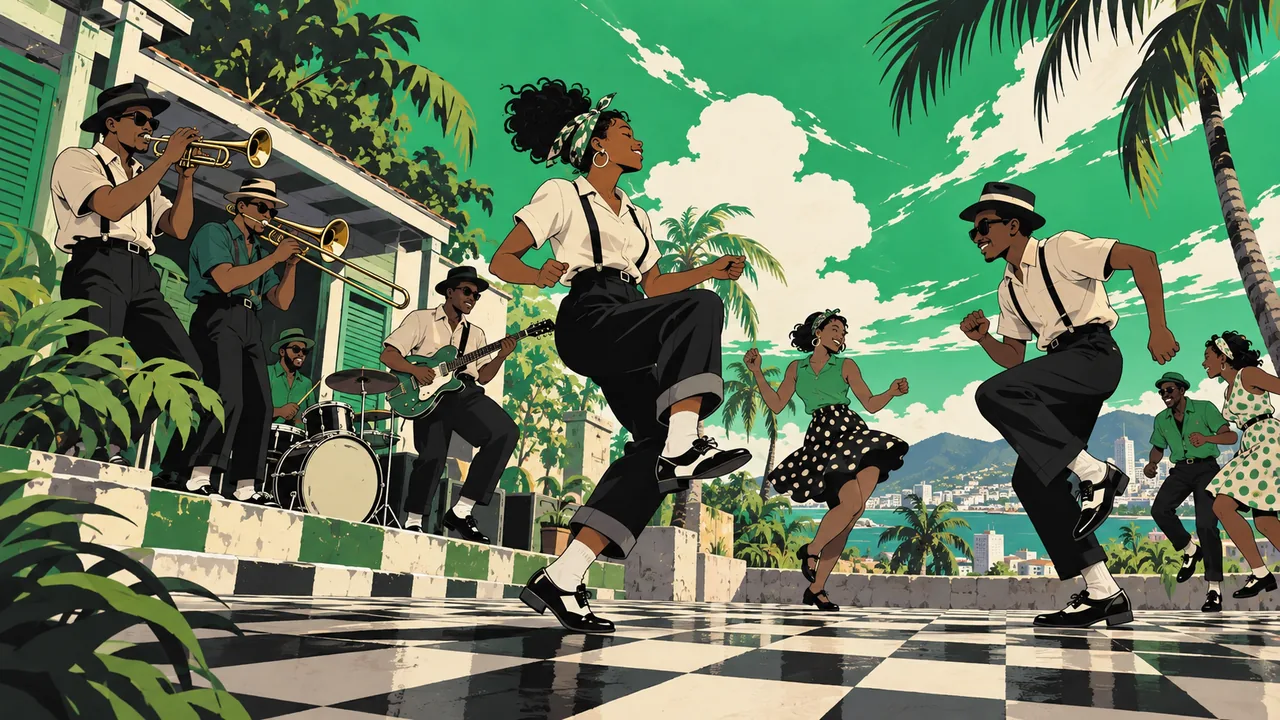
Guitar chops on the offbeat and a cheerful horn section: dance music faster than reggae and sweeter than punk.
- Era
- Late 1950s–present
- Origin
- Jamaica · UK
- Tempo
- 110–160 BPM
- Core instruments
- horn section · offbeat guitar · walking bass
AI prompt
Ska, 1960s Jamaican style, 140 BPM, offbeat guitar and piano skank, walking bass, lively drums, bright trumpet trombone and saxophone horn section, cheerful male vocal with group call-and-response, bouncy and sunny
214 charactersWrite ska + offbeat guitar + horn section; for British 2 Tone add 2 Tone and 1979, for punkier use ska punk.
Rhythm
Offbeat skank groove with walking bass.
Drums
Light, lively drums, often with snare accents.
Bass
Walking electric or upright bass.
Synths / arrangement
Offbeat guitar and piano chops with a trumpet, trombone and sax horn section.
Vocals
Light male vocals, often with group call-and-response.
The guitar chops every offbeat, the horns play a cheerful line together, and the dance floor starts skanking with knees high.
- Period
- Late 1950s–present, in three waves
- Regions & spread
- Kingston, Jamaica · United Kingdom
Ska was born in late-'50s Jamaica, blending mento, calypso and American R&B, with The Skatalites and Desmond Dekker among its leading names; it later slowed into rocksteady and reggae. In the late '70s Britain's 2 Tone movement (The Specials and others) brought a second wave, and in the '90s it fused with punk into ska punk, the third wave.
Social context
The optimism around Jamaican independence, and the unity of multi-ethnic British youth.
Technology
Jamaica's sound systems and small studios.
Cultural psychology (interpretation)
Creative interpretation: Offbeat chops make your body bounce on its own, and the horns bring pure joy.
Guns of Navarone
The Skatalites / TrackHear offbeat accompaniment, brass themes and a bouncing groove; Israelites remains a neighboring rocksteady/early-reggae comparison.
Israelites
Desmond Dekker & The Aces / SongHear the offbeat groove and vocals of the ska-to-rocksteady era.
The Specials
The Specials / Artist / BandCompare British 2 Tone second-wave ska: faster and more punky.
Summer, comedy beats and retro parties
Offbeats and horns naturally bring lightness and humour.
- What is Ska?
- Ska is a jamaican · reggae's forerunner. Guitar chops on the offbeat and a cheerful horn section: dance music faster than reggae and sweeter than punk. Period: Late 1950s–present, in three waves. Regions: Kingston, Jamaica, United Kingdom. The guitar chops every offbeat, the horns play a cheerful line together, and the dance floor starts skanking with knees high.
- How do I write a Suno prompt for Ska?
- Copy this full prompt:
Ska, 1960s Jamaican style, 140 BPM, offbeat guitar and piano skank, walking bass, lively drums, bright trumpet trombone and saxophone horn section, cheerful male vocal with group call-and-response, bouncy and sunny. Write ska + offbeat guitar + horn section; for British 2 Tone add 2 Tone and 1979, for punkier use ska punk. - What BPM and instruments does Ska use?
- Usually 110–160 BPM. Drums: Light, lively drums, often with snare accents. Bass: Walking electric or upright bass. Synths / arrangement: Offbeat guitar and piano chops with a trumpet, trombone and sax horn section. Vocals: Light male vocals, often with group call-and-response.
- What Ska music should I start with?
- Start with “Guns of Navarone” by The Skatalites; “Israelites” by Desmond Dekker & The Aces; “The Specials” by The Specials. The Key works tab notes what to listen for in each.
- What styles are similar to Ska?
- Reggae Same branch; Dancehall Same branch; Future Funk Similar mood · Nostalgic; Eurobeat Similar mood · Groove & energy
Sources are used to check history, categories and works. Cultural psychology, visual language, creator uses, and the instrument and mood tags in the overview are editorial interpretation and do not speak for a whole community or an artist’s sole intent. Tempo ranges are only a starting point; listen to AI examples and adjust.
- Wikipedia · Ska ↗Works and cultural background; sound, imagery and creator uses are editorial analysis
- Wikipedia · Israelites (song) ↗Works and cultural background; sound, imagery and creator uses are editorial analysis