Post-Hardcore
Hardcore punk strand
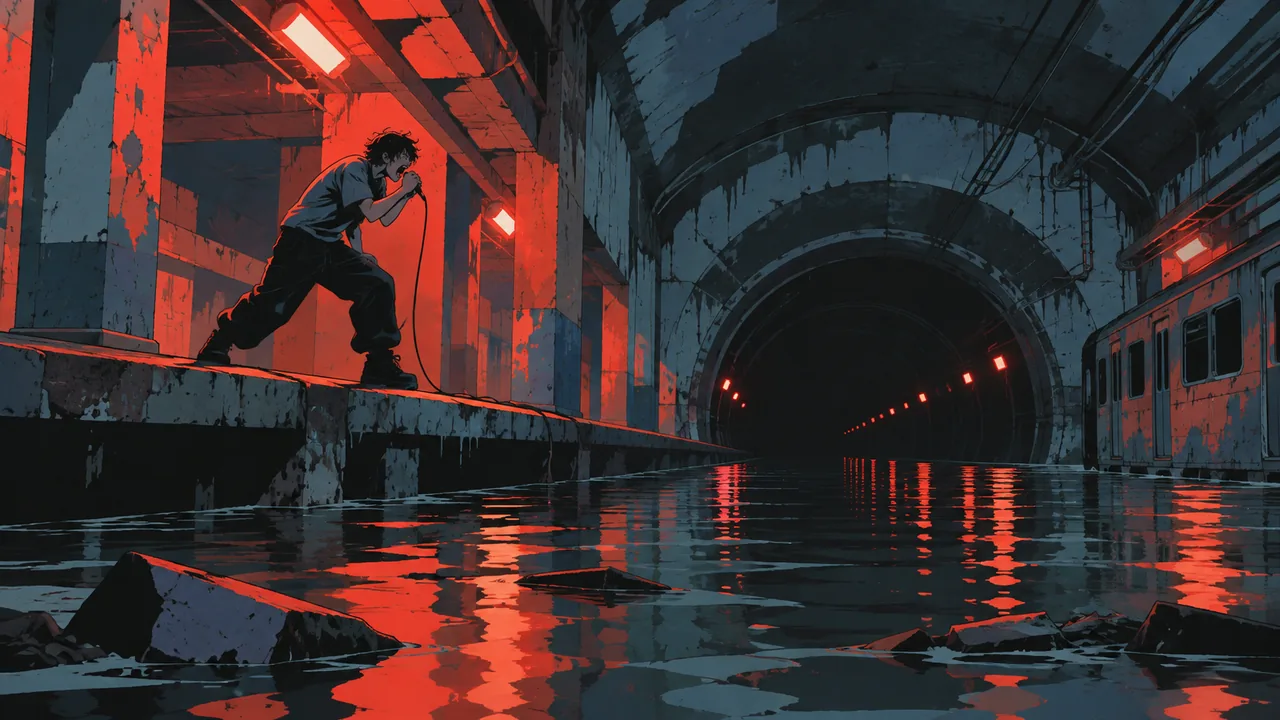
Hardcore's force plus melody and structural experiment, screams and singing tearing at each other in one song.
- Era
- 1990s–2000s
- Origin
- USA · Japan
- Tempo
- 120–180 BPM
- Core instruments
- distorted guitar · drum kit · screams and cleans
AI prompt
Post-hardcore, 150 BPM, dissonant angular guitar riffs, melodic lead lines, powerful drums with sudden stops, dynamic quiet-loud shifts, alternating raw screamed vocals and soaring clean male vocals, cathartic and emotional, 2000s
230 charactersWrite post-hardcore + screamed and clean vocals; heavier leans metalcore, cleaner leans emo.
Rhythm
Irregular forms, dynamic contrasts and sudden stops.
Drums
Powerful hardcore beats with complex fills.
Bass
Distorted bass drive.
Synths / arrangement
Dissonant riffs, melodic leads and clean passages.
Vocals
Screams alternating or duetting with melodic cleans.
A sung chorus rises only to be torn open by another voice screaming.
- Period
- Seeded mid-1980s, peaked in the 2000s
- Regions & spread
- Washington, D.C., USA
Fugazi and Hüsker Dü are early touchstones; At the Drive-In, Thursday, Thrice and Underoath made screams-plus-cleans the 2000s signature; Japan's Crossfaith, coldrain and early ONE OK ROCK were strongly influenced.
Social context
Hardcore's own reflection on formula, seeking more complex emotional expression.
Technology
Indie studios and DIY touring networks let bands grow outside the mainstream.
Cultural psychology (interpretation)
Creative interpretation: Switching between screams and singing sounds like two inner voices arguing.
Relationship of Command
At the Drive-In / AlbumHear chaotic structure, high-energy yelling and dissonant guitars.
The Artist in the Ambulance
Thrice / AlbumCompare a more melodic screams-plus-cleans approach.
Emotional breakdowns, confrontations and awakenings
Scream-versus-clean matches inner conflict.
- What is Post-Hardcore?
- Post-Hardcore is a hardcore punk strand. Hardcore's force plus melody and structural experiment, screams and singing tearing at each other in one song. Period: Seeded mid-1980s, peaked in the 2000s. Regions: Washington, D.C., USA. A sung chorus rises only to be torn open by another voice screaming.
- How do I write a Suno prompt for Post-Hardcore?
- Copy this full prompt:
Post-hardcore, 150 BPM, dissonant angular guitar riffs, melodic lead lines, powerful drums with sudden stops, dynamic quiet-loud shifts, alternating raw screamed vocals and soaring clean male vocals, cathartic and emotional, 2000s. Write post-hardcore + screamed and clean vocals; heavier leans metalcore, cleaner leans emo. - What BPM and instruments does Post-Hardcore use?
- Usually 120–180 BPM. Drums: Powerful hardcore beats with complex fills. Bass: Distorted bass drive. Synths / arrangement: Dissonant riffs, melodic leads and clean passages. Vocals: Screams alternating or duetting with melodic cleans.
- What Post-Hardcore music should I start with?
- Start with “Relationship of Command” by At the Drive-In; “The Artist in the Ambulance” by Thrice. The Key works tab notes what to listen for in each.
- What styles are similar to Post-Hardcore?
- Punk Rock Same branch; Hardcore Punk Same branch; Emo Same branch; Grunge Similar mood · Rebellious & bold
Sources are used to check history, categories and works. Cultural psychology, visual language, creator uses, and the instrument and mood tags in the overview are editorial interpretation and do not speak for a whole community or an artist’s sole intent. Tempo ranges are only a starting point; listen to AI examples and adjust.
- Wikipedia · Post-hardcore ↗Works and cultural background; sound, imagery and creator uses are editorial analysis
- Wikipedia · Relationship of Command ↗Works and cultural background; sound, imagery and creator uses are editorial analysis