Soviet Choir & March
Choir & march · Russian / Soviet
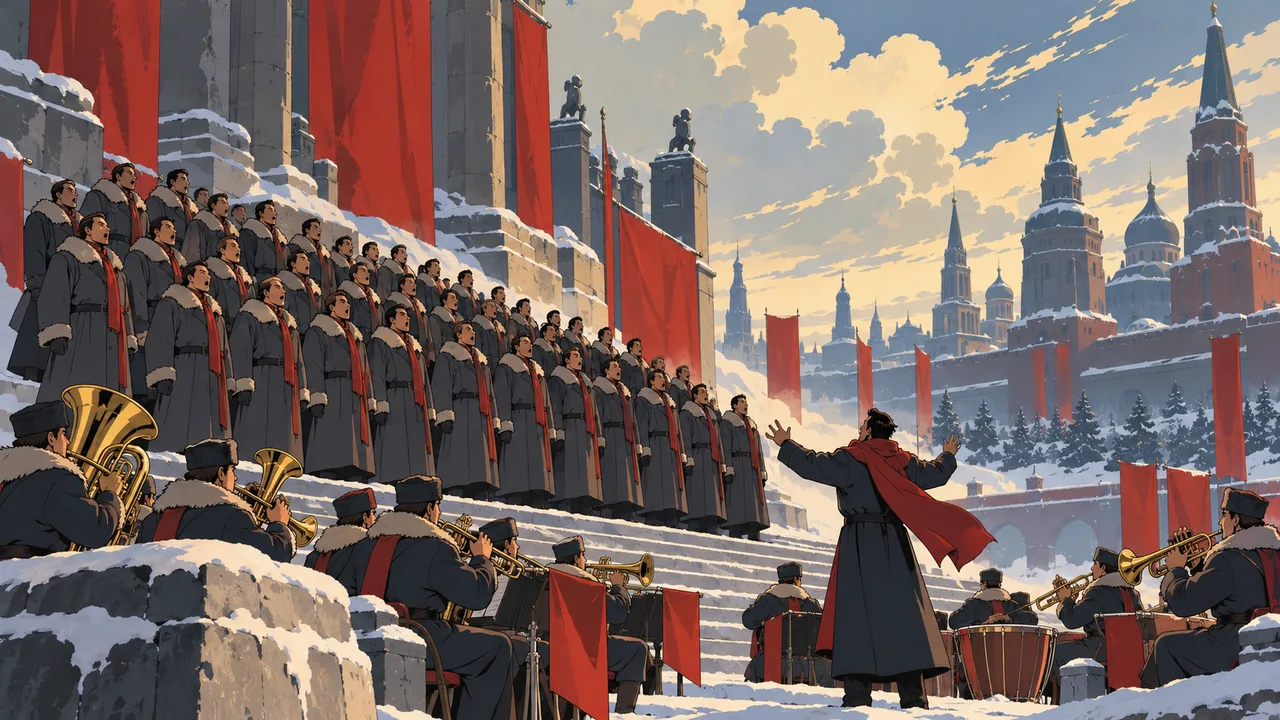
A wall of bass from dozens of male voices: brass, snare and a solemn melody, as if a whole square were breathing.
- Era
- Late 1920s–1980s
- Origin
- Soviet Union / Russia
- Tempo
- 70–120 BPM
- Core instruments
- male choir · brass band · snare drum
AI prompt
Soviet-style Russian male choir, 96 BPM military march, massive deep basso profundo choir singing in Russian, tenor soloist leading, brass band and snare drum rolls, tuba and double bass, solemn, mighty and tragic, snowy winter square
234 charactersWrite Russian male choir or Soviet choir + basso profundo + military march; for something more lyrical drop march and add slow lyrical.
Rhythm
Steady march duple or quadruple time, with slow lyrical choral passages too.
Drums
Snare, bass drum and cymbals.
Bass
Very deep basso profundo voices with tuba and double bass.
Synths / arrangement
Brass band and strings, sometimes accordion or balalaika.
Vocals
Large Russian male choir, a tenor soloist leading and the full choir answering.
After a snare roll, a hundred male voices enter together in the deepest register, and the brass lifts behind them.
- Period
- From the late 1920s, peaking in the Second World War era
- Regions & spread
- Soviet Union / Russia
The Alexandrov Ensemble, founded in 1928 and often called the Red Army Choir in the West, is the emblem: a male choir, orchestra and dance troupe performing together. Alexandrov's 1941 "The Sacred War" and songs such as "Katyusha", "Polyushko Pole" and "Kalinka" carried this sound worldwide. It combines Russian folk melody, the deep-bass tradition of Orthodox choral singing and the march rhythm of military music.
Social context
The state needed music that unified collective feeling; choirs became central to official culture and wartime morale.
Technology
Radio, records and huge tours let the same chorus ring out across the whole country at once.
Cultural psychology (interpretation)
Creative interpretation: Deep, unified voices dissolve the individual into the group, feeling solemn, tragic and reassuring at once.
神圣的战争 The Sacred War
亚历山德罗夫红军歌舞团 Alexandrov Ensemble / SongHear how a very deep male choir and march rhythm create solemn, overwhelming weight.
草原啊草原 Polyushko Pole
亚历山德罗夫红军歌舞团 Alexandrov Ensemble / SongCompare a marching chorus that grows from distant and quiet to near and powerful.
War epics, frozen lands and collective heroism
A deep male choir instantly brings historical weight and scale.
- What is Soviet Choir & March?
- Soviet Choir & March is a choir & march · Russian / Soviet. A wall of bass from dozens of male voices: brass, snare and a solemn melody, as if a whole square were breathing. Period: From the late 1920s, peaking in the Second World War era. Regions: Soviet Union / Russia. After a snare roll, a hundred male voices enter together in the deepest register, and the brass lifts behind them.
- How do I write a Suno prompt for Soviet Choir & March?
- Copy this full prompt:
Soviet-style Russian male choir, 96 BPM military march, massive deep basso profundo choir singing in Russian, tenor soloist leading, brass band and snare drum rolls, tuba and double bass, solemn, mighty and tragic, snowy winter square. Write Russian male choir or Soviet choir + basso profundo + military march; for something more lyrical drop march and add slow lyrical. - What BPM and instruments does Soviet Choir & March use?
- Usually 70–120 BPM. Drums: Snare, bass drum and cymbals. Bass: Very deep basso profundo voices with tuba and double bass. Synths / arrangement: Brass band and strings, sometimes accordion or balalaika. Vocals: Large Russian male choir, a tenor soloist leading and the full choir answering.
- What Soviet Choir & March music should I start with?
- Start with “神圣的战争 The Sacred War” by 亚历山德罗夫红军歌舞团 Alexandrov Ensemble; “草原啊草原 Polyushko Pole” by 亚历山德罗夫红军歌舞团 Alexandrov Ensemble. The Key works tab notes what to listen for in each.
- What styles are similar to Soviet Choir & March?
- French Chanson Same branch; Fado Same branch; Guofeng / Gufeng Similar mood · Epic & vast; Mongolian & Northwest Folk Similar mood · Epic & vast
Sources are used to check history, categories and works. Cultural psychology, visual language, creator uses, and the instrument and mood tags in the overview are editorial interpretation and do not speak for a whole community or an artist’s sole intent. Tempo ranges are only a starting point; listen to AI examples and adjust.
- Wikipedia · Alexandrov Ensemble ↗Works and cultural background; sound, imagery and creator uses are editorial analysis
- Wikipedia · The Sacred War ↗Works and cultural background; sound, imagery and creator uses are editorial analysis