Symphonic Metal
Metal fusion
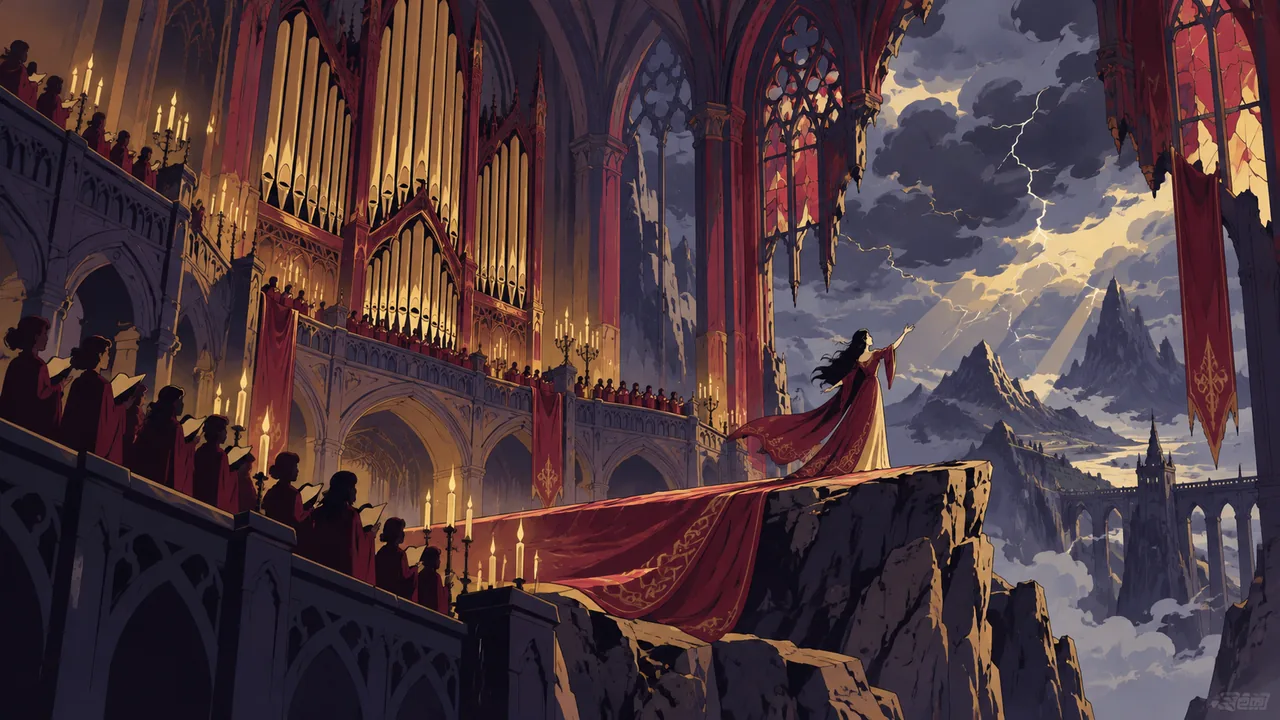
Orchestra, choir and metal band together, turning heaviness into opera.
- Era
- Late 1990s–present
- Origin
- Finland · Netherlands
- Tempo
- 90–170 BPM
- Core instruments
- orchestra · choir · distorted guitar · soprano
AI prompt
Symphonic metal, 140 BPM, heavy distorted guitars, full orchestra with strings and brass, epic Latin choir, operatic female soprano lead, timpani hits, pipe organ, dramatic and cinematic, gothic fantasy
202 charactersWrite symphonic metal + operatic soprano + epic choir; for duets add male growl duet.
Rhythm
Mid-tempo stomps alternate with fast double-kick sections and big crescendos.
Drums
Heavy kit doubled with orchestral timpani.
Bass
Bass supported by cellos and double basses.
Synths / arrangement
Distorted guitars plus strings, brass, choir and organ.
Vocals
Operatic soprano lead, often duetting with male growls or cleans (beauty-and-beast style).
Choir and soprano erupt together over the guitars like a film climax.
- Period
- Formed in the mid-to-late 1990s
- Regions & spread
- Netherlands and Finland · Italy and worldwide
Therion first brought in orchestra and choir at scale; Nightwish, Within Temptation and Epica made the operatic soprano a signature. It overlaps heavily with film, anime and game scores, and is one of the most used metal styles on Suno for fantasy.
Social context
The epic look of fantasy films and games made audiences expect bands to sound cinematic.
Technology
Orchestral sample libraries let bands go symphonic without hiring an orchestra.
Cultural psychology (interpretation)
Creative interpretation: Operatic voice against distorted guitars puts beauty and force in the same frame.
Once
Nightwish / AlbumHear how a full orchestra and choir merge completely with the band.
The Divine Conspiracy
Epica / AlbumCompare the soprano versus growl beauty-and-beast duets.
Vinland Saga
Leaves' Eyes / AlbumAngelic female vocals, Viking themes and folk instruments. Singer Liv Kristine began in Theatre of Tragedy, pioneers of beauty-and-the-beast gothic metal.
A falling kingdom, the dark lord's arrival, the final battle
Choir and orchestra scale the scene up to film size instantly.
- What is Symphonic Metal?
- Symphonic Metal is a metal fusion. Orchestra, choir and metal band together, turning heaviness into opera. Period: Formed in the mid-to-late 1990s. Regions: Netherlands and Finland, Italy and worldwide. Choir and soprano erupt together over the guitars like a film climax.
- How do I write a Suno prompt for Symphonic Metal?
- Copy this full prompt:
Symphonic metal, 140 BPM, heavy distorted guitars, full orchestra with strings and brass, epic Latin choir, operatic female soprano lead, timpani hits, pipe organ, dramatic and cinematic, gothic fantasy. Write symphonic metal + operatic soprano + epic choir; for duets add male growl duet. - What BPM and instruments does Symphonic Metal use?
- Usually 90–170 BPM. Drums: Heavy kit doubled with orchestral timpani. Bass: Bass supported by cellos and double basses. Synths / arrangement: Distorted guitars plus strings, brass, choir and organ. Vocals: Operatic soprano lead, often duetting with male growls or cleans (beauty-and-beast style).
- What Symphonic Metal music should I start with?
- Start with “Once” by Nightwish; “The Divine Conspiracy” by Epica; “Vinland Saga” by Leaves' Eyes. The Key works tab notes what to listen for in each.
- What styles are similar to Symphonic Metal?
- Mongolian Folk Metal Same branch; Gothic Metal Same branch; Heavy Metal Similar mood · Epic & vast; Wafu / Japanese Traditional Fusion Similar mood · Mystic & ritual
Sources are used to check history, categories and works. Cultural psychology, visual language, creator uses, and the instrument and mood tags in the overview are editorial interpretation and do not speak for a whole community or an artist’s sole intent. Tempo ranges are only a starting point; listen to AI examples and adjust.
- Wikipedia · Symphonic metal ↗Works and cultural background; sound, imagery and creator uses are editorial analysis
- Wikipedia · Once (Nightwish album) ↗Works and cultural background; sound, imagery and creator uses are editorial analysis