Mongolian Folk Metal
Folk metal · Chinese-region strand
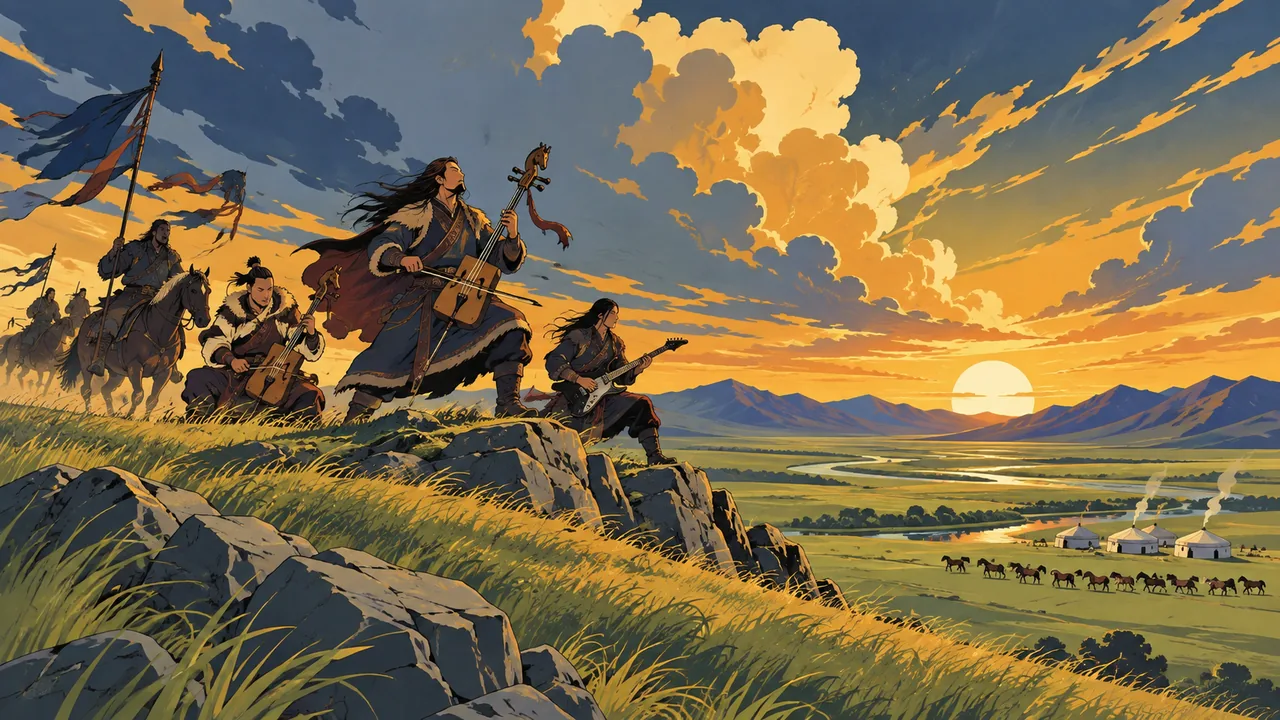
Horsehead fiddle, throat singing and distorted guitars gallop across the steppe; metal can carry wind and hoofbeats.
- Era
- 2000s–present
- Origin
- Inner Mongolia · Beijing · Ulaanbaatar
- Tempo
- 100–150 BPM
- Core instruments
- morin khuur · throat singing · distorted guitar · jaw harp
AI prompt
Mongolian folk metal, 130 BPM galloping rhythm, morin khuur horsehead fiddle melody, deep khoomei throat singing, jaw harp, heavy distorted guitars and thundering drums, Mongolian language chant, epic steppe atmosphere, wind-swept and heroic
241 charactersThe key words are Mongolian folk metal + throat singing + morin khuur; for slower and heavier write Hunnu rock.
Rhythm
Gallop rhythms in triplets imitating hoofbeats.
Drums
Heavy kit with large drums, galloping double kick.
Bass
Distorted bass holds the low end steady.
Synths / arrangement
Horsehead fiddle, tobshuur, jaw harp and distorted guitar.
Vocals
Throat singing (khoomei) and long-song style chant, in Mongolian.
Low throat singing and long fiddle notes unfold over the gallop, like wind across the steppe.
- Period
- From the 2000s, international by the 2010s
- Regions & spread
- Inner Mongolia and Beijing, China · Ulaanbaatar, Mongolia
Nine Treasures fuse horsehead fiddle, tobshuur and throat singing with metal; Hanggai lean folk-rock, Mongolia's The HU went global with "Hunnu Rock", and Tengger Cavalry is another key name. It shares roots with folk metal, but its melodies, instruments and steppe imagery are distinctive, among the most recognisable strands of Chinese-region metal.
Social context
Amid urbanisation and globalisation, young Mongolian musicians retell nomadic tradition through rock and metal.
Technology
Pickups and effects let horsehead fiddle and jaw harp hold their own against distorted guitars.
Cultural psychology (interpretation)
Creative interpretation: Galloping horse rhythms meeting metal drive make the body feel like it's riding.
Nine Treasures
Nine Treasures / Artist / BandHear horsehead fiddle, throat singing and metal guitars running side by side over gallop rhythms.
The Gereg
The HU / AlbumCompare the slower, heavier Hunnu Rock march and chant.
Steppe wars, nomad tribes and epic campaigns
Horsehead fiddle and throat singing instantly establish vast geography.
- What is Mongolian Folk Metal?
- Mongolian Folk Metal is a folk metal · Chinese-region strand. Horsehead fiddle, throat singing and distorted guitars gallop across the steppe; metal can carry wind and hoofbeats. Period: From the 2000s, international by the 2010s. Regions: Inner Mongolia and Beijing, China, Ulaanbaatar, Mongolia. Low throat singing and long fiddle notes unfold over the gallop, like wind across the steppe.
- How do I write a Suno prompt for Mongolian Folk Metal?
- Copy this full prompt:
Mongolian folk metal, 130 BPM galloping rhythm, morin khuur horsehead fiddle melody, deep khoomei throat singing, jaw harp, heavy distorted guitars and thundering drums, Mongolian language chant, epic steppe atmosphere, wind-swept and heroic. The key words are Mongolian folk metal + throat singing + morin khuur; for slower and heavier write Hunnu rock. - What BPM and instruments does Mongolian Folk Metal use?
- Usually 100–150 BPM. Drums: Heavy kit with large drums, galloping double kick. Bass: Distorted bass holds the low end steady. Synths / arrangement: Horsehead fiddle, tobshuur, jaw harp and distorted guitar. Vocals: Throat singing (khoomei) and long-song style chant, in Mongolian.
- What Mongolian Folk Metal music should I start with?
- Start with “Nine Treasures” by Nine Treasures; “The Gereg” by The HU. The Key works tab notes what to listen for in each.
- What styles are similar to Mongolian Folk Metal?
- Symphonic Metal Same branch; Folk Metal Same branch; Wafu / Japanese Traditional Fusion Similar mood · Mystic & ritual; Classic Rock / Hard Rock Similar mood · Epic & vast
Sources are used to check history, categories and works. Cultural psychology, visual language, creator uses, and the instrument and mood tags in the overview are editorial interpretation and do not speak for a whole community or an artist’s sole intent. Tempo ranges are only a starting point; listen to AI examples and adjust.
- Wikipedia · Nine Treasures ↗Works and cultural background; sound, imagery and creator uses are editorial analysis
- Wikipedia · Nine Treasures ↗Works and cultural background; sound, imagery and creator uses are editorial analysis