Folk Metal
Metal fusion
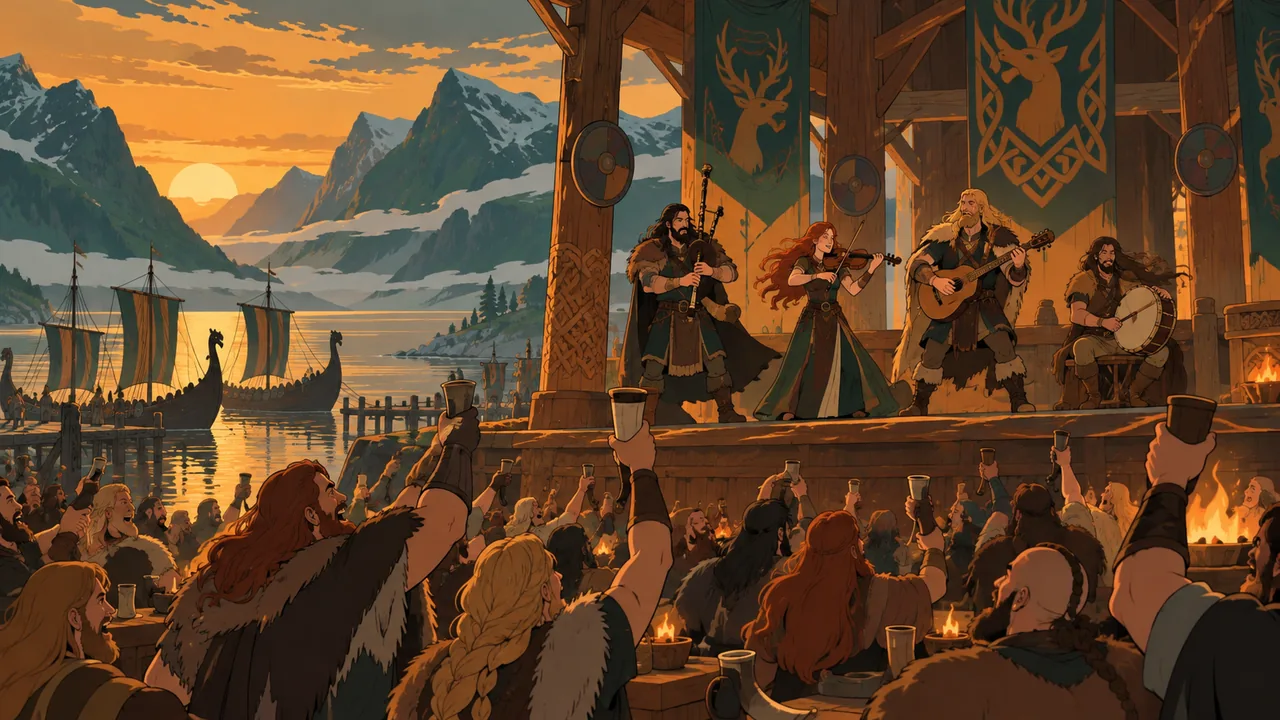
Fiddles, bagpipes and folk melodies plus distorted guitars, an epic feast that turns into a tavern brawl.
- Era
- 1990s–present
- Origin
- Finland · Switzerland · UK
- Tempo
- 120–180 BPM
- Core instruments
- fiddle · bagpipes · distorted guitar
AI prompt
Folk metal, 150 BPM, distorted guitars with fiddle and bagpipe melodies, tin whistle, galloping double bass, stomping polka rhythm, gruff male vocals with rowdy gang choir, festive and epic, tavern celebration
209 charactersNaming one or two folk instruments (fiddle, bagpipes, hurdy-gurdy) is more precise than plain folk metal; add Celtic or Viking for region.
Rhythm
Folk dance rhythms (polka, jig) on metal drums, often 6/8.
Drums
Double kick and stomping snare, with frame drums.
Bass
Bass bounces on the folk melody's roots.
Synths / arrangement
Distorted guitars plus fiddle, bagpipe, tin whistle, accordion, jaw harp.
Vocals
Harsh vocals and gruff group choruses, often in local languages.
Bagpipe or fiddle plays a tavern tune and the whole band stomps on the chorus.
- Period
- Formed in the 1990s, peaked in the 2000s
- Regions & spread
- UK and Ireland · Finland, Switzerland and worldwide
Skyclad is seen as the pioneer; Finland's Korpiklaani, Finntroll and Ensiferum and Switzerland's Eluveitie brought local folk instruments and myths into metal. Mongolia and China have their own strands (see Mongolian Folk Metal).
Social context
Amid globalisation, bands reclaimed local identity through ancestral instruments and myths.
Technology
Multitrack recording kept acoustic folk instruments clear beside distorted guitars.
Cultural psychology (interpretation)
Creative interpretation: Stompable folk tunes turn heavy music into collective revelry.
Slania
Eluveitie / AlbumHear bagpipes, whistles and hurdy-gurdy fused with melodic death metal.
Korpiklaani
Korpiklaani / Artist / BandCompare a merrier tavern polka-metal style.
Seediq Bale
Chthonic / AlbumTaiwanese black metal: erhu and Eastern melodies inside extreme metal, released in the West from 2006.
Dwarf taverns, Viking voyages and tribal feasts
Folk instruments instantly set region and era.
- What is Folk Metal?
- Folk Metal is a metal fusion. Fiddles, bagpipes and folk melodies plus distorted guitars, an epic feast that turns into a tavern brawl. Period: Formed in the 1990s, peaked in the 2000s. Regions: UK and Ireland, Finland, Switzerland and worldwide. Bagpipe or fiddle plays a tavern tune and the whole band stomps on the chorus.
- How do I write a Suno prompt for Folk Metal?
- Copy this full prompt:
Folk metal, 150 BPM, distorted guitars with fiddle and bagpipe melodies, tin whistle, galloping double bass, stomping polka rhythm, gruff male vocals with rowdy gang choir, festive and epic, tavern celebration. Naming one or two folk instruments (fiddle, bagpipes, hurdy-gurdy) is more precise than plain folk metal; add Celtic or Viking for region. - What BPM and instruments does Folk Metal use?
- Usually 120–180 BPM. Drums: Double kick and stomping snare, with frame drums. Bass: Bass bounces on the folk melody's roots. Synths / arrangement: Distorted guitars plus fiddle, bagpipe, tin whistle, accordion, jaw harp. Vocals: Harsh vocals and gruff group choruses, often in local languages.
- What Folk Metal music should I start with?
- Start with “Slania” by Eluveitie; “Korpiklaani” by Korpiklaani; “Seediq Bale” by Chthonic. The Key works tab notes what to listen for in each.
- What styles are similar to Folk Metal?
- Power Metal Similar mood · Epic & vast; Mongolian Folk Metal Same branch; Sea Shanty Similar mood · Epic & vast; Symphonic Metal Same branch
Sources are used to check history, categories and works. Cultural psychology, visual language, creator uses, and the instrument and mood tags in the overview are editorial interpretation and do not speak for a whole community or an artist’s sole intent. Tempo ranges are only a starting point; listen to AI examples and adjust.
- Wikipedia · Folk metal ↗Works and cultural background; sound, imagery and creator uses are editorial analysis
- Wikipedia · Slania ↗Works and cultural background; sound, imagery and creator uses are editorial analysis