Korean Hip-Hop
Hip-hop music and local community
Writes the tone, rhymes and personal stance of the Korean language into beats the body can hear.
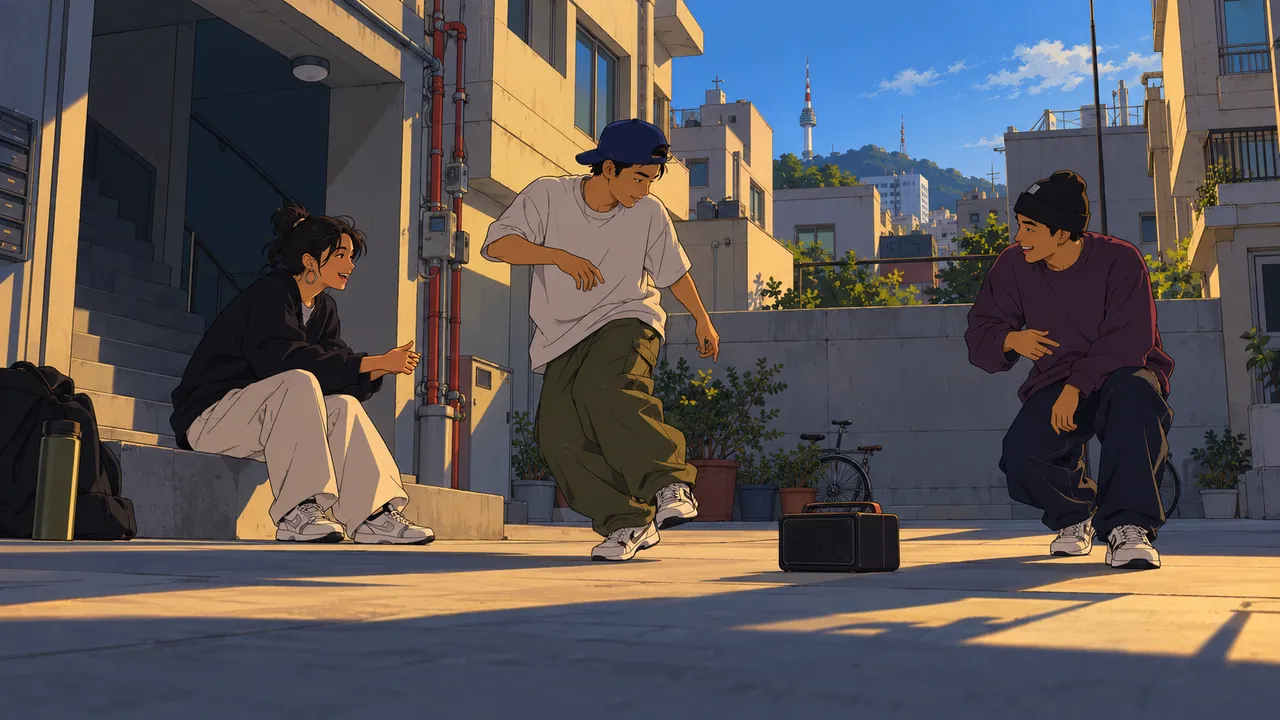
- Era
- 1990s
- Origin
- South Korea
- Tempo
- 80–100 BPM
- Core instruments
- sampled drums · 808 bass · Korean rap
AI prompt
Korean hip-hop, boom bap groove, 92 BPM, dry punchy snare, short warm bass loop, minimal keyboard sample, clearly articulated Korean rap with distinct cadences and intentional pauses, call-and-response hook, grounded neighborhood storytelling
242 charactersThis example uses boom bap. For trap, swap the drum pattern, low end and tempo feel. Spell out the narrator's stance and flow; a regional tag can't replace lyric and rhythm design.
Rhythm
A looping groove holds up the flow; lines can cross the beat or use pauses to land a point.
Drums
Sampled drums with clear snare accents, trap hi-hats and more; choose by sub-style.
Bass
Boom bap can use short bass loops; trap can use 808 low end with slides.
Synths / arrangement
Sample fragments, keys, guitar, synths or turntable scratches; don't stack everything at once.
Vocals
Korean syllables, rhymes, tone and breathing organise the flow, alongside English, sung hooks and multi-rapper relays.
Listen first to how the narrator handles beat and language, then tell whether the base is boom bap, trap or something else.
- Period
- The local scene took shape in the 1990s and kept developing through the 2000s
- Regions & spread
- South Korea · The Korean diaspora and transnational hip-hop exchange networks
Hip-hop began as a cultural practice of African American and Latino communities in the US. In Korea, pop rap, underground shows, DJs, labels and local-language experiments developed together; Seo Taiji and Boys and Drunken Tiger anchor different paths, and no single idol rapper represents the whole scene.
Social context
Underground shows, peer exchange and independent labels gave places to state a position and hone the craft. As Korean rhyme and flow developed, local life found its own rap language, which later connected with mass media.
Technology
Sampling, turntables, drum machines and digital production turned small amounts of material into looping foundations; online releases and TV shows widened reach, but the sound can still come from live and low-budget work.
Cultural psychology (interpretation)
Creative interpretation: the beat gives the narrator a steady place to stand, and the flow decides how they approach, challenge or persuade others. A character's stance matters more than a uniform tough pose.
Born Hater
EPIK HIGH feat. Beenzino, Verbal Jint, B.I, MINO, BOBBY / Song / multi-rapper relayDon't chase every lyric at first; hear how different rappers change timbre, breathing and accents on the same beat. Good for studying each character's stance in an ensemble.
AEAO
Dynamicduo × DJ Premier / Song / transnational production collaborationHear how the loop, snare placement and call-and-response hook hold up the Korean flow. Listen to the original; separate sped-up and slowed versions came out in 2023, and a version's speed isn't a rule of the style.
Neighbourhood characters' self-narration and shared memory
Use the lyric's viewpoint, environmental samples and groove to show how a character lives, rather than just a city-at-night backdrop.
Relay introductions for an ensemble cast
Give each person a different flow and gaps, keeping them distinct on the same beat.
Underground channels and personal manifestos
Build a vocal identity with a clear stance and a low-budget production feel; a futuristic tone can come from samples and electronic layers, not just aggression.
- What is Korean Hip-Hop?
- Korean Hip-Hop is a hip-hop music and local community. Writes the tone, rhymes and personal stance of the Korean language into beats the body can hear. Period: The local scene took shape in the 1990s and kept developing through the 2000s. Regions: South Korea, The Korean diaspora and transnational hip-hop exchange networks. Listen first to how the narrator handles beat and language, then tell whether the base is boom bap, trap or something else.
- How do I write a Suno prompt for Korean Hip-Hop?
- Copy this full prompt:
Korean hip-hop, boom bap groove, 92 BPM, dry punchy snare, short warm bass loop, minimal keyboard sample, clearly articulated Korean rap with distinct cadences and intentional pauses, call-and-response hook, grounded neighborhood storytelling. This example uses boom bap. For trap, swap the drum pattern, low end and tempo feel. Spell out the narrator's stance and flow; a regional tag can't replace lyric and rhythm design. - What BPM and instruments does Korean Hip-Hop use?
- No single BPM; boom bap can start at 80–100 BPM, trap can use a half-time feel at about 130–160 BPM. Drums: Sampled drums with clear snare accents, trap hi-hats and more; choose by sub-style. Bass: Boom bap can use short bass loops; trap can use 808 low end with slides. Synths / arrangement: Sample fragments, keys, guitar, synths or turntable scratches; don't stack everything at once. Vocals: Korean syllables, rhymes, tone and breathing organise the flow, alongside English, sung hooks and multi-rapper relays.
- What Korean Hip-Hop music should I start with?
- Start with “Born Hater” by EPIK HIGH feat. Beenzino, Verbal Jint, B.I, MINO, BOBBY; “AEAO” by Dynamicduo × DJ Premier. The Key works tab notes what to listen for in each.
- What styles are similar to Korean Hip-Hop?
- Chinese Hip-Hop Same branch; Hip-Hop / Rap Similar mood · Rebellious & bold; Grime Same branch; Ska Punk Similar mood · Groove & energy
Sources are used to check history, categories and works. Cultural psychology, visual language, creator uses, and the instrument and mood tags in the overview are editorial interpretation and do not speak for a whole community or an artist’s sole intent. Tempo ranges are only a starting point; listen to AI examples and adjust.
- Korea.net · A peek into the hip-hop music scene of Korea ↗Local underground scene, development of Korean rhyme, labels and mass-media spread; includes an interview with Jerry.K
- EPIK HIGH · Born Hater 官方 MV ↗2014 release, featured rappers and Epik High production credits
- Amoeba Culture · AEAO 版本与制作署名 ↗Dynamicduo × DJ Premier production collaboration, turntable and lyric credits, and the speed versions released separately in 2023