Tango
Latin dance music
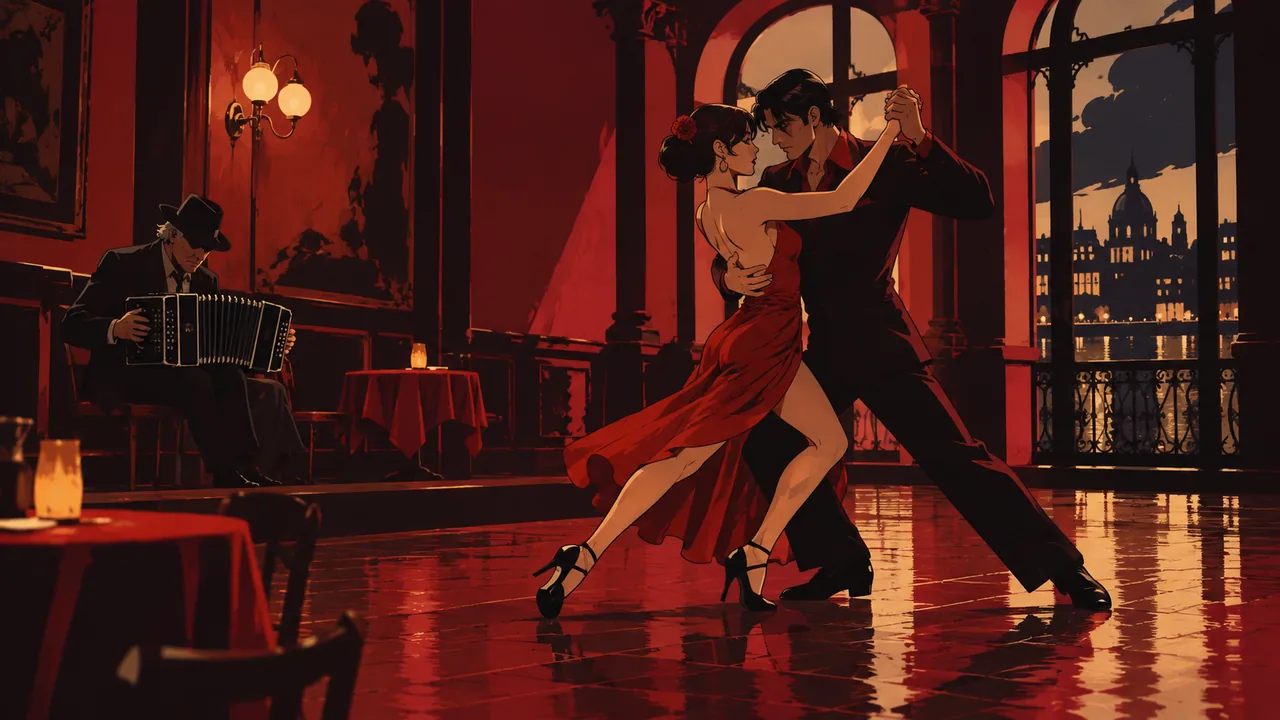
The bandoneón's sighs and staccato writing a dangerous love story in a dim dance hall.
- Era
- Late 19th century–present
- Origin
- Buenos Aires
- Tempo
- 110–130 BPM
- Core instruments
- bandoneón · violin · piano
AI prompt
Argentine tango, 120 BPM, sharp marcato rhythm with sudden stops, expressive bandoneón, passionate violin melody, percussive piano, plucked double bass, dramatic and melancholic, Buenos Aires milonga, instrumental
213 charactersWrite tango + bandoneón; for modern write nuevo tango or electro tango.
Rhythm
Strong marcato in 2/4 or 4/4, sudden stops and syncopation.
Drums
Usually no drums; piano and bass drive the rhythm.
Bass
Plucked and bowed double bass.
Synths / arrangement
Bandoneón, violin, piano.
Vocals
Instrumental or dramatic Spanish singing.
A sharp bandoneón stab, then the violin draws a long sorrowful melody.
- Period
- Formed in the late 19th century; golden age in the 1940s
- Regions & spread
- Buenos Aires, Argentina and Montevideo, Uruguay
Carlos Gardel's sung tango and Juan D'Arienzo's dance orchestras, then Astor Piazzolla's nuevo tango fusing classical and jazz; in the 2000s Gotan Project brought electronic tango.
Social context
Working-class dance halls and homesickness in a migrant port city.
Technology
The German bandoneón became tango's soul instrument.
Cultural psychology (interpretation)
Creative interpretation: Sudden stops and sharp staccato mimic the push and pull between partners.
Libertango
Astor Piazzolla / SongHear nuevo tango's sharp bandoneón and string staccato with modern harmony.
Por una Cabeza
Carlos Gardel / SongCompare elegant, nostalgic golden-age sung tango.
Dangerous love, spy balls and suspense
Staccato and pauses bring strong tension and seduction.
- What is Tango?
- Tango is a latin dance music. The bandoneón's sighs and staccato writing a dangerous love story in a dim dance hall. Period: Formed in the late 19th century; golden age in the 1940s. Regions: Buenos Aires, Argentina and Montevideo, Uruguay. A sharp bandoneón stab, then the violin draws a long sorrowful melody.
- How do I write a Suno prompt for Tango?
- Copy this full prompt:
Argentine tango, 120 BPM, sharp marcato rhythm with sudden stops, expressive bandoneón, passionate violin melody, percussive piano, plucked double bass, dramatic and melancholic, Buenos Aires milonga, instrumental. Write tango + bandoneón; for modern write nuevo tango or electro tango. - What BPM and instruments does Tango use?
- Usually 110–130 BPM. Drums: Usually no drums; piano and bass drive the rhythm. Bass: Plucked and bowed double bass. Synths / arrangement: Bandoneón, violin, piano. Vocals: Instrumental or dramatic Spanish singing.
- What Tango music should I start with?
- Start with “Libertango” by Astor Piazzolla; “Por una Cabeza” by Carlos Gardel. The Key works tab notes what to listen for in each.
Sources are used to check history, categories and works. Cultural psychology, visual language, creator uses, and the instrument and mood tags in the overview are editorial interpretation and do not speak for a whole community or an artist’s sole intent. Tempo ranges are only a starting point; listen to AI examples and adjust.
- Wikipedia · Tango music ↗Works and cultural background; sound, imagery and creator uses are editorial analysis
- Wikipedia · Libertango ↗Works and cultural background; sound, imagery and creator uses are editorial analysis