Xiqiang / Opera Fusion
Chinese-style fusion
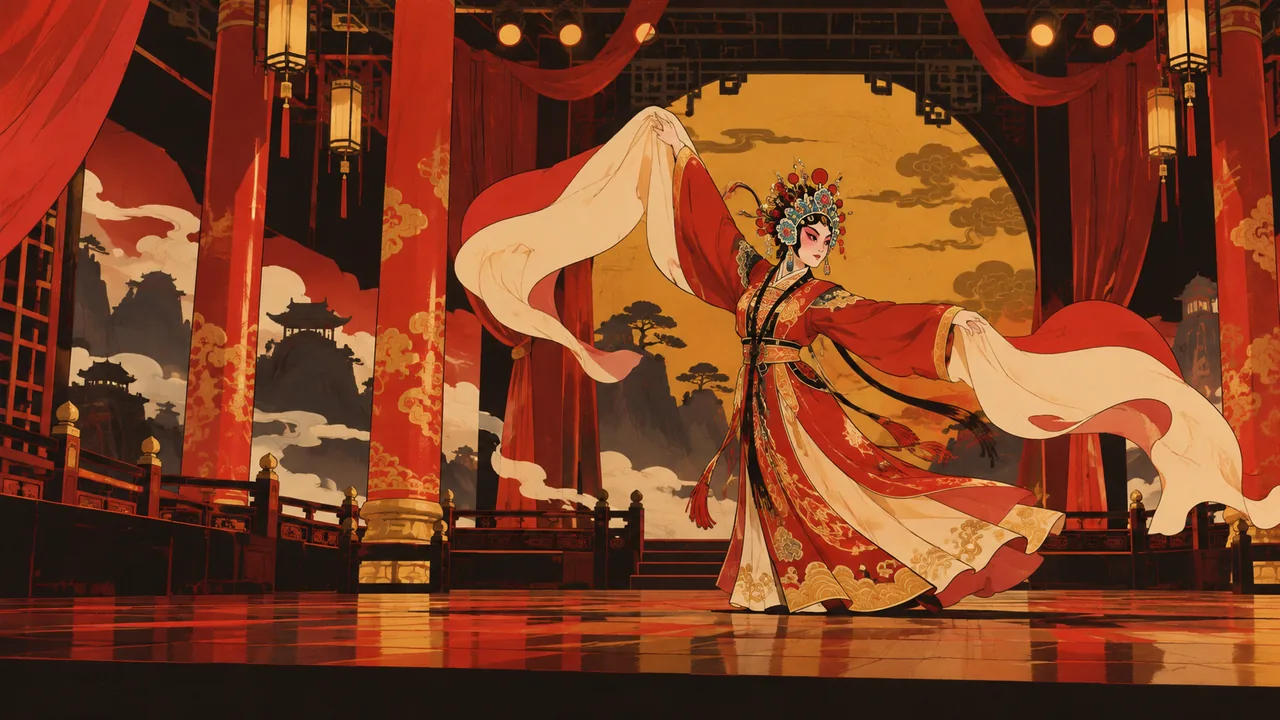
Peking and Kunqu opera vocals brought into pop; one line of opera singing lifts the chorus.
- Era
- 2000s–present
- Origin
- Mainland China · Taiwan
- Tempo
- 70–110 BPM
- Core instruments
- jinghu · opera percussion · pipa · piano
AI prompt
Chinese style pop with Peking opera vocals, 85 BPM, piano and string ballad base, jinghu and pipa melody, Peking opera percussion gong and cymbal transitions, female pop vocals switching to bright operatic falsetto xiqiang in the chorus, dramatic and tragic, guofeng
266 charactersWrite Peking opera vocals or Kunqu opera vocals + Chinese style pop; plain guofeng won't necessarily produce opera singing.
Rhythm
Pop form with opera-voice sections in the chorus or bridge, gong-and-drum transitions.
Drums
Pop kit layered with Peking opera percussion (bangu, cymbals, small gong).
Bass
Soft electric or synth bass.
Synths / arrangement
Jinghu, erhu, pipa, guzheng with strings and piano.
Vocals
Pop singing switching with Peking/Kunqu opera falsetto styles.
A gong crash, then the opera voice draws out a long, bright falsetto phrase.
- Period
- Popular from the 2000s, huge online after the 2010s
- Regions & spread
- Mainland China and Taiwan
Chinese-style pop like Wang Leehom's "Zai Mei Bian" and Jay Chou's "Fearless" and "Chrysanthemum Terrace" experimented early; Li Yugang's opera crossover, Huo Zun's xiqiang and many online gufeng songs made "xiqiang" (opera-voice) its own listening tag. It neighbours guofeng, but its core is opera vocals and percussion.
Social context
A younger generation's rediscovery of traditional culture and the guochao aesthetic.
Technology
Pop arrangement and electronic production keep opera vocals cutting through a modern mix.
Cultural psychology (interpretation)
Creative interpretation: Soaring, ornamented opera vocals against modern beats create a time-travel drama.
鸳鸯戏
黄龄 Huang Ling / TrackHear pop delivery shift into opera-influenced diction and ornamentation; this is fusion pop, rather than a full traditional opera excerpt.
Zai Mei Bian · Heroes of Earth
王力宏 Wang Leehom / SongHear a Kunqu passage embedded in an R&B pop song.
京剧唱腔 Peking opera vocals
京剧 Peking opera / WorkCompare real Peking opera falsetto and percussion to understand where xiqiang comes from.
Costume dramas, guochao ads and wuxia climaxes
One opera line brings instant classical Chinese drama.
- What is Xiqiang / Opera Fusion?
- Xiqiang / Opera Fusion is a chinese-style fusion. Peking and Kunqu opera vocals brought into pop; one line of opera singing lifts the chorus. Period: Popular from the 2000s, huge online after the 2010s. Regions: Mainland China and Taiwan. A gong crash, then the opera voice draws out a long, bright falsetto phrase.
- How do I write a Suno prompt for Xiqiang / Opera Fusion?
- Copy this full prompt:
Chinese style pop with Peking opera vocals, 85 BPM, piano and string ballad base, jinghu and pipa melody, Peking opera percussion gong and cymbal transitions, female pop vocals switching to bright operatic falsetto xiqiang in the chorus, dramatic and tragic, guofeng. Write Peking opera vocals or Kunqu opera vocals + Chinese style pop; plain guofeng won't necessarily produce opera singing. - What BPM and instruments does Xiqiang / Opera Fusion use?
- Usually 70–110 BPM. Drums: Pop kit layered with Peking opera percussion (bangu, cymbals, small gong). Bass: Soft electric or synth bass. Synths / arrangement: Jinghu, erhu, pipa, guzheng with strings and piano. Vocals: Pop singing switching with Peking/Kunqu opera falsetto styles.
- What Xiqiang / Opera Fusion music should I start with?
- Start with “鸳鸯戏” by 黄龄 Huang Ling; “Zai Mei Bian · Heroes of Earth” by 王力宏 Wang Leehom; “京剧唱腔 Peking opera vocals” by 京剧 Peking opera. The Key works tab notes what to listen for in each.
- What styles are similar to Xiqiang / Opera Fusion?
- Guofeng / Gufeng Same branch; Romantic Orchestral Similar mood · Epic & vast; Dark Guofeng / Chinese Folk Horror Same branch; Post-Rock Similar mood · Epic & vast
Sources are used to check history, categories and works. Cultural psychology, visual language, creator uses, and the instrument and mood tags in the overview are editorial interpretation and do not speak for a whole community or an artist’s sole intent. Tempo ranges are only a starting point; listen to AI examples and adjust.
- Wikipedia · Peking opera ↗Works and cultural background; sound, imagery and creator uses are editorial analysis
- Wikipedia · Heroes of Earth ↗Works and cultural background; sound, imagery and creator uses are editorial analysis