Taiwanese Hokkien Pop
Taiwanese dialect pop
Hokkien's soft tones, nakasi and enka-like singing, songs of harbours, leaving home and human warmth.
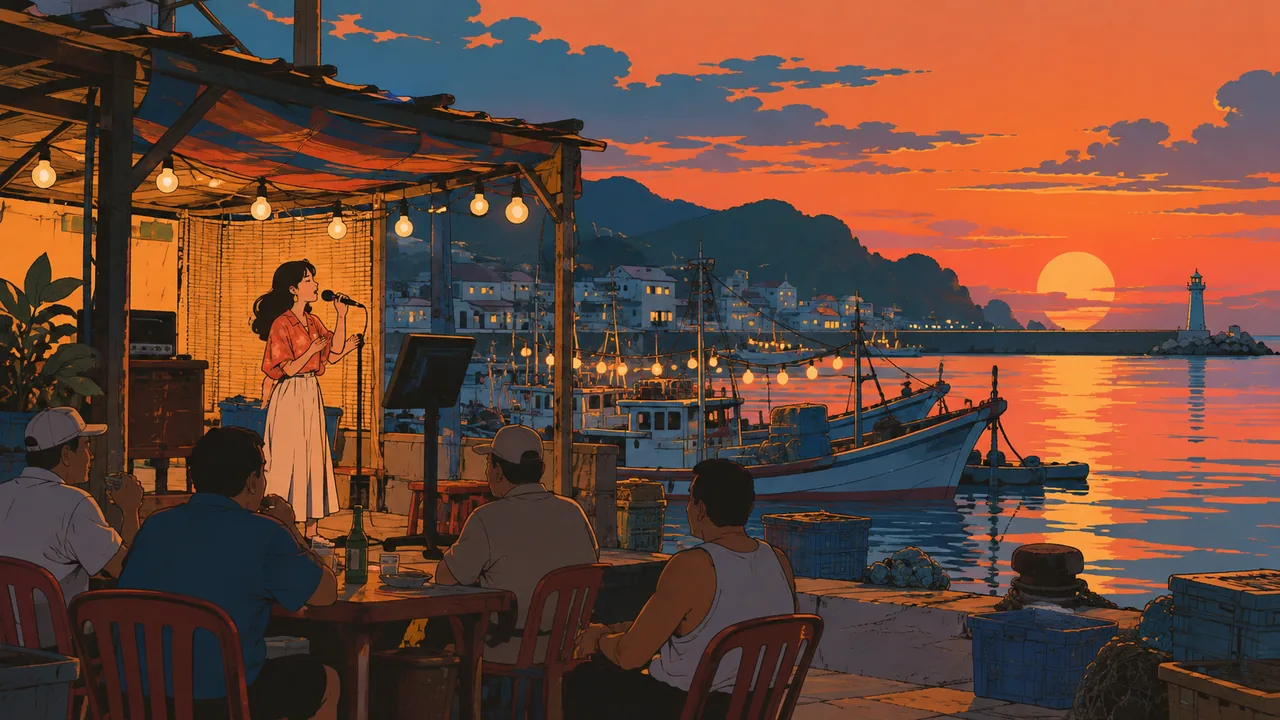
- Era
- 1930s–present
- Origin
- Taiwan
- Tempo
- 70–120 BPM
- Core instruments
- electronic keyboard · saxophone · acoustic guitar
AI prompt
Taiwanese Hokkien pop ballad, 80 BPM, electronic keyboard and saxophone intro, nylon guitar, soft strings, simple drums, female vocals in Taiwanese Hokkien with vibrato and ornamentation, harbour farewell, nostalgic and sorrowful
229 charactersWrite Taiwanese Hokkien or Taiwanese enka; for a rock version write Taiwanese rock.
Rhythm
Slow ballads or two-beat enka rhythm.
Drums
Simple kit or drum machine.
Bass
Soft bass.
Synths / arrangement
Electronic keyboard, sax, acoustic guitar, strings; rock versions add electric guitar.
Vocals
Hokkien singing with vibrato and ornamentation.
A sax intro, then the Hokkien voice sings of harbours and partings with vibrato.
- Period
- From the 1930s, peaking in the 1980s–'90s
- Regions & spread
- Taiwan
Early classics include "Bāng Chhun-hong" and "Flower in the Rainy Night"; enka influence produced Taiwanese enka, with Jody Chiang and Yeh Chi-tien as key names; Wu Bai brought it into rock, and later artists like Jolin Tsai, No Party for Cao Dong and Sorry Youth also sing in Hokkien.
Social context
Taiwanese local identity and everyday life, sung in harbours, night markets and karaoke.
Technology
Electronic keyboard backing and karaoke machines made Hokkien songs the most widespread entertainment.
Cultural psychology (interpretation)
Creative interpretation: Dialect tones and vibrato make homesickness and warmth feel close and real.
家后 Ka-āu
江蕙 Jody Chiang / SongHear Taiwanese enka's vibrato and sorrowful melodies.
Wu Bai & China Blue
伍佰 Wu Bai / Artist / BandCompare a style bringing Hokkien song into rock.
Taiwanese hometown dramas, harbours and night-market life
Hokkien tones establish local feeling and place instantly.
- What is Taiwanese Hokkien Pop?
- Taiwanese Hokkien Pop is a taiwanese dialect pop. Hokkien's soft tones, nakasi and enka-like singing, songs of harbours, leaving home and human warmth. Period: From the 1930s, peaking in the 1980s–'90s. Regions: Taiwan. A sax intro, then the Hokkien voice sings of harbours and partings with vibrato.
- How do I write a Suno prompt for Taiwanese Hokkien Pop?
- Copy this full prompt:
Taiwanese Hokkien pop ballad, 80 BPM, electronic keyboard and saxophone intro, nylon guitar, soft strings, simple drums, female vocals in Taiwanese Hokkien with vibrato and ornamentation, harbour farewell, nostalgic and sorrowful. Write Taiwanese Hokkien or Taiwanese enka; for a rock version write Taiwanese rock. - What BPM and instruments does Taiwanese Hokkien Pop use?
- Usually 70–120 BPM. Drums: Simple kit or drum machine. Bass: Soft bass. Synths / arrangement: Electronic keyboard, sax, acoustic guitar, strings; rock versions add electric guitar. Vocals: Hokkien singing with vibrato and ornamentation.
- What Taiwanese Hokkien Pop music should I start with?
- Start with “家后 Ka-āu” by 江蕙 Jody Chiang; “Wu Bai & China Blue” by 伍佰 Wu Bai. The Key works tab notes what to listen for in each.
Sources are used to check history, categories and works. Cultural psychology, visual language, creator uses, and the instrument and mood tags in the overview are editorial interpretation and do not speak for a whole community or an artist’s sole intent. Tempo ranges are only a starting point; listen to AI examples and adjust.
- Wikipedia · Hokkien pop ↗Works and cultural background; sound, imagery and creator uses are editorial analysis
- Wikipedia · Jody Chiang ↗Works and cultural background; sound, imagery and creator uses are editorial analysis