Visual Kei / Visual Rock
Japanese music culture scene and performance system
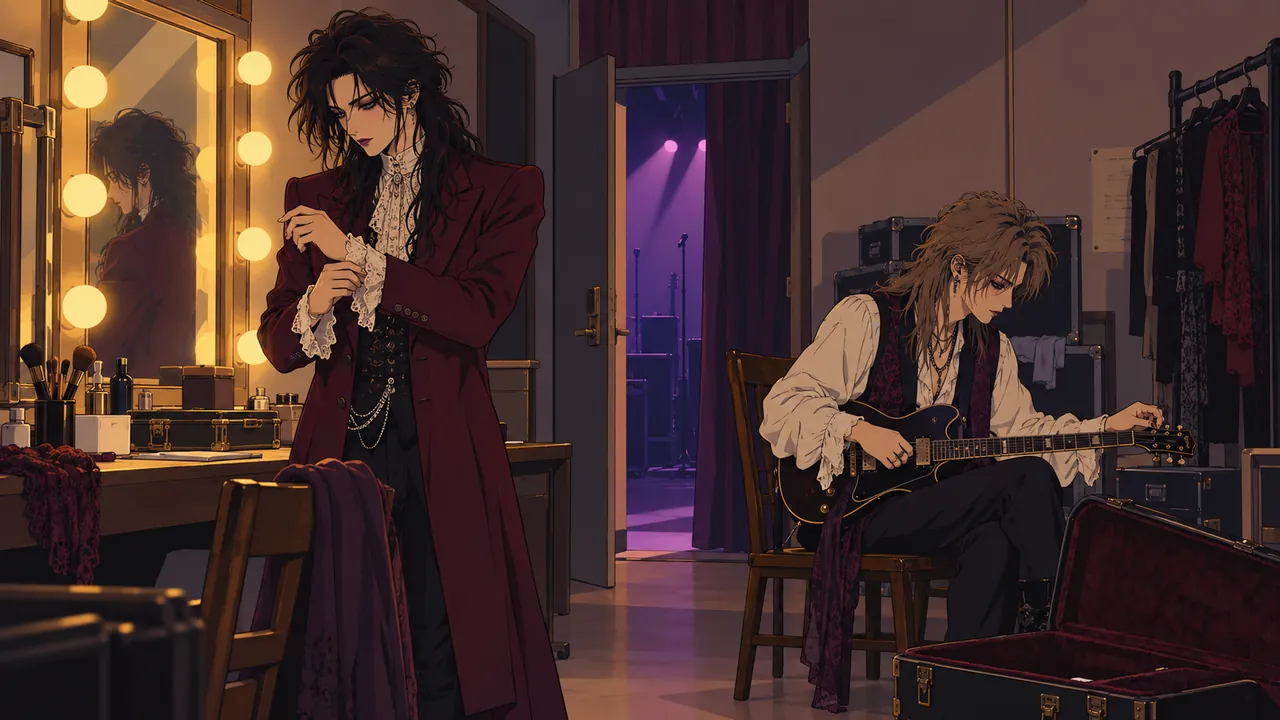
Music, body and look become a character together, and that character's fragility is sung to the whole venue.
- Era
- 1980s
- Origin
- Japan
- Tempo
- Fast and slow
- Core instruments
- twin guitars · fast drums · keyboards · theatrical vocals
AI prompt
Visual-kei-inspired symphonic rock, 128 BPM, intertwined twin electric-guitar melodies, piano and a restrained organ layer, expressive live drums and melodic electric bass, dramatic Japanese lead vocal, a memorable chorus, tragic romantic atmosphere, an original character balancing an elaborate public persona with a private wound, build from a quiet opening to a strong full-band climax
388 characters"Visual kei" sets a cultural and stage direction; the sound still needs choosing. This example leans towards classical theatrical rock. For the fast, heavy route, rewrite as melodic speed metal, fast double-kick drums, harmonized guitar leads; for a ballad, write piano-led rock ballad with the band joining gradually. Pick one route instead of cramming every key band's traits into one song.
Rhythm
Choose per work: fast metal drive, pop-rock song form, or theatrical arrangements with dance pulses or classical layers.
Drums
For the X JAPAN direction, listen for intense live drums and tempo changes; other works use electronic beats or more restrained ballad drums. No drum pattern is a badge of identity.
Bass
Can lock to heavy riffs or have its own melody; its relationship to interwoven twin guitars or harmony sections needs listening song by song.
Synths / arrangement
Focus on orchestration choices: piano, strings, synths, organ or other keyboards may appear. Mana has described having two guitars weave independent lines like twin harpsichords; that is MALICE MIZER's specific approach, not a standard for all visual kei.
Vocals
High-tension singing, theatrical low voices, soft balladry and other styles all exist; you can't judge by one range, gender or language.
Sound, styling, stage concept and fan relationships build a work's identity together. X JAPAN's heaviness and lyricism and MALICE MIZER's blend of classical and theatre are two entry points, not substitutes for each other.
- Period
- Took shape in the 1980s Japanese rock scene and grew in influence in the 1990s
- Regions & spread
- Japanese bands, live shows and fan scenes · Later connected with international audiences
X JAPAN is a key pioneer, and bands such as MALICE MIZER showed other sounds and world-building. Visual kei links music, styling, stage concept and fan culture, and can't be defined by a fixed BPM or one guitar tone. This page keeps "visual rock" as a common entry term but discusses visual kei as a cultural scene.
Social context
Live shows, music media and fan participation let sound and image build identity together. Elaborate styling, gender expression and character poses opened a space outside everyday appearance norms, and audiences took part in that expression.
Technology
Electric guitars, effects and studio production made room for heavy bands, piano ballads, interweaving twin guitars and electronic or classical timbres; stage, video and costume design turned the musical themes into a world you could see.
Cultural psychology (interpretation)
Creative interpretation: an exaggerated exterior doesn't rule out sincerity. A character-like body can hold fierce rebellion, soft sorrow and an ideal self at once, turning feelings that are hard to say aloud into a live moment everyone can answer.
Kurenai · Hibiya Open-Air Concert Hall (1989)
X JAPAN (performing as X at the time) / Song / live · official videoNotice the tense band drive, the interplay of twin guitars and vocals, and how the performance hands personal emotion to the crowd. Pair it with ENDLESS RAIN so you don't remember the band only for fast, heavy sound.
ENDLESS RAIN · BLUE BLOOD(1989)
X JAPAN / Song · official MVNotice how piano, voice and band gradually widen the ballad's space, and how fragile expression can carry the same shared emotion as a heavy song. Visual kei identity spans these sonic choices.
月下の夜想曲 / Gekka no Yasoukyoku (1998)
MALICE MIZER / Song · official release infoListen to the melody, band arrangement and character-like singing together, then compare with the two X JAPAN entries. The link is Columbia's official page; playback depends on your region. The shared title doesn't mean it's part of the Castlevania: Symphony of the Night score.
白い肌に狂う愛と哀しみの輪舞 / Shiroi Hada ni Kuruu Ai to Kanashimi no Rondo (2000)
MALICE MIZER / Song · production interviewUse the production interview to notice how the twin guitars' independent lines layer, and how organ, piano and strings extend the story. The link is a fan translation of a magazine interview, not audio; this classical approach belongs to specific works and doesn't mean all visual kei is gothic rock or sacred music.
Characters with a dazzling exterior and an inner wound
Design sounds where public image and private emotion answer each other, so costume, movement and song form a character that can develop.
Castle balls, tragic lovers and theatrical rituals
Start from MALICE MIZER's specific classical arrangements and tie interweaving parts and voice to the story; write gothic fantasy orchestration separately rather than assuming all visual kei suits a castle.
Transformations, final battles and the emotional return afterwards
Heavy sections can express will to act; piano and ballad sections return to relationships and loss. One melody can carry a character's memory through both stances.
- What is Visual Kei / Visual Rock?
- Visual Kei / Visual Rock is a japanese music culture scene and performance system. Music, body and look become a character together, and that character's fragility is sung to the whole venue. Period: Took shape in the 1980s Japanese rock scene and grew in influence in the 1990s. Regions: Japanese bands, live shows and fan scenes, Later connected with international audiences. Sound, styling, stage concept and fan relationships build a work's identity together. X JAPAN's heaviness and lyricism and MALICE MIZER's blend of classical and theatre are two entry points, not substitutes for each other.
- How do I write a Suno prompt for Visual Kei / Visual Rock?
- Copy this full prompt:
Visual-kei-inspired symphonic rock, 128 BPM, intertwined twin electric-guitar melodies, piano and a restrained organ layer, expressive live drums and melodic electric bass, dramatic Japanese lead vocal, a memorable chorus, tragic romantic atmosphere, an original character balancing an elaborate public persona with a private wound, build from a quiet opening to a strong full-band climax. "Visual kei" sets a cultural and stage direction; the sound still needs choosing. This example leans towards classical theatrical rock. For the fast, heavy route, rewrite as melodic speed metal, fast double-kick drums, harmonized guitar leads; for a ballad, write piano-led rock ballad with the band joining gradually. Pick one route instead of cramming every key band's traits into one song. - What BPM and instruments does Visual Kei / Visual Rock use?
- No single BPM: fast heavy songs and slow ballads both belong to this scene. Drums: For the X JAPAN direction, listen for intense live drums and tempo changes; other works use electronic beats or more restrained ballad drums. No drum pattern is a badge of identity. Bass: Can lock to heavy riffs or have its own melody; its relationship to interwoven twin guitars or harmony sections needs listening song by song. Synths / arrangement: Focus on orchestration choices: piano, strings, synths, organ or other keyboards may appear. Mana has described having two guitars weave independent lines like twin harpsichords; that is MALICE MIZER's specific approach, not a standard for all visual kei. Vocals: High-tension singing, theatrical low voices, soft balladry and other styles all exist; you can't judge by one range, gender or language.
- What Visual Kei / Visual Rock music should I start with?
- Start with “Kurenai · Hibiya Open-Air Concert Hall (1989)” by X JAPAN (performing as X at the time); “ENDLESS RAIN · BLUE BLOOD(1989)” by X JAPAN; “月下の夜想曲 / Gekka no Yasoukyoku (1998)” by MALICE MIZER; “白い肌に狂う愛と哀しみの輪舞 / Shiroi Hada ni Kuruu Ai to Kanashimi no Rondo (2000)” by MALICE MIZER. The Key works tab notes what to listen for in each.
- What styles are similar to Visual Kei / Visual Rock?
- Chinese Rock Same branch; Heavy Metal Similar mood · Epic & vast; J-Rock Same branch; Symphonic Metal Similar mood · Epic & vast
Sources are used to check history, categories and works. Cultural psychology, visual language, creator uses, and the instrument and mood tags in the overview are editorial interpretation and do not speak for a whole community or an artist’s sole intent. Tempo ranges are only a starting point; listen to AI examples and adjust.
- X JAPAN 官方 · Biography ↗X JAPAN's pioneering place in the visual kei scene
- Ken McLeod · Visual Kei: Hybridity and Gender in Japanese Popular Culture(2013) ↗Original research: the cultural mix of sonic diversity, performance and community, and the different sonic paths of X JAPAN and MALICE MIZER; the listening notes are this page's analysis
- Adrienne Renee Johnson · Josō or gender free?(2020) ↗Public abstract of original research: formation in the 1980s, theatrical performance and non-binary gender expression; full text restricted
- Sony Music · X JAPAN 1989 日比谷现场官方发布 ↗Live version of Kurenai, performance date, BLUE BLOOD as historical anchor and official video link
- X JAPAN 官方频道 · ENDLESS RAIN ↗Official MV, BLUE BLOOD (1989) and songwriting credits
- 日本 Columbia · 月下の夜想曲 ↗1998 single release, track and official page; playback not guaranteed in all regions or devices
- MALICE MIZER · Fool's Mate 2000 年 9 月访谈(爱好者英文译文) ↗Unofficial translation of a first-person production interview: twin guitars as twin harpsichords, orchestration and stage theatre ideas; source level clearly marked