Chiptune / 8-bit
Game music / electronic
Songs written on old console sound chips: square, triangle and noise waves that take you straight back to childhood.
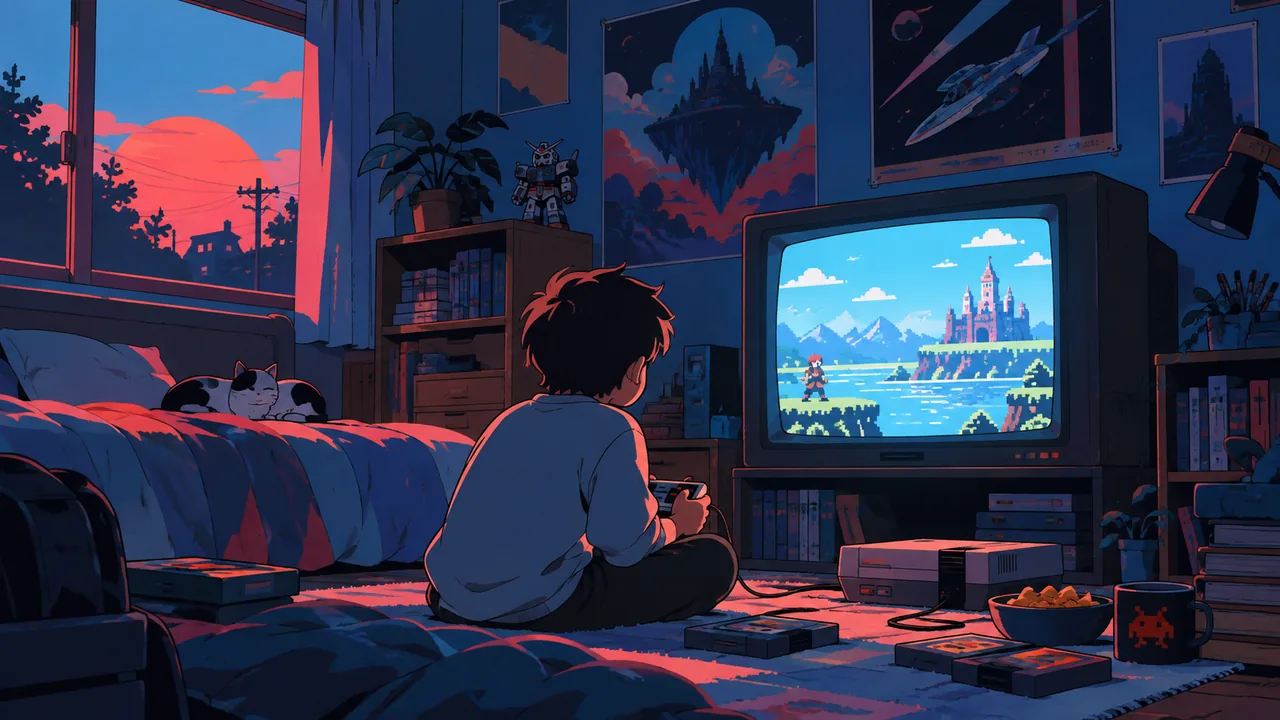
- Era
- 1980s–present
- Origin
- Japan · West
- Tempo
- 120–180 BPM
- Core instruments
- square wave · triangle bass · noise drums
AI prompt
Chiptune, 150 BPM, 8-bit NES style, bright square wave lead melody, pulse wave harmony, fast arpeggiated chords, triangle wave bass, noise channel drums, adventurous level music, nostalgic and playful, instrumental
214 charactersWrite chiptune + 8-bit + square wave; for modern drums and guitar write chiptune rock or bitpop.
Rhythm
Short looping game BGM forms, or modern pop forms.
Drums
Drums from the noise channel.
Bass
Triangle-wave bass.
Synths / arrangement
Square and pulse-wave leads, fast arpeggios.
Vocals
Usually instrumental.
A square-wave melody bounces over fast arpeggios, like a character running and jumping through a level.
- Period
- From the 1980s; its own music scene since the 2000s
- Regions & spread
- Japan · Europe and USA
Rooted in NES/Famicom, Game Boy and Commodore 64 scores (Koji Kondo's Super Mario, Koichi Sugiyama's Dragon Quest); later Anamanaguchi, Chipzel, Shovel Knight and Undertale made it a modern style.
Social context
A generation raised on consoles turned childhood sounds into a creative language.
Technology
Chips had only 3–5 channels; limits forced fast arpeggios to fake chords.
Cultural psychology (interpretation)
Creative interpretation: Simple, clear tones evoke nostalgia and adventure, with built-in playfulness.
Super Mario Bros. theme
Koji Kondo / Game soundtrackHear a classic game melody written with just a few channels.
Anamanaguchi
Anamanaguchi / Artist / BandCompare a modern approach blending chip sounds with pop-punk.
Pixel-art games, retro memories and light comedy
Chip tones establish game and childhood feeling instantly.
- What is Chiptune / 8-bit?
- Chiptune / 8-bit is a game music / electronic. Songs written on old console sound chips: square, triangle and noise waves that take you straight back to childhood. Period: From the 1980s; its own music scene since the 2000s. Regions: Japan, Europe and USA. A square-wave melody bounces over fast arpeggios, like a character running and jumping through a level.
- How do I write a Suno prompt for Chiptune / 8-bit?
- Copy this full prompt:
Chiptune, 150 BPM, 8-bit NES style, bright square wave lead melody, pulse wave harmony, fast arpeggiated chords, triangle wave bass, noise channel drums, adventurous level music, nostalgic and playful, instrumental. Write chiptune + 8-bit + square wave; for modern drums and guitar write chiptune rock or bitpop. - What BPM and instruments does Chiptune / 8-bit use?
- Usually 120–180 BPM. Drums: Drums from the noise channel. Bass: Triangle-wave bass. Synths / arrangement: Square and pulse-wave leads, fast arpeggios. Vocals: Usually instrumental.
- What Chiptune / 8-bit music should I start with?
- Start with “Super Mario Bros. theme” by Koji Kondo; “Anamanaguchi” by Anamanaguchi. The Key works tab notes what to listen for in each.
- What styles are similar to Chiptune / 8-bit?
- Synth-pop Similar mood · Nostalgic; Adaptive Game Music Same branch; Tokusatsu / Super Robot Song Similar mood · Nostalgic; Anisong Similar mood · Bright & sweet
Sources are used to check history, categories and works. Cultural psychology, visual language, creator uses, and the instrument and mood tags in the overview are editorial interpretation and do not speak for a whole community or an artist’s sole intent. Tempo ranges are only a starting point; listen to AI examples and adjust.
- Wikipedia · Chiptune ↗Works and cultural background; sound, imagery and creator uses are editorial analysis
- Wikipedia · Super Mario Bros. theme ↗Works and cultural background; sound, imagery and creator uses are editorial analysis