J-Rock
Japanese rock
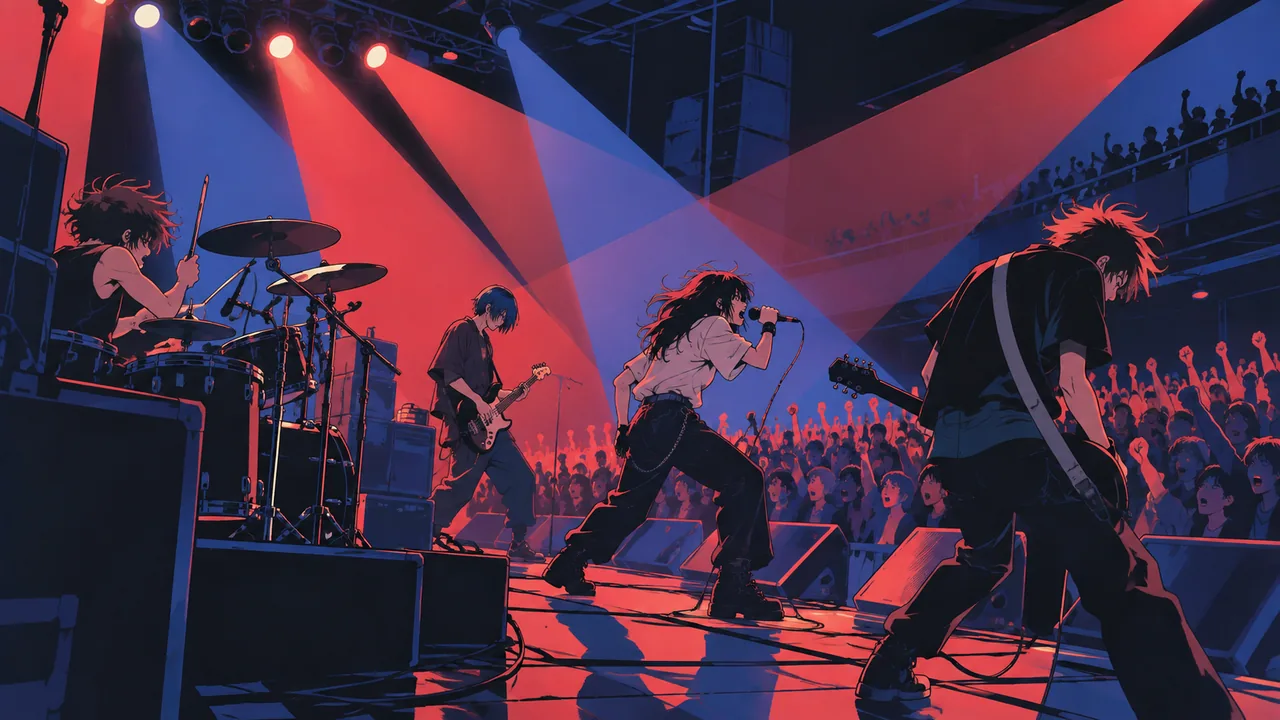
Fast, intensely melodic and emotionally full, the sound behind countless anime openings.
- Era
- 1980s–present
- Origin
- Tokyo
- Tempo
- 150–200 BPM
- Core instruments
- twin guitars · electric bass · drum kit
AI prompt
J-rock, 180 BPM, fast distorted twin guitars with melodic leads, busy energetic drums, running melodic bass, emotional high-pitched male vocals in Japanese, dramatic key change into a soaring chorus, anime opening energy
220 charactersJ-rock + Japanese lyrics + anime opening is the safest combo; add an era like 2000s to pin it down.
Rhythm
Fast eighth-note drive, verse–pre-chorus–chorus, often modulating.
Drums
Busy drumming with lots of fills and cymbals.
Bass
Melodic, fast-running bass.
Synths / arrangement
Twin guitars: distorted rhythm and fast leads, rich chords.
Vocals
High, emotional voices, mostly Japanese with English lines.
A pause before the chorus, then a high melody launches the whole band forward.
- Period
- From the 1970s, diversifying since the 1990s
- Regions & spread
- Tokyo, Japan
From '80s BOØWY and X JAPAN to '90s–2000s L'Arc~en~Ciel, ASIAN KUNG-FU GENERATION and ELLEGARDEN, and on to ONE OK ROCK, RADWIMPS and King Gnu. It puts melody first, with rich chord changes and soaring choruses, and is deeply tied to anime themes. Visual kei is one strand (separate page).
Social context
Japan's live house culture combined with the anime industry gives bands constant exposure.
Technology
Dense arrangements and clear mixing let fast guitars and vocals both stand out.
Cultural psychology (interpretation)
Creative interpretation: Frequent key changes and rising melodies create a feeling of emotions being pushed higher.
Sol-fa
ASIAN KUNG-FU GENERATION / AlbumHear fast eighth-note guitars, emotional melodies and the link to anime themes.
Jinsei×Boku=
ONE OK ROCK / AlbumCompare a modern style closer to Western post-hardcore and arena rock.
Donten
DOES / SongA Gintama opening: a tight, punchy three-piece band with a hint of Japanese melody.
Boku ga Shinō to Omotta no wa
amazarashi / SongWritten by Hiromu Akita for Mika Nakashima (2013) and later covered by amazarashi themselves: half-spoken, held-back storytelling rock.
Anime openings, youth sports shows and battles
Fast melodic drive matches anime pacing and emotion.
- What is J-Rock?
- J-Rock is a japanese rock. Fast, intensely melodic and emotionally full, the sound behind countless anime openings. Period: From the 1970s, diversifying since the 1990s. Regions: Tokyo, Japan. A pause before the chorus, then a high melody launches the whole band forward.
- How do I write a Suno prompt for J-Rock?
- Copy this full prompt:
J-rock, 180 BPM, fast distorted twin guitars with melodic leads, busy energetic drums, running melodic bass, emotional high-pitched male vocals in Japanese, dramatic key change into a soaring chorus, anime opening energy. J-rock + Japanese lyrics + anime opening is the safest combo; add an era like 2000s to pin it down. - What BPM and instruments does J-Rock use?
- Usually 150–200 BPM. Drums: Busy drumming with lots of fills and cymbals. Bass: Melodic, fast-running bass. Synths / arrangement: Twin guitars: distorted rhythm and fast leads, rich chords. Vocals: High, emotional voices, mostly Japanese with English lines.
- What J-Rock music should I start with?
- Start with “Sol-fa” by ASIAN KUNG-FU GENERATION; “Jinsei×Boku=” by ONE OK ROCK; “Donten” by DOES; “Boku ga Shinō to Omotta no wa” by amazarashi. The Key works tab notes what to listen for in each.
- What styles are similar to J-Rock?
- Battle Anime Opening Similar mood · Epic & vast; Power Metal Similar mood · Epic & vast; Chinese Rock Same branch; Visual Kei / Visual Rock Same branch
Sources are used to check history, categories and works. Cultural psychology, visual language, creator uses, and the instrument and mood tags in the overview are editorial interpretation and do not speak for a whole community or an artist’s sole intent. Tempo ranges are only a starting point; listen to AI examples and adjust.
- Wikipedia · Japanese rock ↗Works and cultural background; sound, imagery and creator uses are editorial analysis
- Wikipedia · Sol-fa (album) ↗Works and cultural background; sound, imagery and creator uses are editorial analysis