JRPG Fantasy
Game scoring and world aesthetic direction
Makes every town and every farewell a place on the journey you can come back to.
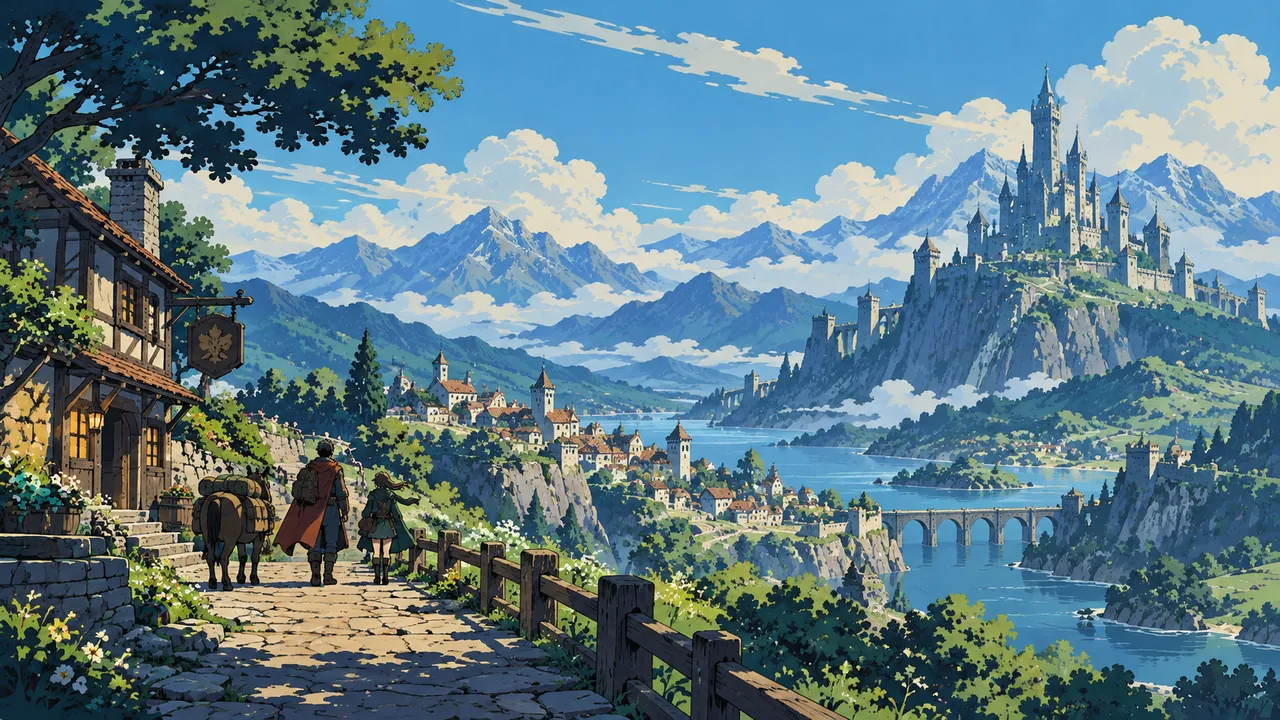
- Era
- 1980s
- Origin
- Japan
- Tempo
- Depends on the scene
- Core instruments
- strings · woodwinds · harp · synths
AI prompt
JRPG fantasy town theme, memorable woodwind melody, light strings, warm acoustic bass, gentle percussion, instrumental, a welcoming mountain inn after a long journey, seamless loop feel without a dramatic ending
211 charactersChoose one map use at a time; battles and towns need different rhythm, looping and density.
Rhythm
Exploration loops, dance-like town rhythms, driving battle rhythms.
Drums
Light percussion, orchestral drums, rock or electronic drums chosen per area.
Bass
Supports clear melodies and loops, adding activity per scene.
Synths / arrangement
Chip, orchestra, folk instruments, rock and keys all work.
Vocals
Usually instrumental; theme songs or chants need a clear place in the story.
Memorable themes and looping structures give places and characters a lasting identity.
- Period
- Key development in Japan's 1980s home console industry
- Regions & spread
- Japanese game production · Global player culture
Dragon Quest (1986) shaped a fantasy world with classical and orchestral thinking, an important case. Afterwards chip sounds, rock, electronics and orchestra together expanded JRPG sound; there's no single fixed orchestration.
Social context
Long role-playing games need to keep shaping regions, characters and journeys, and players linger in the same places again and again.
Technology
Early channel and memory limits encouraged clear themes; later hardware, sampling and recording expanded the world's timbres.
Cultural psychology (interpretation)
Creative interpretation: melodies you keep returning to make players remember places, and when a theme reappears late in the story it can also recall who they once were.
Overture · Dragon Quest I
Koichi Sugiyama / すぎやまこういち / Game theme / later orchestral recordingFirst hear how the overture sets up departure and adventure, then compare location themes; the linked symphonic recording isn't the 1986 game audio, but shows how the original theme developed orchestrally.
Towns, fields and expeditions
Give places melodies first, then decide each area's orchestration, building memories players can return to.
Character themes and story chapters
One theme can be varied in a warm town and a tense battle, giving the journey emotional continuity.
- What is JRPG Fantasy?
- JRPG Fantasy is a game scoring and world aesthetic direction. Makes every town and every farewell a place on the journey you can come back to. Period: Key development in Japan's 1980s home console industry. Regions: Japanese game production, Global player culture. Memorable themes and looping structures give places and characters a lasting identity.
- How do I write a Suno prompt for JRPG Fantasy?
- Copy this full prompt:
JRPG fantasy town theme, memorable woodwind melody, light strings, warm acoustic bass, gentle percussion, instrumental, a welcoming mountain inn after a long journey, seamless loop feel without a dramatic ending. Choose one map use at a time; battles and towns need different rhythm, looping and density. - What BPM and instruments does JRPG Fantasy use?
- No single BPM; design towns, fields and battles separately. Drums: Light percussion, orchestral drums, rock or electronic drums chosen per area. Bass: Supports clear melodies and loops, adding activity per scene. Synths / arrangement: Chip, orchestra, folk instruments, rock and keys all work. Vocals: Usually instrumental; theme songs or chants need a clear place in the story.
- What JRPG Fantasy music should I start with?
- Start with “Overture · Dragon Quest I” by Koichi Sugiyama / すぎやまこういち. The Key works tab notes what to listen for in each.
- What styles are similar to JRPG Fantasy?
- Gothic Fantasy Score Same branch; Folk / World-inspired Score Same branch; Tokusatsu / Super Robot Song Similar mood · Epic & vast; Sea Shanty Similar mood · Epic & vast
Sources are used to check history, categories and works. Cultural psychology, visual language, creator uses, and the instrument and mood tags in the overview are editorial interpretation and do not speak for a whole community or an artist’s sole intent. Tempo ranges are only a starting point; listen to AI examples and adjust.
- Dragon Quest · 官方历史 ↗1986, the composer and fantasy orchestral thinking
- Square Enix · Dragon Quest I 交响组曲 ↗Later recordings and listening direction