Cumbia
Latin dance music
Accordion and guacharaca's two-step shuffle, the riverside town dance that's slow yet impossible to stop.
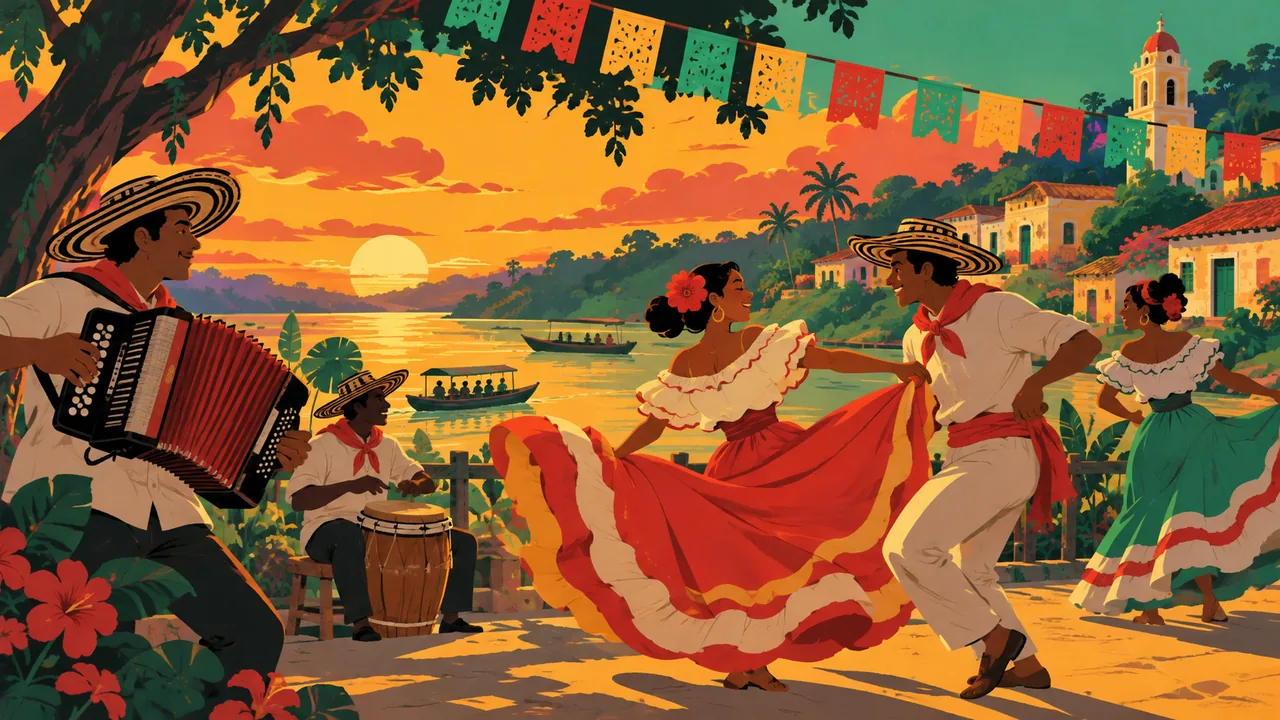
- Era
- 20th century–present
- Origin
- Colombia · Mexico · Peru
- Tempo
- 85–110 BPM
- Core instruments
- accordion · guacharaca · congas
AI prompt
Colombian cumbia, 95 BPM, steady 2/4 two-beat, guacharaca scraper and maracas, congas and tambora, cheerful accordion melody, gaita flute, simple bass, Spanish vocals with chorus, riverside fiesta, joyful and tropical
217 charactersWrite cumbia + accordion + guacharaca; for modern write electro cumbia or cumbia villera.
Rhythm
2/4 two-beat with a light "boom-chk" sway.
Drums
Guacharaca scraper, maracas, congas, tambora.
Bass
Simple two-beat root bass.
Synths / arrangement
Accordion, gaita flute, electronic keyboard, or Peruvian-style electric guitar.
Vocals
Spanish vocals, often with chorus.
The guacharaca scrapes out the beat while the accordion plays a cheerful melody above.
- Period
- Long folk roots; popularised in the mid-20th century
- Regions & spread
- Colombia's Caribbean coast · Mexico, Peru and Argentina
Rooted in Colombian African, Indigenous and Spanish traditions; spreading across Latin America it formed Mexican cumbia sonidera, Peruvian chicha and Argentine cumbia villera, with modern electro-cumbia from Bomba Estéreo and others.
Social context
Working-class parties and community dances across Latin America.
Technology
Accordion and electronic keyboard made cumbia easy to localise everywhere.
Cultural psychology (interpretation)
Creative interpretation: A steady two-beat and easy sway let anyone dance right away.
Fuego
Bomba Estéreo / SongHear modern electro-cumbia blend tradition with electronics.
Los Ángeles Azules
Los Ángeles Azules / Artist / BandCompare Mexican cumbia's keyboards and romantic melodies.
Latin American towns, fiestas and travel vlogs
The easy two-beat is joyful without being loud.
- What is Cumbia?
- Cumbia is a latin dance music. Accordion and guacharaca's two-step shuffle, the riverside town dance that's slow yet impossible to stop. Period: Long folk roots; popularised in the mid-20th century. Regions: Colombia's Caribbean coast, Mexico, Peru and Argentina. The guacharaca scrapes out the beat while the accordion plays a cheerful melody above.
- How do I write a Suno prompt for Cumbia?
- Copy this full prompt:
Colombian cumbia, 95 BPM, steady 2/4 two-beat, guacharaca scraper and maracas, congas and tambora, cheerful accordion melody, gaita flute, simple bass, Spanish vocals with chorus, riverside fiesta, joyful and tropical. Write cumbia + accordion + guacharaca; for modern write electro cumbia or cumbia villera. - What BPM and instruments does Cumbia use?
- Usually 85–110 BPM. Drums: Guacharaca scraper, maracas, congas, tambora. Bass: Simple two-beat root bass. Synths / arrangement: Accordion, gaita flute, electronic keyboard, or Peruvian-style electric guitar. Vocals: Spanish vocals, often with chorus.
- What Cumbia music should I start with?
- Start with “Fuego” by Bomba Estéreo; “Los Ángeles Azules” by Los Ángeles Azules. The Key works tab notes what to listen for in each.
- What styles are similar to Cumbia?
- Samba Same branch; Salsa Same branch; Regional Mexican Same branch; Bluegrass Similar mood · Bright & sweet
Sources are used to check history, categories and works. Cultural psychology, visual language, creator uses, and the instrument and mood tags in the overview are editorial interpretation and do not speak for a whole community or an artist’s sole intent. Tempo ranges are only a starting point; listen to AI examples and adjust.
- Wikipedia · Cumbia ↗Works and cultural background; sound, imagery and creator uses are editorial analysis
- Wikipedia · Bomba Estéreo ↗Works and cultural background; sound, imagery and creator uses are editorial analysis