Delta Blues
Blues · acoustic
One acoustic guitar, a bottleneck slide and a rough voice: the earliest, rawest blues from the Mississippi riverbank.
- Era
- 1920s–1940s
- Origin
- Mississippi Delta
- Tempo
- 70–120 BPM
- Core instruments
- acoustic guitar · slide · harmonica
AI prompt
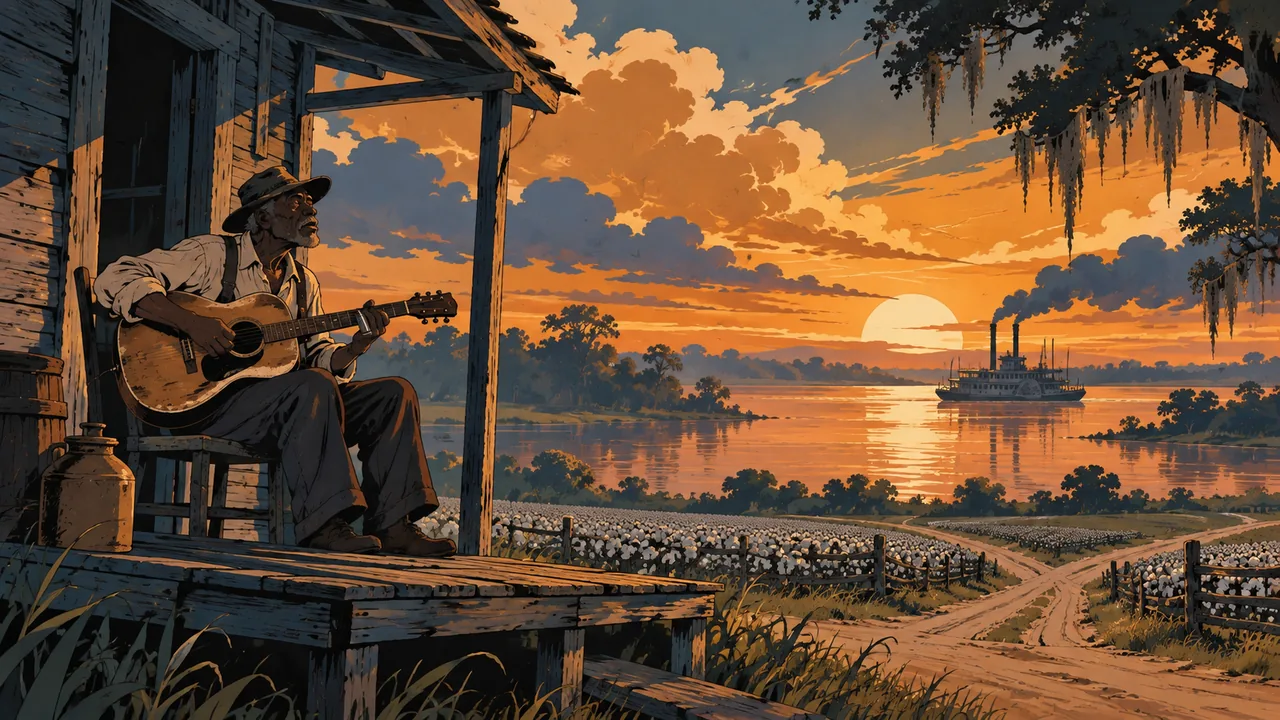
Delta blues, 1930s, solo acoustic guitar with bottleneck slide, thumb-picked repeating bass line, foot stomps, raw hollering male vocal, twelve-bar blues, lonesome and raw, porch by the Mississippi river at dusk, lo-fi field recording
234 charactersWrite Delta blues + acoustic slide guitar + raw vocal; for an old-record feel add 1930s and lo-fi field recording.
Rhythm
Twelve-bar blues or looser repeating sections, foot-stomped time.
Drums
No drums: foot stomps or slaps on the guitar body.
Bass
Repeating thumb-picked bass lines on the guitar.
Synths / arrangement
Acoustic guitar with bottleneck or metal slide, sometimes harmonica.
Vocals
Rough, hollering male voice.
The slide cries a long note across the strings, a foot stomps, and the singer rasps a line about far-off roads.
- Period
- 1920s–1940s
- Regions & spread
- Mississippi Delta, USA
Delta blues was born in the plantation country of the Mississippi Delta, with Charley Patton, Son House and Robert Johnson as key figures. It is usually one singer with a guitar, heavy on slide and repeating bass lines, with rough, hollering vocals singing of poverty, parting, travel and legend. Chicago electric blues and British rock bands such as the Rolling Stones and Led Zeppelin drew deeply on it.
Social context
African American labourers on plantations sang of hardship and longing.
Technology
Field recordings and 78 rpm records.
Cultural psychology (interpretation)
Creative interpretation: The crying slide and rough voice feel lonely, honest and stubborn.
Cross Road Blues
Robert Johnson / SongHear slide, repeating bass and a hollering voice, plus the crossroads legend.
Son House
Son House / Artist / BandCompare a rougher, more forceful voice and attack.
American South, road movies and mysterious tales
One slide guitar brings dust, loneliness and legend.
- What is Delta Blues?
- Delta Blues is a blues · acoustic. One acoustic guitar, a bottleneck slide and a rough voice: the earliest, rawest blues from the Mississippi riverbank. Period: 1920s–1940s. Regions: Mississippi Delta, USA. The slide cries a long note across the strings, a foot stomps, and the singer rasps a line about far-off roads.
- How do I write a Suno prompt for Delta Blues?
- Copy this full prompt:
Delta blues, 1930s, solo acoustic guitar with bottleneck slide, thumb-picked repeating bass line, foot stomps, raw hollering male vocal, twelve-bar blues, lonesome and raw, porch by the Mississippi river at dusk, lo-fi field recording. Write Delta blues + acoustic slide guitar + raw vocal; for an old-record feel add 1930s and lo-fi field recording. - What BPM and instruments does Delta Blues use?
- Usually 70–120 BPM, often loose. Drums: No drums: foot stomps or slaps on the guitar body. Bass: Repeating thumb-picked bass lines on the guitar. Synths / arrangement: Acoustic guitar with bottleneck or metal slide, sometimes harmonica. Vocals: Rough, hollering male voice.
- What Delta Blues music should I start with?
- Start with “Cross Road Blues” by Robert Johnson; “Son House” by Son House. The Key works tab notes what to listen for in each.
- What styles are similar to Delta Blues?
- Blues Same branch; Chicago / Electric Blues Same branch; Americana Similar mood · Melancholy & lonely; Alternative Rock Similar mood · Melancholy & lonely
Sources are used to check history, categories and works. Cultural psychology, visual language, creator uses, and the instrument and mood tags in the overview are editorial interpretation and do not speak for a whole community or an artist’s sole intent. Tempo ranges are only a starting point; listen to AI examples and adjust.
- Wikipedia · Delta blues ↗Works and cultural background; sound, imagery and creator uses are editorial analysis
- Wikipedia · Cross Road Blues ↗Works and cultural background; sound, imagery and creator uses are editorial analysis