Afrobeats
West African popular music wave
Light percussion and warm melodies turn a party into an easy, rolling groove.
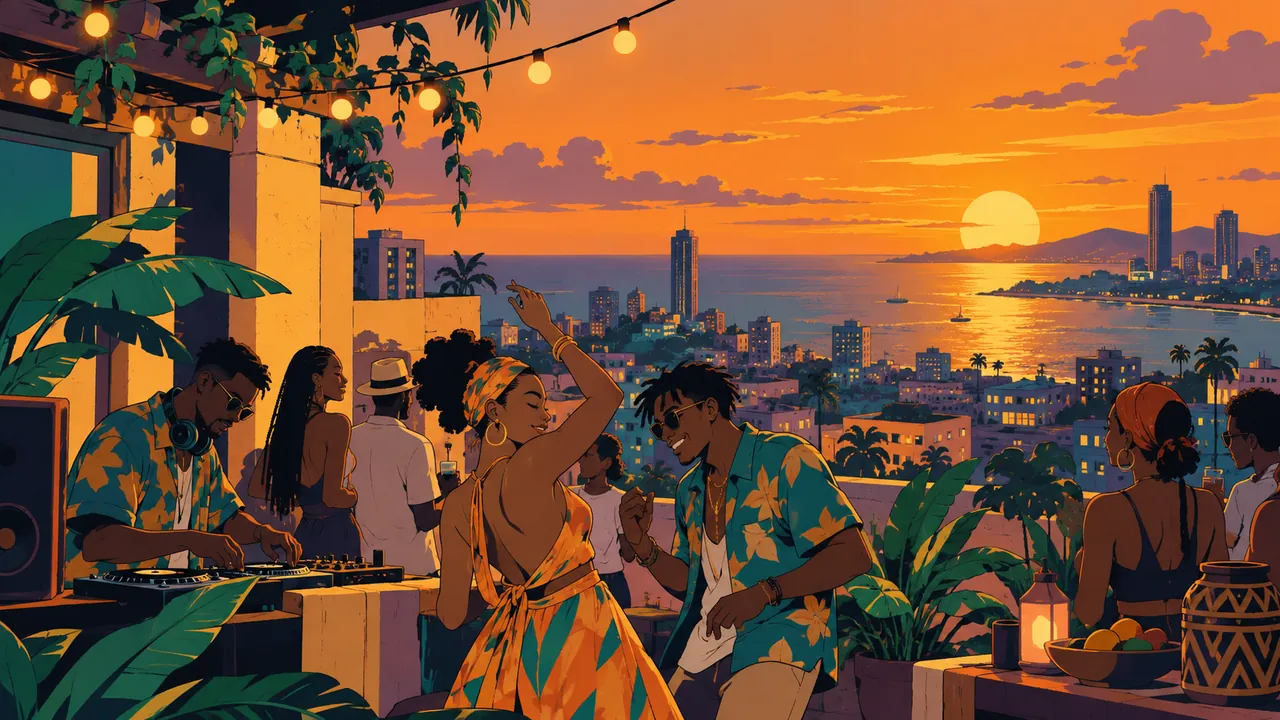
- Era
- From the late 2000s
- Origin
- Nigeria · Ghana
- Tempo
- 95–115 BPM
- Core instruments
- layered percussion · highlife guitar · log drum
AI prompt
Afrobeats, 104 BPM, syncopated layered percussion with shakers and log drum, light swaying drum groove, highlife-style clean guitar licks, round bass, warm synth pads, smooth melodic vocal mixing English and Pidgin, rooftop party at sunset, easygoing and warm
259 charactersWhen writing Afrobeats, keep it distinct from Afrobeat (Fela Kuti); layered percussion and relaxed vocals are key, and amapiano gives more dance-floor drive.
Rhythm
Syncopated percussion layers with a swaying groove, often with a triplet feel.
Drums
Light drum programming, shakers, shekere, log drum and other percussion.
Bass
Round bass lines with space.
Synths / arrangement
Highlife-style clean guitar, warm synths and pads.
Vocals
Melodic singing mixing English with Yoruba and Pidgin.
Layered percussion and easy melodic lines matter more than heavy bass.
- Period
- Rose from the late 2000s through the 2010s
- Regions & spread
- Nigeria · Ghana · African diaspora in London
It blends West African highlife, jùjú, hip-hop, dancehall and R&B. Don't confuse it with Fela Kuti's 1970s Afrobeat (singular), a long-form, horn-driven, political funk fusion; Afrobeats is contemporary pop. Wizkid, Burna Boy, Davido and Tems took it into the global mainstream, and South Africa's amapiano is a neighbouring, different sound.
Social context
Young people in Lagos and Accra and the diaspora built a confident contemporary African identity through music.
Technology
Social media dance challenges and streaming let singles cross borders fast.
Cultural psychology (interpretation)
Creative interpretation: an unhurried mid-tempo groove makes joy feel effortless rather than forced.
Essence · Made in Lagos
Wizkid feat. Tems / Song / albumHear soft percussion and a spacious beat carry the two singers' easygoing exchange.
A dusk date in a tropical city
Light percussion and warm melody make a scene romantic and relaxed.
- What is Afrobeats?
- Afrobeats is a west African popular music wave. Light percussion and warm melodies turn a party into an easy, rolling groove. Period: Rose from the late 2000s through the 2010s. Regions: Nigeria, Ghana, African diaspora in London. Layered percussion and easy melodic lines matter more than heavy bass.
- How do I write a Suno prompt for Afrobeats?
- Copy this full prompt:
Afrobeats, 104 BPM, syncopated layered percussion with shakers and log drum, light swaying drum groove, highlife-style clean guitar licks, round bass, warm synth pads, smooth melodic vocal mixing English and Pidgin, rooftop party at sunset, easygoing and warm. When writing Afrobeats, keep it distinct from Afrobeat (Fela Kuti); layered percussion and relaxed vocals are key, and amapiano gives more dance-floor drive. - What BPM and instruments does Afrobeats use?
- Usually 95–115 BPM. Drums: Light drum programming, shakers, shekere, log drum and other percussion. Bass: Round bass lines with space. Synths / arrangement: Highlife-style clean guitar, warm synths and pads. Vocals: Melodic singing mixing English with Yoruba and Pidgin.
- What Afrobeats music should I start with?
- Start with “Essence · Made in Lagos” by Wizkid feat. Tems. The Key works tab notes what to listen for in each.
- What styles are similar to Afrobeats?
- Afro House Same branch; Amapiano Same branch; Reggaeton Similar mood · Groove & energy; Salsa Similar mood · Groove & energy
Sources are used to check history, categories and works. Cultural psychology, visual language, creator uses, and the instrument and mood tags in the overview are editorial interpretation and do not speak for a whole community or an artist’s sole intent. Tempo ranges are only a starting point; listen to AI examples and adjust.
- Wikipedia · Afrobeats ↗Works and cultural background; sound, imagery and creator uses are editorial analysis
- Wikipedia · Essence (Wizkid song) ↗Works and cultural background; sound, imagery and creator uses are editorial analysis