Blues
Music family and song tradition
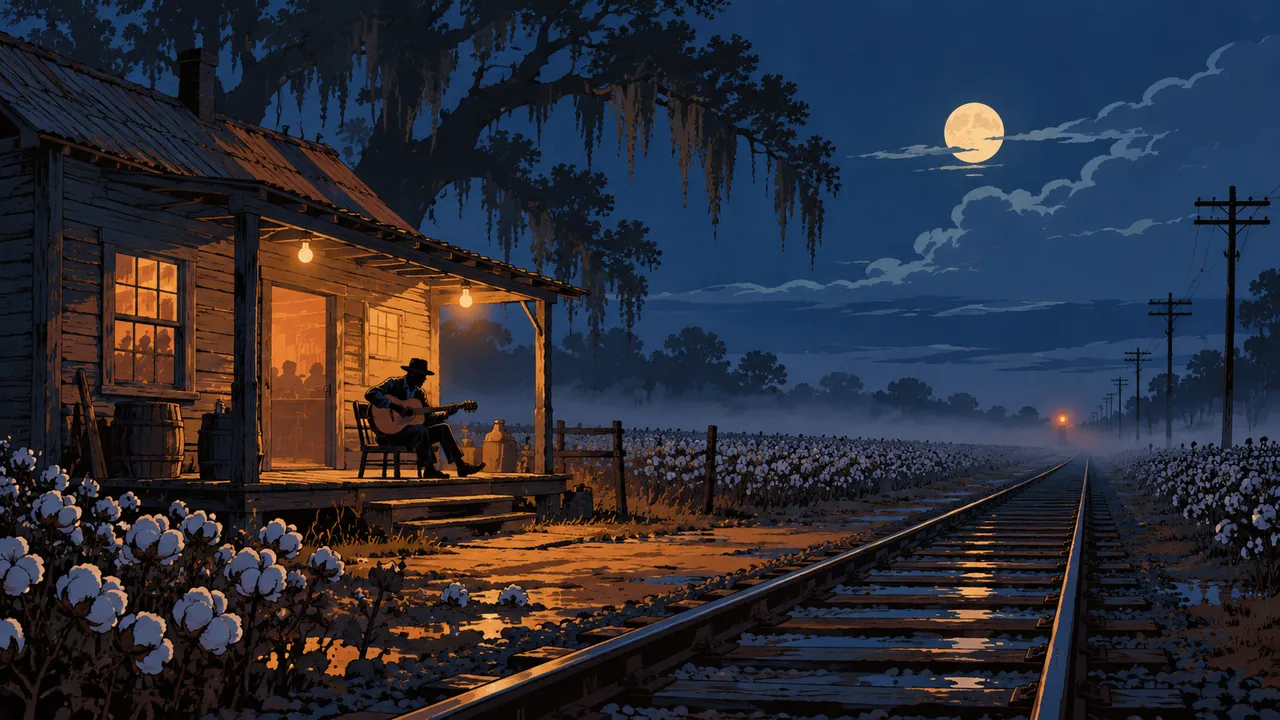
Hardship sung into twelve bars, giving sorrow a shape you can sway to together.
- Era
- Late 1800s–early 1900s
- Origin
- Mississippi Delta, USA
- Tempo
- 60–120 BPM
- Core instruments
- electric guitar · harmonica · piano · raspy vocal
AI prompt
Electric blues, 72 BPM slow shuffle, 12-bar progression, expressive electric guitar bends answering the vocal, harmonica fills, warm Hammond organ, raspy soulful male vocal, smoky late-night bar, weary but defiant
213 charactersAsk for 12-bar and shuffle, and choose acoustic Delta or electric Chicago; the call and response between voice and guitar is key.
Rhythm
The twelve-bar form and triplet shuffle are the most common.
Drums
Shuffle groove with snare on two and four.
Bass
Boogie bass lines or simple root walks.
Synths / arrangement
Electric guitar bends and slides, harmonica, piano; the blues scale with flattened thirds and sevenths.
Vocals
Gritty, raspy confessional singing, often call and response.
Sing a line, the guitar answers; blue notes create tension between major and minor.
- Period
- Formed in the late 19th and early 20th centuries
- Regions & spread
- The US South, especially the Mississippi Delta · later Chicago and northern cities
It grew from African American work songs, spirituals and field hollers. Delta acoustic blues and Chicago electric blues differ a lot; it is a key root of jazz, R&B, rock and roll and rock.
Social context
Segregation and poverty after slavery turned personal testimony into shared memory.
Technology
Records, and later electric guitars and amplifiers, carried country blues into city clubs.
Cultural psychology (interpretation)
Creative interpretation: naming and singing the pain is itself a way of standing back up.
The Thrill Is Gone
B.B. King / SongHear voice and guitar take turns confiding, and how strings widen the electric blues.
A run-down bar at the end of the highway
A slow shuffle and bent notes speak tiredness and stubbornness directly.
- What is Blues?
- Blues is a music family and song tradition. Hardship sung into twelve bars, giving sorrow a shape you can sway to together. Period: Formed in the late 19th and early 20th centuries. Regions: The US South, especially the Mississippi Delta, later Chicago and northern cities. Sing a line, the guitar answers; blue notes create tension between major and minor.
- How do I write a Suno prompt for Blues?
- Copy this full prompt:
Electric blues, 72 BPM slow shuffle, 12-bar progression, expressive electric guitar bends answering the vocal, harmonica fills, warm Hammond organ, raspy soulful male vocal, smoky late-night bar, weary but defiant. Ask for 12-bar and shuffle, and choose acoustic Delta or electric Chicago; the call and response between voice and guitar is key. - What BPM and instruments does Blues use?
- Slow blues at 60–80 BPM; shuffles up to about 120. Drums: Shuffle groove with snare on two and four. Bass: Boogie bass lines or simple root walks. Synths / arrangement: Electric guitar bends and slides, harmonica, piano; the blues scale with flattened thirds and sevenths. Vocals: Gritty, raspy confessional singing, often call and response.
- What Blues music should I start with?
- Start with “The Thrill Is Gone” by B.B. King. The Key works tab notes what to listen for in each.
- What styles are similar to Blues?
- Chicago / Electric Blues Same branch; Delta Blues Same branch; Indie Folk Similar mood · Warm & intimate; Contemporary R&B Similar mood · City night
Sources are used to check history, categories and works. Cultural psychology, visual language, creator uses, and the instrument and mood tags in the overview are editorial interpretation and do not speak for a whole community or an artist’s sole intent. Tempo ranges are only a starting point; listen to AI examples and adjust.
- Wikipedia · Blues ↗Works and cultural background; sound, imagery and creator uses are editorial analysis
- Wikipedia · The Thrill Is Gone ↗Works and cultural background; sound, imagery and creator uses are editorial analysis