Gugak / Gugak Fusion
Umbrella term for traditional music and a contemporary creative direction
Lets traditional breath, storytelling and cycles take part in contemporary sound, rather than serving only as antique decoration.
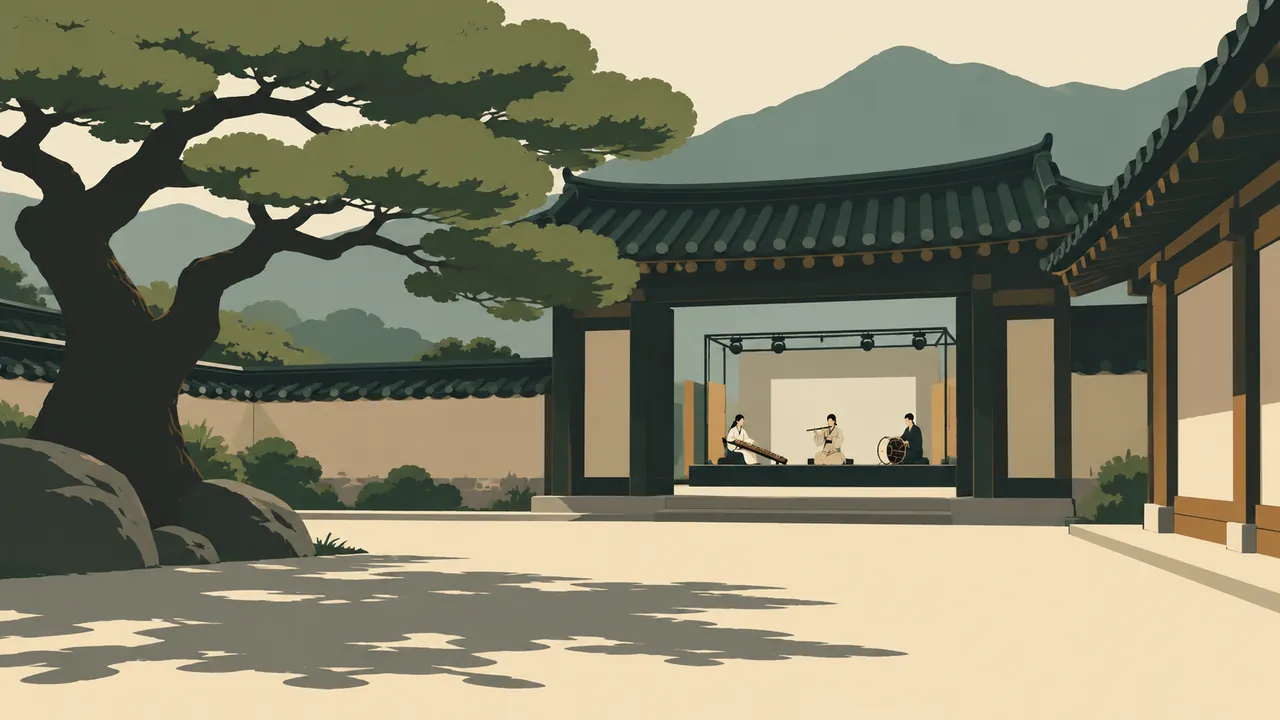
- Era
- 20th–21st century
- Origin
- South Korea
- Tempo
- Follows jangdan cycles
- Core instruments
- gayageum · janggu · haegeum · modern ensemble
AI prompt
Contemporary gugak-inspired instrumental fusion, geomungo plucked zither ostinato, expressive haegeum bowed phrases, organic percussion in breathing cyclic phrases, restrained electric guitar, gradual ensemble expansion, an intimate dialogue between living tradition and a modern band, no generic cinematic choir
312 charactersThis points to contemporary instrumental fusion. General AI tools may not accurately reproduce specific gugak instruments, jangdan or pansori; when faithfulness to tradition matters, check against performances and scores and use suitable samples or players.
Rhythm
Rhythmic cycles and tempo changes depend on the tradition; modern fusion can set traditional phrases against electric bass, rock or electronic beats.
Drums
Janggu (hourglass drum), buk (barrel drum) and others as the chosen tradition calls for; pansori's traditional form is singer plus drummer, which is not all of gugak.
Bass
Tradition doesn't necessarily have a bass part in the modern sense; fusion can use the geomungo's low register or electric bass, but their roles differ.
Synths / arrangement
Choose specific instruments such as gayageum (zither), geomungo or haegeum (fiddle), then decide whether to add guitar, piano and electronic layers.
Vocals
Pansori's narrative singing, regional folk songs or purely instrumental music can all be entry points; don't assume all Korean traditional music shares one singing style.
Keep the specific tradition's rhythm, timbre and performance logic; adding one traditional instrument or a vague "Eastern" scale isn't enough to define a piece.
- Period
- Each tradition has its own history; contemporary gugak and fusion kept developing through the 20th and 21st centuries
- Regions & spread
- The various music traditions of the Korean peninsula · Contemporary Korean creation and international exchange
Gugak is the umbrella term for Korean traditional music, covering court music, folk song (minyo), pansori, sanjo and other traditions; gugak fusion brings specific traditional material into contemporary arrangement. The National Gugak Center's Contemporary Gugak Orchestra, founded in 2004, is an institutional anchor, not the birth year of fusion music.
Social context
Preserving and teaching tradition can happen alongside creating new work. Traditional musicians also want to reach listeners unfamiliar with gugak, so they change stages, line-ups and formats rather than only recreating historical settings.
Technology
Amplification, recording, electric bands and electronic production brought traditional instruments and voices into new volumes and spaces. Fusion can also simply be live interplay between traditional instruments, piano and percussion, with no synths needed.
Cultural psychology (interpretation)
Creative interpretation: cycles, the friction of sound and narrative singing give time a body of its own. Choose one specific tradition and its expressive function first, then decide how it talks with new material.
범 내려온다 / Tiger Is Coming
LEENALCHI / Song / pansori narrative material with a modern bandHear how Sugungga's narrative material is recombined with two basses, drums and several voices. It's an entry point to contemporary adaptation, not the complete original form of traditional pansori.
Connection · Korean Music NOW live
JAMBINAI / Instrumental / traditional instruments and experimental rockThe programme includes Connection. Hear how geomungo, haegeum and guitar organise repetition, friction and gradually expanding power; it's another fusion path, to be understood separately from LEENALCHI's dance groove.
A Piece of String Music Based on Shin Kwaedong Style Geomungo Sanjo
Minju Kim × Jeehoon Song × Juri Jeong / Live work / geomungo sanjo with jazz ensembleHear how geomungo, piano and percussion converse between traditional melody and improvisation. Identify the rhythmic cycle and players' breath first, then compare with electric-band fusion; the official page has performance and programme notes.
Regional sound built on a specific music tradition
Study actual instruments, rhythms and narrative uses so cultural identity comes from performance logic; avoid blending different Asian traditions into vague decoration.
Living tradition and new stages in a future city
Carry traditional material in a contemporary band or electronic space so residents' culture can grow instead of staying frozen in antiquity.
Narrative cycles, journeys and gradually rising intensity
Pick specific traditional phrases and part relationships, then arrange modern beats and dynamics; make the source and context of the material clear.
- What is Gugak / Gugak Fusion?
- Gugak / Gugak Fusion is an umbrella term for traditional music and a contemporary creative direction. Lets traditional breath, storytelling and cycles take part in contemporary sound, rather than serving only as antique decoration. Period: Each tradition has its own history; contemporary gugak and fusion kept developing through the 20th and 21st centuries. Regions: The various music traditions of the Korean peninsula, Contemporary Korean creation and international exchange. Keep the specific tradition's rhythm, timbre and performance logic; adding one traditional instrument or a vague "Eastern" scale isn't enough to define a piece.
- How do I write a Suno prompt for Gugak / Gugak Fusion?
- Copy this full prompt:
Contemporary gugak-inspired instrumental fusion, geomungo plucked zither ostinato, expressive haegeum bowed phrases, organic percussion in breathing cyclic phrases, restrained electric guitar, gradual ensemble expansion, an intimate dialogue between living tradition and a modern band, no generic cinematic choir. This points to contemporary instrumental fusion. General AI tools may not accurately reproduce specific gugak instruments, jangdan or pansori; when faithfulness to tradition matters, check against performances and scores and use suitable samples or players. - What BPM and instruments does Gugak / Gugak Fusion use?
- No single BPM; traditional rhythm should be understood through specific jangdan (rhythmic cycles) and the players' breath, while a modern steady groove can have its own tempo. Drums: Janggu (hourglass drum), buk (barrel drum) and others as the chosen tradition calls for; pansori's traditional form is singer plus drummer, which is not all of gugak. Bass: Tradition doesn't necessarily have a bass part in the modern sense; fusion can use the geomungo's low register or electric bass, but their roles differ. Synths / arrangement: Choose specific instruments such as gayageum (zither), geomungo or haegeum (fiddle), then decide whether to add guitar, piano and electronic layers. Vocals: Pansori's narrative singing, regional folk songs or purely instrumental music can all be entry points; don't assume all Korean traditional music shares one singing style.
- What Gugak / Gugak Fusion music should I start with?
- Start with “범 내려온다 / Tiger Is Coming” by LEENALCHI; “Connection · Korean Music NOW live” by JAMBINAI; “A Piece of String Music Based on Shin Kwaedong Style Geomungo Sanjo” by Minju Kim × Jeehoon Song × Juri Jeong. The Key works tab notes what to listen for in each.
- What styles are similar to Gugak / Gugak Fusion?
- Indian Classical Same branch; Wafu / Japanese Traditional Fusion Same branch; Sacred / Choral Similar mood · Mystic & ritual; Chinese Instrumental Similar mood · Epic & vast
Sources are used to check history, categories and works. Cultural psychology, visual language, creator uses, and the instrument and mood tags in the overview are editorial interpretation and do not speak for a whole community or an artist’s sole intent. Tempo ranges are only a starting point; listen to AI examples and adjust.
- National Gugak Center · Folk Music Group ↗Traditional categories such as pansori, sanjo and minyo, and practices of preservation and re-creation
- National Gugak Center · Contemporary Gugak Orchestra ↗Founded in 2004, contemporary creation and chamber practice grounded in tradition; not the origin of every fusion direction
- LEENALCHI · SUGUNGGA ↗Sugungga narrative material, the track Tiger Is Coming, and credits for four singers, two bassists and a drummer
- Korean Cultural Center New York · Korean Music NOW: JAMBINAI ↗The Connection performance, the pairing of traditional instruments and experimental rock, and the members' aims for new listeners
- National Gugak Center · Geomungo Sanjo 融合作品 ↗A specific collaboration of geomungo sanjo, piano and percussion, the work's rhythmic cycle and a link to the live performance