Indian Classical
South Asian classical music
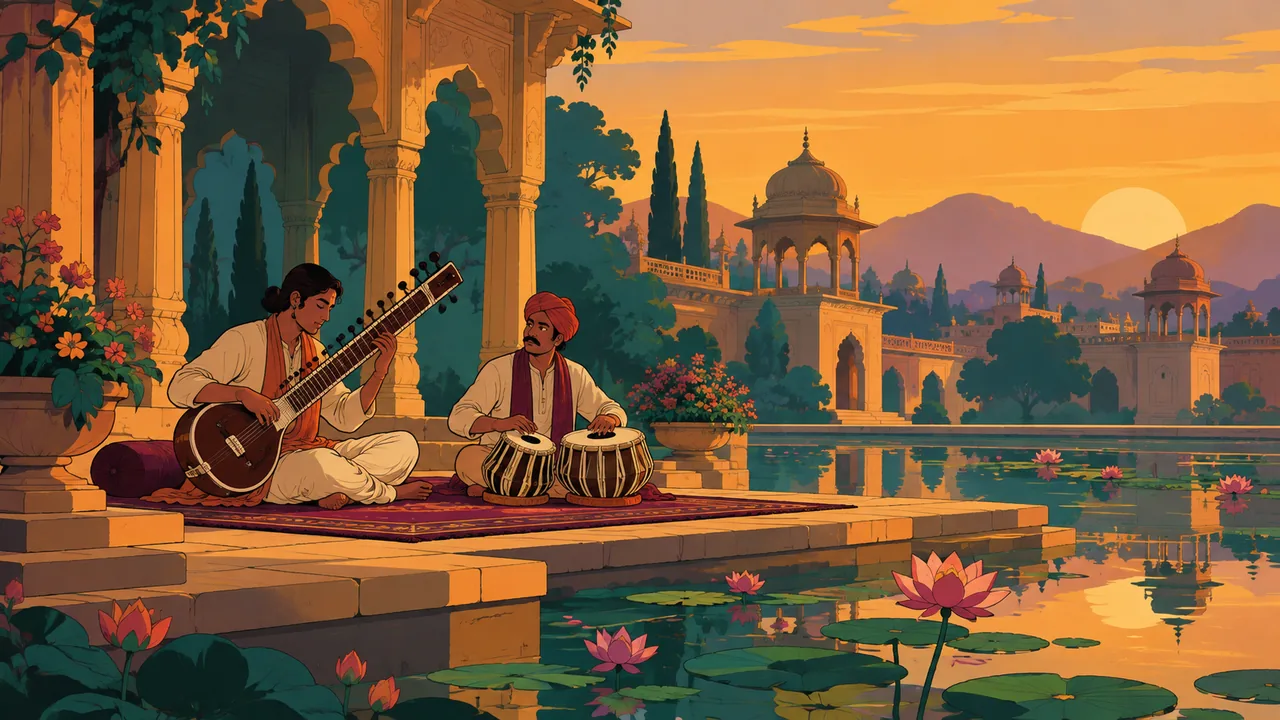
Sitar, tabla and drone; a raga warms slowly from meditation to ecstasy.
- Era
- Traditional–present
- Origin
- India
- Tempo
- free–300+ BPM
- Core instruments
- sitar · tabla · tanpura · bansuri
AI prompt
Hindustani classical raga, starting with a slow free-time alap on sitar over tanpura drone, gradually accelerating as tabla enters in 16-beat teental, bansuri flute answering, ecstatic fast jhala finale, dawn palace courtyard, meditative to ecstatic, instrumental
263 charactersWrite Indian classical raga + sitar + tabla + tanpura drone; for modern write Indian fusion.
Rhythm
Alap (free intro), jor, then jhala/gat with tabla in cycles like 16-beat teental.
Drums
Tabla.
Bass
Tanpura drone.
Synths / arrangement
Sitar, sarangi, bansuri, sarod.
Vocals
Instrumental or khayal classical singing.
The tanpura hums on, the sitar starts with slow slides, and once the tabla joins it gets faster and faster.
- Period
- Millennia-old tradition; modern forms from the medieval period
- Regions & spread
- North India (Hindustani) and South India (Carnatic)
Built on raga (melodic framework) and tala (rhythmic cycle); Ravi Shankar took the sitar worldwide and influenced the Beatles, and Zakir Hussain is a tabla master.
Social context
Religious, courtly and master-disciple (guru-shishya) traditions.
Technology
Tanpura drone and sympathetic strings create overtone space.
Cultural psychology (interpretation)
Creative interpretation: Moving from beatless alap into fast sections mirrors a mind going from stillness to ecstasy.
Three Ragas
Ravi Shankar / AlbumHear the sitar's full journey from meditative alap to fast jhala.
Zakir Hussain
Zakir Hussain / Artist / BandCompare the tabla's complex rhythm and improvisation.
Meditation, Indian landscapes and mystical rituals
Drone and sitar establish the sacred and exotic instantly.
- What is Indian Classical?
- Indian Classical is a south Asian classical music. Sitar, tabla and drone; a raga warms slowly from meditation to ecstasy. Period: Millennia-old tradition; modern forms from the medieval period. Regions: North India (Hindustani) and South India (Carnatic). The tanpura hums on, the sitar starts with slow slides, and once the tabla joins it gets faster and faster.
- How do I write a Suno prompt for Indian Classical?
- Copy this full prompt:
Hindustani classical raga, starting with a slow free-time alap on sitar over tanpura drone, gradually accelerating as tabla enters in 16-beat teental, bansuri flute answering, ecstatic fast jhala finale, dawn palace courtyard, meditative to ecstatic, instrumental. Write Indian classical raga + sitar + tabla + tanpura drone; for modern write Indian fusion. - What BPM and instruments does Indian Classical use?
- Accelerating from free time to 300+ BPM. Drums: Tabla. Bass: Tanpura drone. Synths / arrangement: Sitar, sarangi, bansuri, sarod. Vocals: Instrumental or khayal classical singing.
- What Indian Classical music should I start with?
- Start with “Three Ragas” by Ravi Shankar; “Zakir Hussain” by Zakir Hussain. The Key works tab notes what to listen for in each.
- What styles are similar to Indian Classical?
- Gugak / Gugak Fusion Same branch; Chinese Instrumental Similar mood · Calm & focused; Wafu / Japanese Traditional Fusion Same branch; Sacred / Choral Similar mood · Mystic & ritual
Sources are used to check history, categories and works. Cultural psychology, visual language, creator uses, and the instrument and mood tags in the overview are editorial interpretation and do not speak for a whole community or an artist’s sole intent. Tempo ranges are only a starting point; listen to AI examples and adjust.
- Wikipedia · Indian classical music ↗Works and cultural background; sound, imagery and creator uses are editorial analysis
- Wikipedia · Ravi Shankar ↗Works and cultural background; sound, imagery and creator uses are editorial analysis