Chinese Steppe Pop
Pop · steppe style
Long-song melodies of the grasslands over a four-on-the-floor beat: high, wide open, all blue sky and galloping horses.
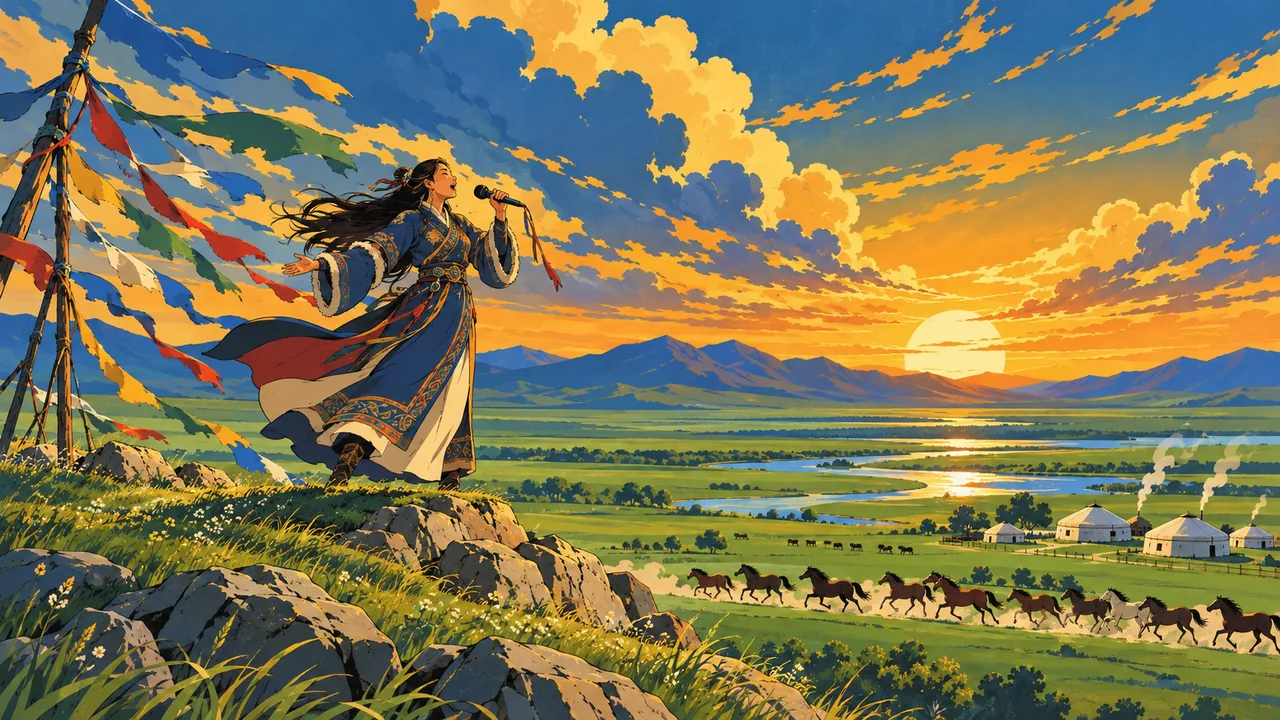
- Era
- 2000s–present
- Origin
- Inner Mongolia · nationwide
- Tempo
- 110–130 BPM
- Core instruments
- morin khuur · synth · soaring female vocal
AI prompt
Chinese steppe pop, 120 BPM four-on-the-floor dance beat with galloping accents, morin khuur melody, bright synth leads and string pads, soaring high female vocal in Mandarin trading lines with a male chant, pentatonic Mongolian-style melody, wide-open grassland, joyful and catchy
281 charactersWrite Chinese steppe pop + morin khuur + soaring female vocal; for a square-dance feel add four-on-the-floor and male chant.
Rhythm
Four-on-the-floor or galloping dotted rhythms.
Drums
Electronic drums and hand drums, a stronger kick in the chorus.
Bass
Steady synth bass.
Synths / arrangement
Morin khuur (or a synth imitation), string pads, bright synths.
Vocals
Soaring female voice, or a male rap-like part trading with a high female lead.
The morin khuur draws a long note, the beat kicks in, and the female voice hits its highest note on the word for grassland.
- Period
- Popular from the 2000s, peaking in the 2010s square-dance era
- Regions & spread
- Inner Mongolia and across China
It joins Mongolian long-song and grassland folk melody with pop arrangement and dance-music beats: high female vocals or male–female duets, morin khuur or synth imitations of it, and galloping drums. Phoenix Legend's "Above the Moon" and "Zui Xuan Min Zu Feng" and Wulan Tuya's "Tao Ma Gan" made it ubiquitous in karaoke, square dancing and car stereos.
Social context
People in fast-urbanising China longed for open space; the grassland became a far-away place everyone could sing about.
Technology
Cheap synths, karaoke rooms and square-dance speakers carried it everywhere.
Cultural psychology (interpretation)
Creative interpretation: The high notes carry you to the grassland, while the beat makes your body move.
月亮之上 Yue Liang Zhi Shang
凤凰传奇 Phoenix Legend / SongHear the male chant trading with the high female lead, and grassland melody over a dance beat.
套马杆 Tao Ma Gan
乌兰图雅 Wulan Tuya / SongCompare a purer grassland female voice and galloping rhythm.
Road trips, open-air squares and celebrations
Instantly wide and cheerful, perfect for lively scenes.
- What is Chinese Steppe Pop?
- Chinese Steppe Pop is a pop · steppe style. Long-song melodies of the grasslands over a four-on-the-floor beat: high, wide open, all blue sky and galloping horses. Period: Popular from the 2000s, peaking in the 2010s square-dance era. Regions: Inner Mongolia and across China. The morin khuur draws a long note, the beat kicks in, and the female voice hits its highest note on the word for grassland.
- How do I write a Suno prompt for Chinese Steppe Pop?
- Copy this full prompt:
Chinese steppe pop, 120 BPM four-on-the-floor dance beat with galloping accents, morin khuur melody, bright synth leads and string pads, soaring high female vocal in Mandarin trading lines with a male chant, pentatonic Mongolian-style melody, wide-open grassland, joyful and catchy. Write Chinese steppe pop + morin khuur + soaring female vocal; for a square-dance feel add four-on-the-floor and male chant. - What BPM and instruments does Chinese Steppe Pop use?
- Usually 110–130 BPM. Drums: Electronic drums and hand drums, a stronger kick in the chorus. Bass: Steady synth bass. Synths / arrangement: Morin khuur (or a synth imitation), string pads, bright synths. Vocals: Soaring female voice, or a male rap-like part trading with a high female lead.
- What Chinese Steppe Pop music should I start with?
- Start with “月亮之上 Yue Liang Zhi Shang” by 凤凰传奇 Phoenix Legend; “套马杆 Tao Ma Gan” by 乌兰图雅 Wulan Tuya. The Key works tab notes what to listen for in each.
- What styles are similar to Chinese Steppe Pop?
- Chinese National Singing (Minzu Changfa) Same branch; Trance Similar mood · Epic & vast; Eurobeat Similar mood · Bright & sweet; Mongolian & Northwest Folk Same branch
Sources are used to check history, categories and works. Cultural psychology, visual language, creator uses, and the instrument and mood tags in the overview are editorial interpretation and do not speak for a whole community or an artist’s sole intent. Tempo ranges are only a starting point; listen to AI examples and adjust.
- Wikipedia · Phoenix Legend ↗Works and cultural background; sound, imagery and creator uses are editorial analysis
- Wikipedia · Phoenix Legend ↗Works and cultural background; sound, imagery and creator uses are editorial analysis