Chinese National Singing (Minzu Changfa)
Vocal style · Chinese national singing
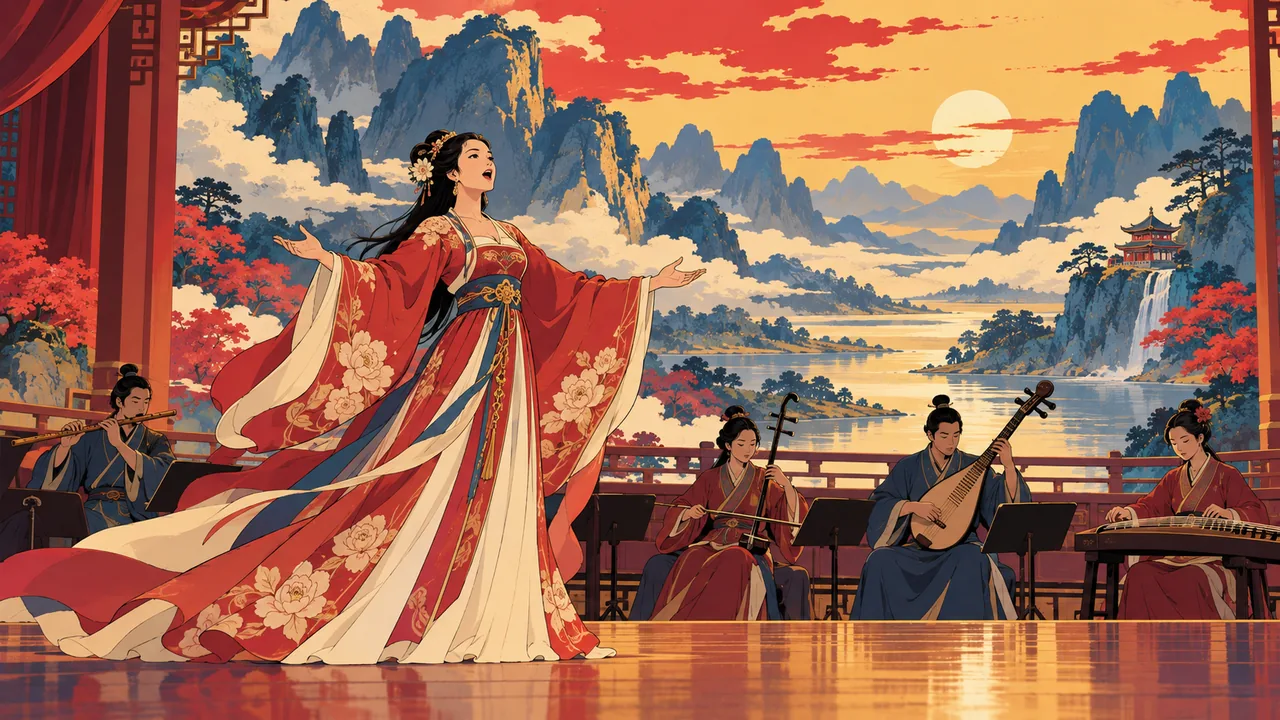
Bright, round, crisply enunciated high notes between folk song and bel canto: the most familiar Chinese sound of gala stages.
- Era
- Mid-20th century–present
- Origin
- China
- Tempo
- 60–110 BPM
- Core instruments
- national-style soprano · erhu · dizi
AI prompt
Chinese national singing style, 80 BPM, bright forward soprano in Mandarin with clear diction and vibrato, Chinese orchestra with erhu, pipa, dizi and yangqin, lush symphonic strings, timpani swells, festive and heartfelt, grand concert hall
241 charactersWrite Chinese national singing style + bright soprano + Chinese orchestra; for less formality add folk song and drop symphonic.
Rhythm
Lyrical slow tempos or lively folk rhythms.
Drums
Chinese percussion, timpani, or almost no drums.
Bass
Cellos and double basses underneath.
Synths / arrangement
Chinese orchestra: erhu, pipa, dizi, yangqin, often with symphonic strings.
Vocals
Bright, forward soprano or tenor with vibrato and very clear diction.
A dizi introduction, a bright soprano's first line, strings slowly lifting, and the chorus opening wide in the high register.
- Period
- Formed in the mid-20th century, at its height in the 1980s–2000s
- Regions & spread
- China
National singing builds on the diction and phrasing of Chinese folk song and opera, adding bel-canto breathing and resonance training; the tone is bright, forward and clearly articulated. Singers such as Li Guyi and Song Zuying made it the signature sound of big televised galas, anthemic songs and folk-style hits, usually with a Chinese or symphony orchestra. In Suno it differs from both pop and bel canto and needs its own description.
Social context
State ensembles and TV galas needed a voice both distinctly Chinese and nationally broadcastable.
Technology
Conservatory training, live television and the Chinese orchestra format.
Cultural psychology (interpretation)
Creative interpretation: Bright high notes and clear diction feel festive, sincere and ceremonial.
好日子 Hao Ri Zi
宋祖英 Song Zuying / SongHear the bright, forward national-singing tone and festive folk rhythm.
乡恋 Xiang Lian
李谷一 Li Guyi / SongCompare an earlier, softer national-singing style with a pop touch.
Festive galas, period dramas and landscape themes
One phrase sets a ceremonial, festive Chinese stage.
- What is Chinese National Singing (Minzu Changfa)?
- Chinese National Singing (Minzu Changfa) is a vocal style · Chinese national singing. Bright, round, crisply enunciated high notes between folk song and bel canto: the most familiar Chinese sound of gala stages. Period: Formed in the mid-20th century, at its height in the 1980s–2000s. Regions: China. A dizi introduction, a bright soprano's first line, strings slowly lifting, and the chorus opening wide in the high register.
- How do I write a Suno prompt for Chinese National Singing (Minzu Changfa)?
- Copy this full prompt:
Chinese national singing style, 80 BPM, bright forward soprano in Mandarin with clear diction and vibrato, Chinese orchestra with erhu, pipa, dizi and yangqin, lush symphonic strings, timpani swells, festive and heartfelt, grand concert hall. Write Chinese national singing style + bright soprano + Chinese orchestra; for less formality add folk song and drop symphonic. - What BPM and instruments does Chinese National Singing (Minzu Changfa) use?
- Usually 60–110 BPM. Drums: Chinese percussion, timpani, or almost no drums. Bass: Cellos and double basses underneath. Synths / arrangement: Chinese orchestra: erhu, pipa, dizi, yangqin, often with symphonic strings. Vocals: Bright, forward soprano or tenor with vibrato and very clear diction.
- What Chinese National Singing (Minzu Changfa) music should I start with?
- Start with “好日子 Hao Ri Zi” by 宋祖英 Song Zuying; “乡恋 Xiang Lian” by 李谷一 Li Guyi. The Key works tab notes what to listen for in each.
- What styles are similar to Chinese National Singing (Minzu Changfa)?
- Mongolian & Northwest Folk Same branch; Gospel Similar mood · Bright & sweet; Chinese Steppe Pop Same branch; Chinese Instrumental Same branch
Sources are used to check history, categories and works. Cultural psychology, visual language, creator uses, and the instrument and mood tags in the overview are editorial interpretation and do not speak for a whole community or an artist’s sole intent. Tempo ranges are only a starting point; listen to AI examples and adjust.
- Wikipedia · Song Zuying ↗Works and cultural background; sound, imagery and creator uses are editorial analysis
- Wikipedia · Song Zuying ↗Works and cultural background; sound, imagery and creator uses are editorial analysis